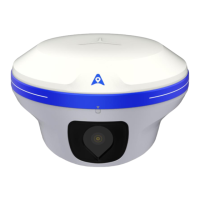
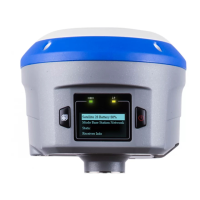
51 CHC i83 User Manual
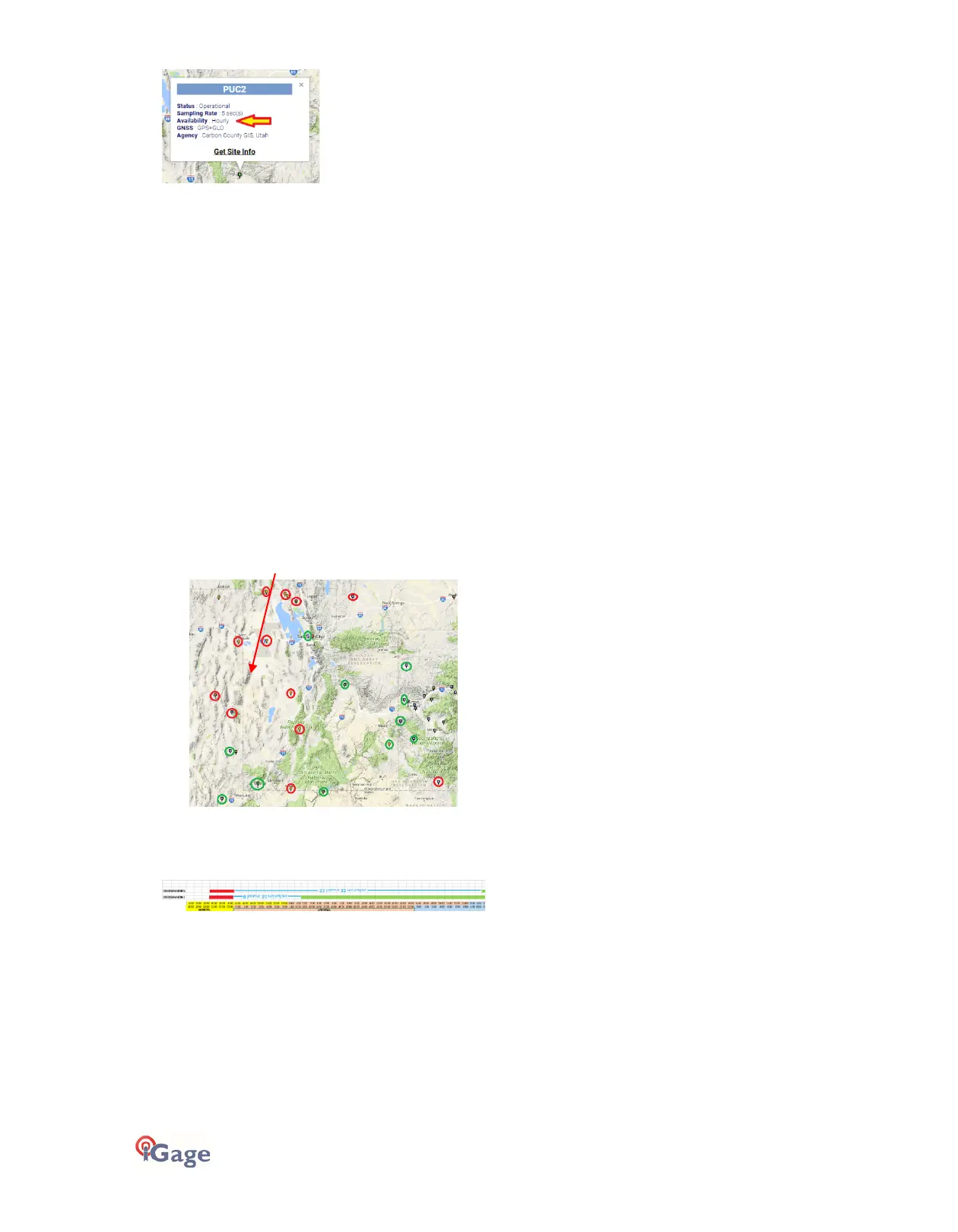
Hourly
Daily means that a full day’s CORS station data is collected and then sometime after midnight UTC the data is archived
and becomes available for use as CORS data. Observation collection is ONCE PER DAY.
Hourly means that the previous hour’s data is collected and available immediately after the top of each hour. Collection
is EVERY HOUR.
Hourly data is much more desirable.
For the two sites above:
P113 data is typically available at 09:03 am (UTC) on the following day.
PUC2 data is typically available 35 minutes after the top of each hour.
If your OPUS submission has sufficient nearby hourly stations, then you can probably wait 45 minutes after the top of
the hour following your file collection and an OPUS submission will be successful.
However, if you are collecting data in an area where most of the stations have only
daily
availability you will have to wait
a longer time before the nearby stations will be available for use.
This is especially troublesome if you acquire observation data in two separate UTC days. (In other words, your
observation spans midnight UTC.)
#5 Some areas of the United States effectively ONLY have Daily Data
Consider Western Utah:
Daily Stations Red; Hourly Stations Green
If your observation is in the western part of the state there are only daily stations available.
Let’s look at an example with two observations collected on the Northwest side of Utah near Wendover Nevada:
The two observations were performed Monday afternoon (the red bars). One is a section corner, the other is vertical
bench mark which is only 400 feet northeast of the section corner. Both locations enjoy completely open sky – no
canopy. Both observations are
exactly
three hours in length.
The first observation starts at 1:59 pm Mountain Time (20:59 UTC) and ends at 4:59 pm Mountain Time (23:59 UTC).
The second observation starts two minutes after the first at 2:01 pm Mountain Time (21:01 UTC) and ends two minutes
after the first observation ends at 5:01 pm Mountain Time.
We submit both occupations to OPUS Tuesday morning, the day after we collect the observations.
OPUS returns the first solution, and it looks fantastic with 98% observations used and an ellipsoid height RMS error
estimate of 0.011 meters.



 To Next Page