CHC i83 User Manual 58
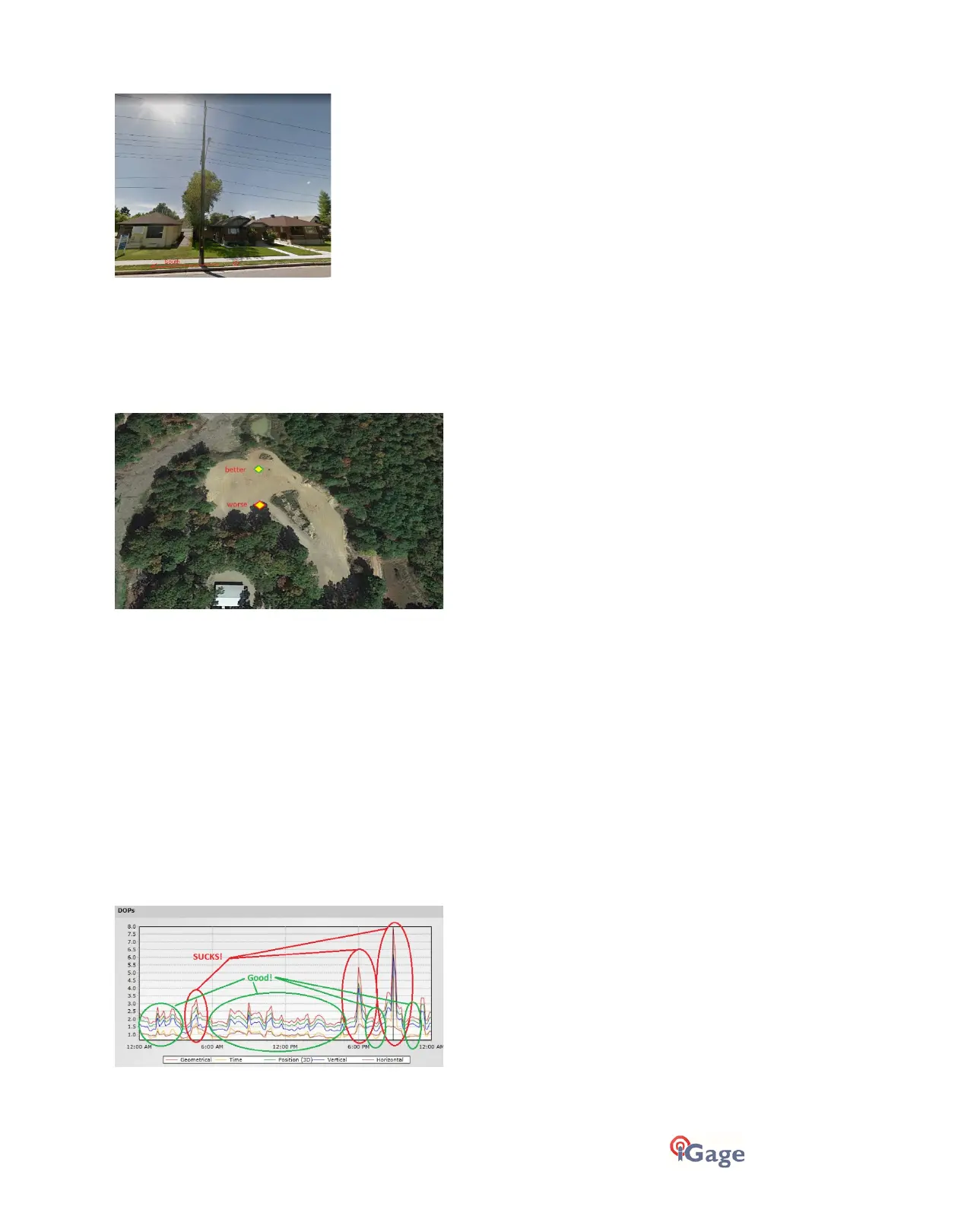
Smaller power poles and lines are also unacceptable, especially if they are south of the occupation site:
#9 Optimizing Occupations in the Real-World
Receiver Placement
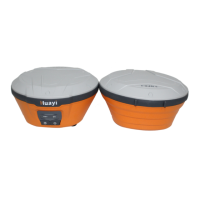
In North America, the most important sky is to the East, South and West (because there are never any GPS satellites
directly north.) So, if you are setting up in a field that is surrounded by large trees, locations in the middle of the North
side of the open area are preferable because the southern sky effectively opens up:
Longer Observations
OPUS-RS is especially vulnerable to bad sites. If you think a site may have problems, try to collect over two hours of data
so that you will have the option of using OPUS-Static. You can always trim the 2-hour observation file and also submit it
as a Rapid Static job in addition to the Static job.
A six-hour occupation may return remarkable results at a site where 2-hour occupations fail. More-time in adverse
locations is always better.
#10 Mission Planning
With modern GNSS RTK receivers that track lots of satellite constellations and lots of signals, mission planning is no
longer required. A full GNSS receiver tracks so many satellites that there are no bad times.
However, OPUS is
GPS only
and mission planning should be used to select better times to occupy sketchy locations.
Especially if you are using OPUS-RS.
Here is a typical GPS Only Mission Planning example:
Lower DOP is better than higher DOP. You can see that most of the day, DOP is excellent. Most OPUS submissions will be
successful. However, starting at 5:30 pm there are large DOP spikes.


 To Next Page