Introduction
Copyright © 2015 Coda Octopus Products Ltd
11
F180R MOTION Sensor User and Reference Guide
2 Introduction
The F180R System Inertial Attitude and Positioning System from CodaOctopus is an instrument
for making precision measurements of vessel attitude (including heading), dynamics and
geographical position for use in any marine hydrographic survey application. The F180R
System is light in weight, compact in size and can be installed and uninstalled easily and
quickly. The F180R System Inertial Attitude and Positioning System requires none of the
complicated post-installation setup and configuration procedures demanded by other similar
systems, yet provides all the functionality required within hydrographic survey applications.
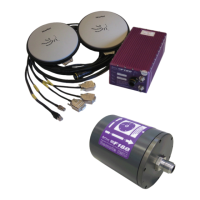
The F180R System is a multi-sensor system consisting of an inertial measurement unit (IMU),
built up of three solid-state gyros and three inertial-grade accelerometers, and two survey
grade GPS receivers. The F180R System is delivered with the IMU components in a separate
waterproof pod (wetpod) in order to allow the IMU to be located close to a transducer head.
WARNING: Although selected for their ruggedness, the solid–state accelerometers
and rate sensors used in the IMU are susceptible to excessive shock and vibration.
Refer to the environmental specifications for details. Treat the IMU with care when
you handle it—store it in the transit case until you are ready to install it. Never drop
the IMU or subject it to shocks. A 'Shockwatch' label attached to the IMU casing will
show a red central vial if the unit is subjected to severe shock. If this occurs, return the
unit to CodaOctopus Limited for test and repair. The solid–state inertial measurement
components are not field repairable.
The F180R System integrates the information provided by the attitude and position sensors
and takes advantage of their complimentary attributes in order to yield a position and attitude
solution more stable than either system in operating in isolation. This blended navigation
solution gives the F180R System several key advantages:
Measurement of position, attitude and heading that exhibit the long-term stability of a
GNSS navigation system with the short term accuracy of the inertial navigator.
Precise position and attitude information at a high 100Hz update rate ideal for high-
dynamic applications.
Automatic system calibration compensating for IMU bias, drift and scale factor errors.
Robust navigation output capable of maintaining a useful degree of accuracy during
GNSS signal blockage and degradation.
Recognises and ignores anomalous transient jumps in the GNSS position solution.
This guide describes the F180R System Inertial Attitude and Positioning System in detail and is
an important part of the system. You should retain the guide so that it is available to all those
who will install, operate and maintain the system.
Although installation and operation of the F180R System are not complex tasks, you should
spend time to familiarise yourself with the contents of this manual before you start to install
or use the system. The time that you spend in identifying the task sequence now will help you
to have your system operational with minimal delay.


 To Next Page