TRANSIENT3000
11/162
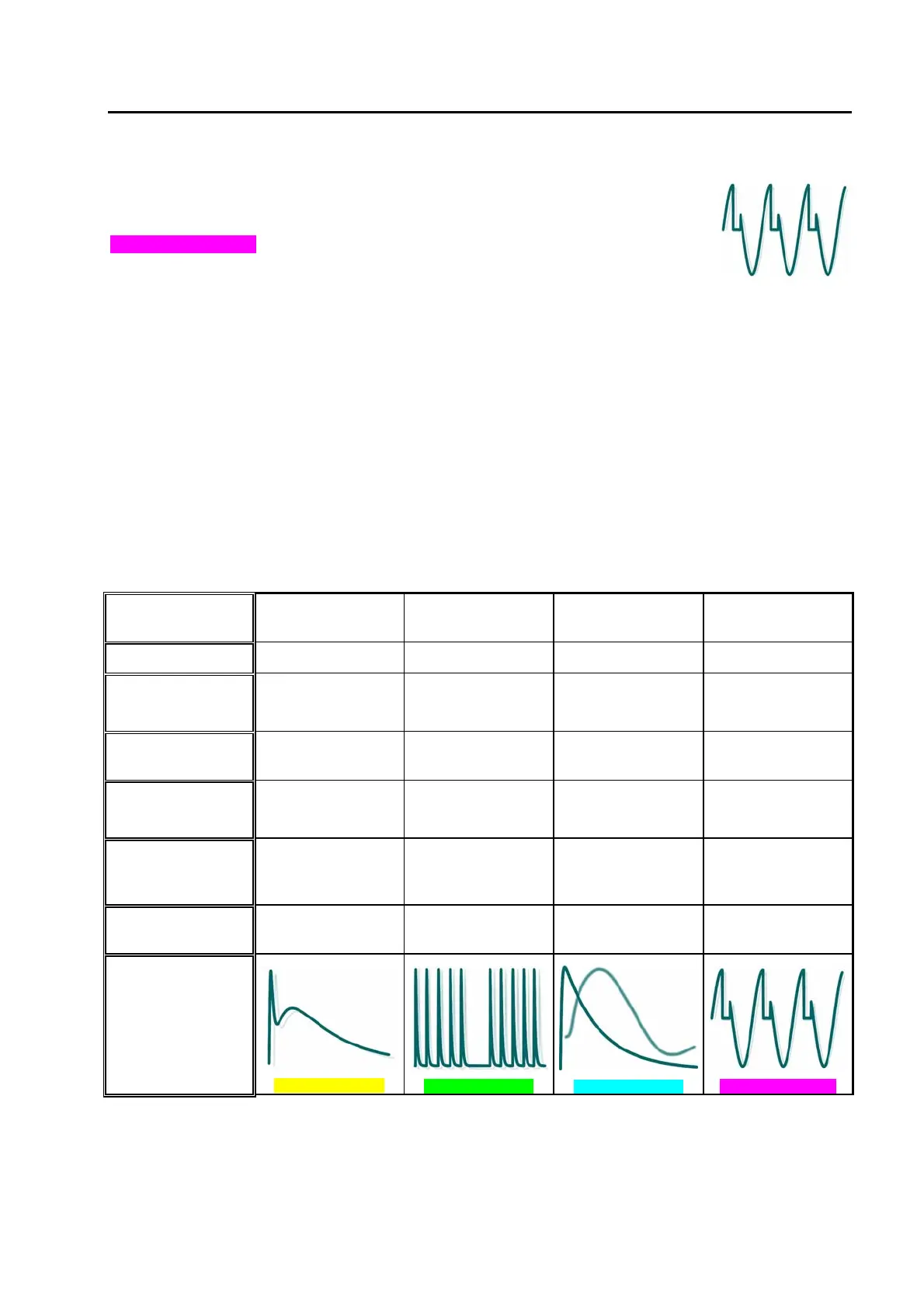
1.1.4 Voltage interruptions, Dips
DIPS means a sudden reduction of the voltage at a point in the electrical system,
followed by voltage recovery after a short period of time from a few cycles to a few
seconds.
IEC 61000-4-11 Ed.2
Voltage failures occur following switching operations, short-circuits, fuses blowing and when running up
heavy loads. These are man-made faults, produced unintentionally, and include operation of domestic
appliances, electronically controlled machine tools, switching operations in the public lighting system,
economy lamps, etc.
The quality of the electrical power supply is increasingly becoming a central topic of discussion.
Interference sources in the mains, caused by electronic power control using non-linear components such
as thyristors are increasing. These devices are used in domestic appliances, such as hotplates, heating
units, washing machines, television sets, economy lamps, PCs and industrial systems with speed-
controlled drives. Simultaneously an increase in electronic systems sensitive to interference is apparent in
all sectors of the electrical power system.
In order to achieve electromagnetic compatibility, both the interaction of the electrical equipment connected
to the supply and its noise immunity must be determined.
The electromagnetic compatibility of electronic equipment must be guaranteed e. g. Europe Union 31.
December 1995.
1.1.5 How ESD, EFT, SURGE DIPS differ
Characteristics Static
discharges Switched
inductance
Lightning.
switching actions
Mains
Interruptions
Phenomenon
"ESD" "EFT Burst" "Surge" "DIPS"
Voltage U
up to 15 kV up to 4 kV up to 4 kV supply source
voltage
Energy at maximum
voltage
approx. 10 mJ 300 mJ 300 J -
Repetition rate
Single event Multiple event 5
kHz
Maximum 6
Impulse / minutes
supply source
frequency
Application to the
different ports
Touchable metallic
part ( enclosure
ports)
AC/DC ports,
Signal and data
lines
AC/DC ports,
Signal and data
lines
AC/DC ports
upper limit
frequency
approx.. 1 GHz approx. 200 MHz approx. 350 kHz approx. 100 kHz
impulse waveform
IEC 61000-4-2 Ed.2
IEC 61000-4-4 Ed.2
IEC 61000-4-5 Ed.2
IEC 61000-4-11 Ed.2
The overview of „How ESD,EFT, SURGE,DIPS differ“ shows that all four test have to be carried out
because the frequency content and energy of the four transient tests are different.


 To Next Page