MAINTENANCE
BATTERY MAINTENANCE
*
Battery give off flammable fumes
that can explode.
*
Do not smoke when observing the
battery electrolyte levels.
*
Electrolyte is an acid and can
cause personal injury if it contacts
skin or eyes.
If the electrolyte comes in contact
with eyes, wash it away with water
and call for emergency medical
cure.
Always wear protective glasses
when working with battery.
Battery post, terminals and related
accessories contain lead and lead
compounds, chemicals known to
cause cancer and reproductive
harm.
WASH HAND AFTER HANDLING.
I.
Cleanliness
Clean the battery surface. Keep the
terminals clean and coated with good
quality grease.
Install the post cover after coating.
2.
Battery Recharge
Battery should not be allowed to stand in
a fully discharged condition, but should
be recharged as soon as possible. If
battery is out of use for a long time, it
must not be allowed to run down
completely.
The battery should be given a small
recharge, sufficient to bring it back to fully
charged state about every one or two
months.
Trickle charging is not recommend and
during charging as before, care must be
taken that temperature of electrolyte does
not rise above 40°C for temperate
climates and 52°C for battery using lower
gravity acids specified for tropical use.
\
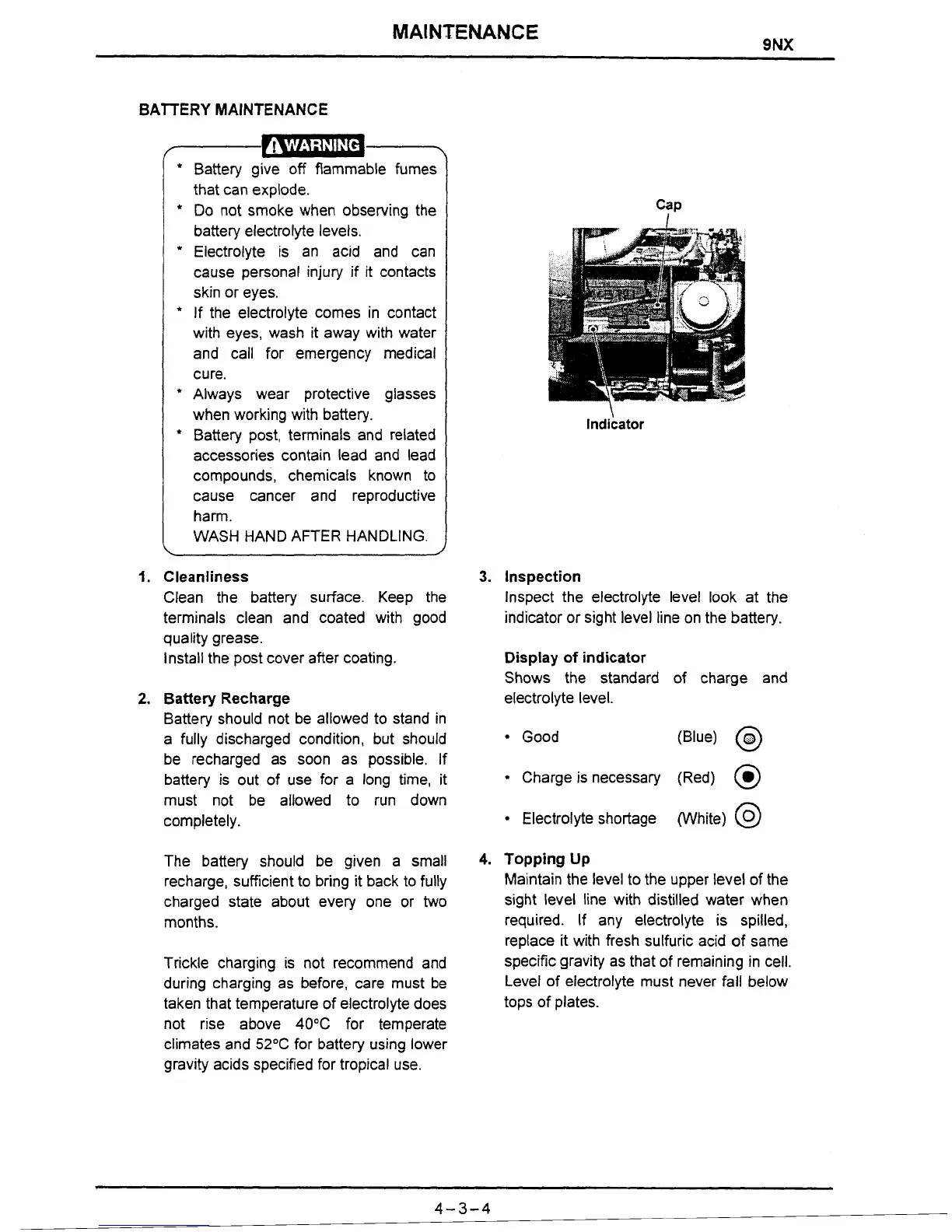
Indicator
3.
Inspection
Inspect the electrolyte level look at the
indicator or sight level line on the battery.
Display
of
indicator
Shows the standard of charge and
electrolyte level.
Good (Blue)
@
*
Charge is necessary (Red)
@
Electrolyte shortage (White)
@
4.
Topping Up
Maintain the level to the upper level of the
sight level line with distilled water when
required. If any electrolyte is spilled,
replace it with fresh sulfuric acid of same
specific gravity as that of remaining in cell.
Level of electrolyte must never fall below
tops of plates.



 To Next Page