50 Programming SATEL
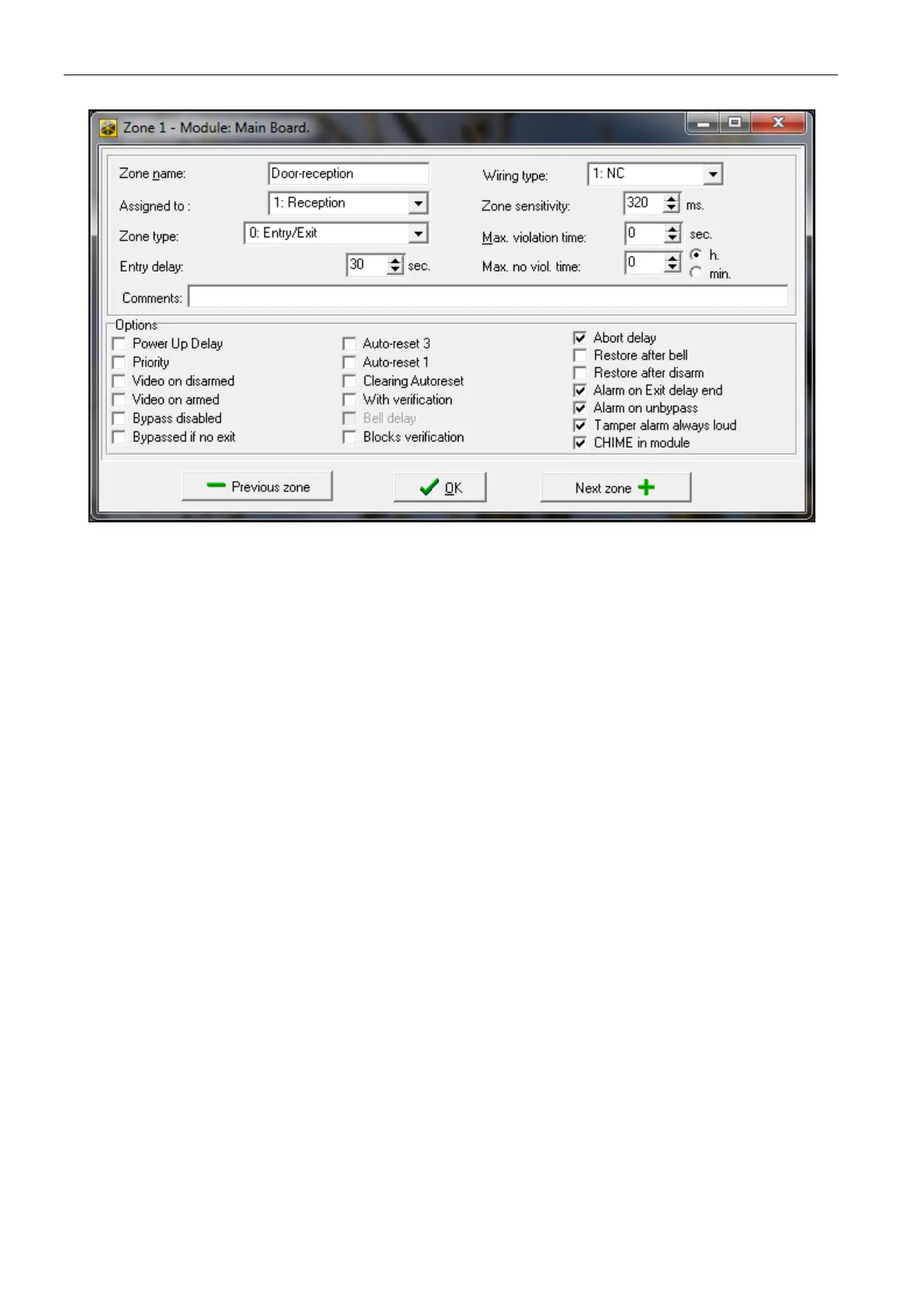
Fig. 5. Example of zone settings in the DLOADX program.
Surveillance time – refers to the 8. EXTERIOR type zones.
Bypass time – refers to the bypassing zones (zone types 64-79). It indicates for how long
the zones will be bypassed. If value 0 is programmed, the zones will remain bypassed until
disarming the partitions to which they belong, or until they are unbypassed by the user.
Module number (lock/keypad) – refers to the 58. TECHNICAL – DOOR BUTTON type zones. It
defines which door will be unlocked after zone violation (you can indicate a door controlled
by partition keypad, code lock, proximity card reader expander or DALLAS chip reader
expander).
Arming mode – refers to the 80. ARMING and 82. ARM/DISARM type zones. It defines which
type of armed mode will be activated by the zone:
0 – full armed mode,
1 – fully armed and, additionally, the zones for which the BYPASSED IF NO EXIT option is
enabled, will be bypassed,
2 - 3. INTERIOR DELAYED type zones will not be armed, 8. EXTERIOR will trigger silent alarm,
and the other ones – audible alarm,
3 – same as 2, but the delayed zones type will act as instant ones.
Group – refers to the 80. ARMING, 81. DISARMING and 83. CLEARING ALARM type zones. It
defines which group of partitions will be controlled by the zone (the zone always controls
the partition it belongs to). If value 0 is programmed, the zone will only control the partition
to which it belongs.
Exit delay – refers to the 89. FINISHING EXIT DELAY type zones.
Outputs group – refers to the 92. OUTPUTS GROUP OFF type zones.
Wiring type – must be selected to match the detector type and how it is connected to the
zone:
0. no detector – no detector is connected to the zone,
1. NC – the zone supports a detector of NC (normally closed) type,
2. NO – the zone supports a detector of NO (normally open) type,
3. EOL – the zone supports a detector of NO or NC type with EOL resistor in the circuit,



 To Next Page