5.20
SEL-551 Relay Instruction Manual Date Code 20110408
Serial Port Communications and Commands
Command Explanations
If you select N or n, the relay displays:
Canceled
and aborts the command.
If you select
Y, the relay displays:
Rebooting the relay
The relay then restarts (just like powering down, then powering up relay), and
all diagnostics are re-run before the relay is enabled.
Refer to Section 8: Testing and Troubleshooting for self-test thresholds and
corrective actions.
TAR Command (Target)
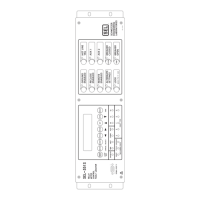
The TAR command remaps the front-panel targets to display Relay Word bit
information. It also sends this same information to the serial port. Refer to
Table 5.6 (note the correspondence with Table 4.5).
The TAR command format is: TAR M N
Parameter N does not affect the remapping of the front-panel targets. They are
remapped according to parameter M and will stay in that new state until a new
TAR command is executed or the port times out due to port inactivity (see
serial port setting TIMEOUT). Port timeout takes the targets back to their
normal front-panel target operation (like TAR 0).
To prevent the front-panel targets from being remapped by the execution of
the TAR command, add an X after the Relay Word row parameter. For
example, command TAR 2 X causes Relay Word row 2 to be sent to the serial
port/computer screen, but the front-panel targets remain unchanged-they
continue in their normal front-panel target operation mode (like TAR 0).
If the TAR command is executed from the front panel (see Figure 6.3), front-
panel timeout is 15 minutes of front-panel keyboard inactivity. Front-panel
timeout takes the targets back to their normal front-panel target operation, also
(like TAR 0).
where:
M = the Relay Word row (1–15) to be displayed,
or 0 (zero) to take the targets back to their normal front-
panel target operation,
or R to take the targets back to their normal front-panel
target operation (like TAR 0), reset the FAULT TYPE
targets (INST, A, B, C, and N), and unlatch the trip logic for
testing purposes (see Figure 3.13)
N = the number of times to repeat the displaying of the
selected Relay Word row on the computer screen
connected to the serial port. If parameter N is not entered,
the information displays once on the screen



 To Next Page