4.2
SEL-551 Relay Instruction Manual Date Code 20110408
Setting the Relay
Time-Overcurrent Element Setting Reference Information
When you execute the SET command, the relay presents a list of settings, one
at a time. Enter a new setting, or press <Enter> to accept the existing setting.
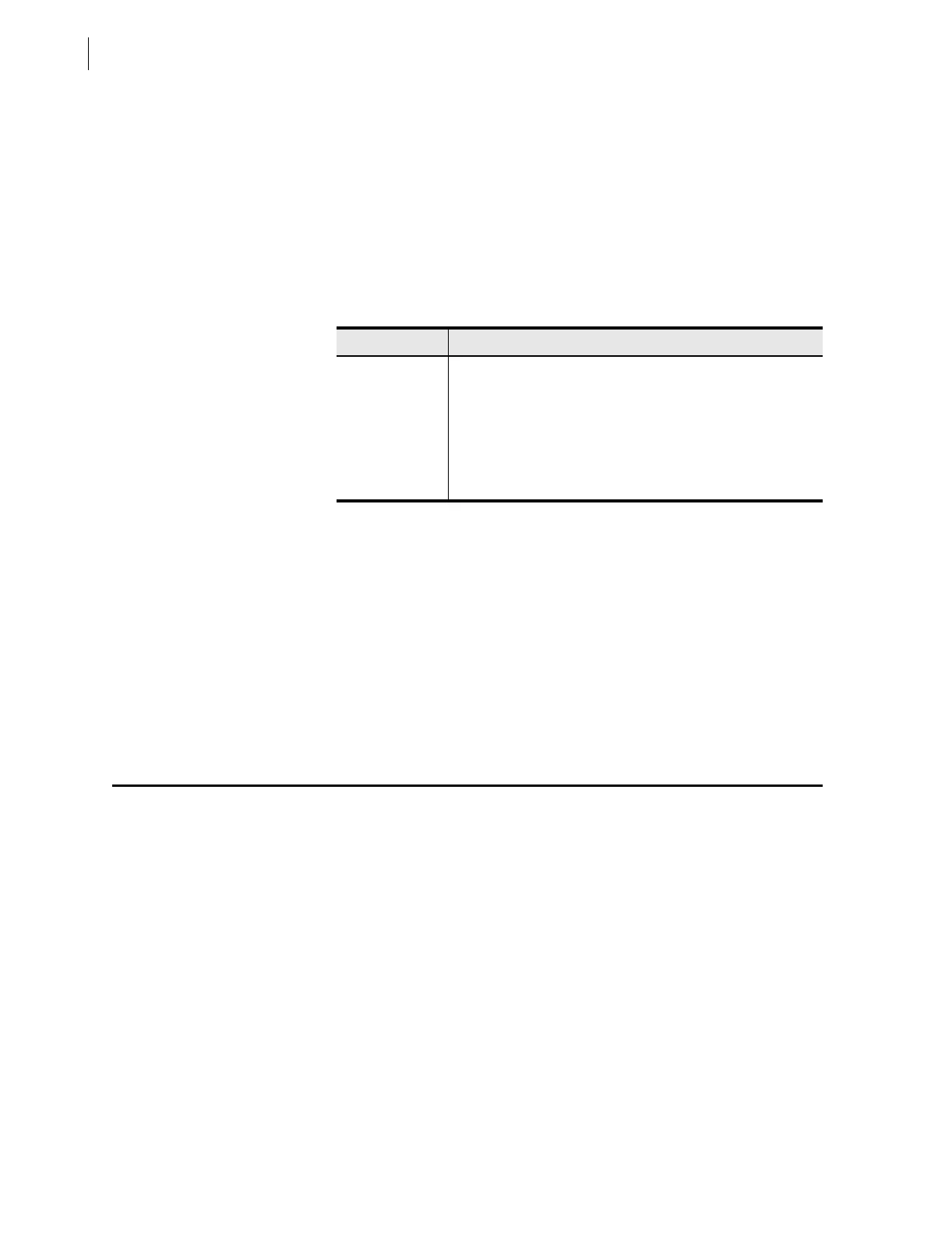
Editing keystrokes are shown in Table 4. 2.
The relay checks each entry to ensure that it is within the setting range. If it is
not, an
Out of Range message is generated, and the relay prompts for the
setting again.
When settings are complete, the relay displays the new settings and prompts
for approval to enable them. Answer Y <Enter> to enable the new settings.
For about one second, while the active settings are updated, the relay is
disabled and the ALARM output contact closes for the SEL-551 (assuming b-
type output contact; see Figure 3.23).
Time-Overcurrent Element Setting Reference
Information
The following information describes the curve timing for the curve and time
dial settings made for the time-overcurrent elements (see Figure 3.9–
Figure 3.12). The time-overcurrent relay curves in Figure 4.1–Figure 4.3
conform to IEEE C37.112-1996 IEEE Standard Inverse Time Characteristic
Equations for Overcurrent Relays.
where:
n = L, R, T, P, P 1, P F, or P 2 (parameter n is not entered for
the Relay settings)
s = the name of the specific setting you wish to jump to and
begin setting. If s is not entered, the relay starts at the first
setting.
Table 4.2 SET Command Editing Keystrokes
Press Key(s) Results
<Enter> Retains setting and moves to the next.
^ <Enter> Returns to previous setting.
< <Enter> Returns to previous setting.
> <Enter> Moves to next setting.
END <Enter> Exits editing session, then prompts you to save the settings.
<Ctrl+X> Aborts editing session without saving changes.
t
p
= operating time in seconds
t
r
= electromechanical induction-disk emulation reset time in
seconds (if electromechanical reset setting is made)
TD = time dial setting
M = applied multiples of pickup current [for operating time
(t
p
), M>1; for reset time (t
r
), M≤1]



 To Next Page