6.10
SEL-551 Relay Instruction Manual Date Code 20110408
Front-Panel Interface
Functions Unique to the Front-Panel Interface
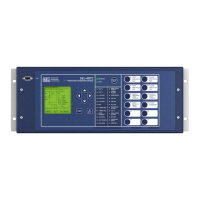
Because this is an OFF/MOMENTARY type switch, the MANUAL TRIP switch
returns to the
RETURN position after momentarily being in the TRIP position.
Technically, the
MANUAL TRIP switch (being an OFF/MOMENTARY type
switch) is in the:
TRIP position for one processing interval (1/8 cycle; long enough to assert
the corresponding local bit LB3 to logical 1).
and then returns to the:
RETURN position (local bit LB3 deasserts to logical 0 again).
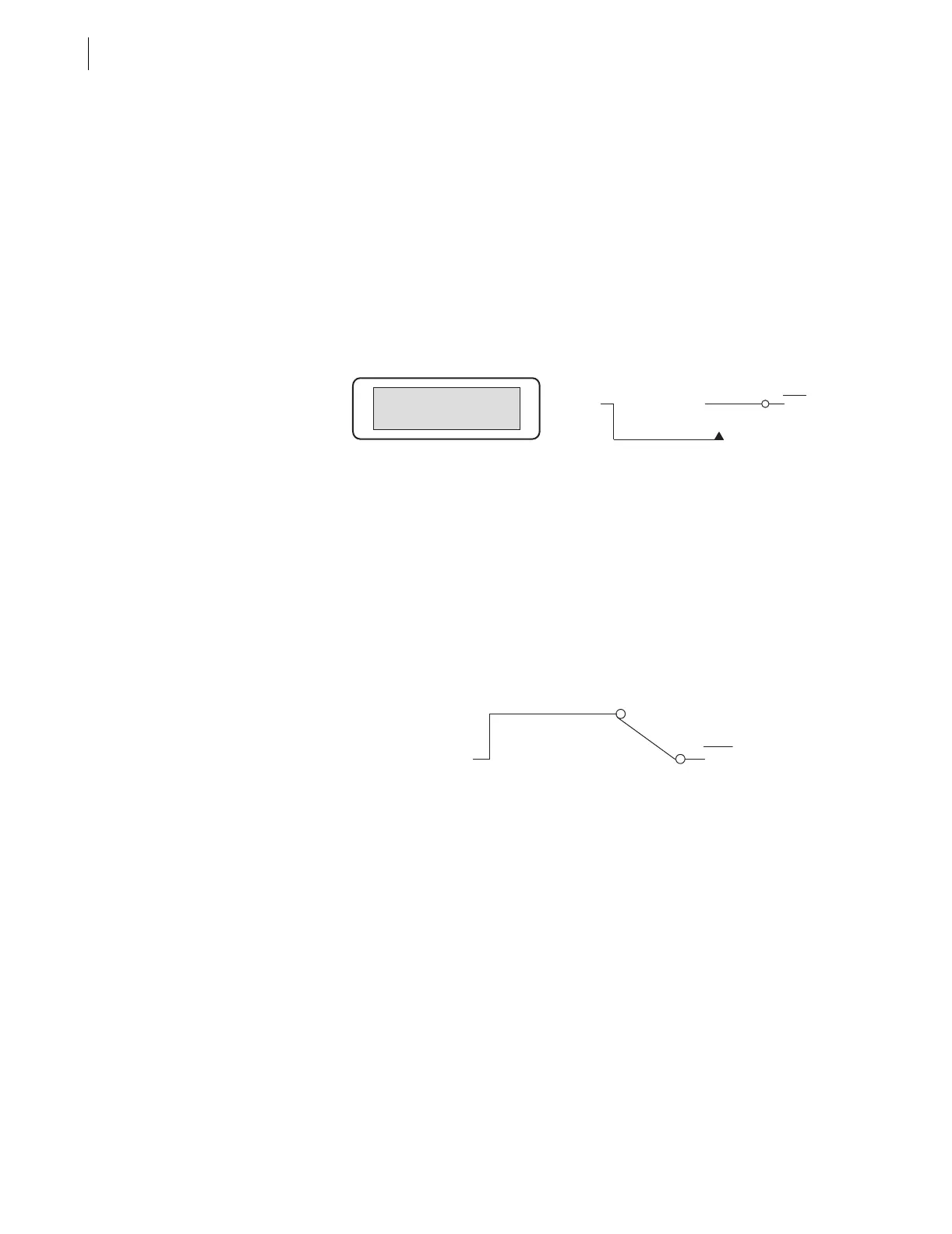
On the display, the
MANUAL TRIP switch is shown to be in the TRIP position for
two seconds (long enough to be seen by human eyes), and then it returns to the
RETURN position:
The
MANUAL CLOSE switch is an OFF/MOMENTARY type switch, like the
MANUAL TRIP switch, and operates similarly.
Local Control State Retained When Relay De-energized
Local bit states are stored in nonvolatile memory, so when power to the relay
is turned off, the local bit states are retained.
For example, with the factory default settings, local bit LB1 controls the
enabling/disabling of reclosing. If local bit LB1 is at logical 1, reclosing is
enabled:
If power to the relay is turned off and then turned on again, local bit LB1
remains at logical 1, and reclosing is still enabled. This is similar to a
traditional panel, where enabling/disabling of reclosing and other functions is
accomplished by panel-mounted switches. If dc control voltage to the panel is
lost and then restored again, the switch positions are still in place. If the
reclosing switch is in the enable position (switch closed) before the power
outage, it will be in the same position after the outage when power is restored.
MANUAL TRIP
←→
Position: RETURN
Logical 1
LB3
RETURN
(Logical 0)
TRIP
Relay
Word
Bit
MANUAL TRIP
Logical 1
LB1
ENABLE
RECLOSER
DISABLE
(Logical 0)
Relay
Word
Bit



 To Next Page