Automatic Divider-rounder model Syncro
61/79
Use and maintenance manual (translation of the original instructions) - MASA6_en_2 of 23/03/2021
electric.com/852575A6007E5FD3/all/15A86EB
010BB2446852576540069E2F8
Motor control gear
overheating. One
of the electric
motors the
machine is
equipped with
cannot complete
its work cycle,
because of
excessive driving
torque absorption.
Turn off the machine, open the rear electrical
box, set to “MANUAL” the resetting of all the
protection circuit breakers marked with "QT1", "QT2",
"QT3", "QT4", "QT5", "QT7", " QT8, then restart the
machine: when the problem reoccurs, check which of
the aforementioned circuit breakers has triggered
and then analyse the respective motor. Then
establish and solve the problem that impedes the
movement;
Also verify that the power supply voltage of
the machine is not less than that required in the
specifications (see Par. 3.3).
Missing power supply phase “S”;
Fuse “F1” interrupted - replace it.
Display waiting to
RESET cannot be
reset
Missing “NEUTRAL” connection to the power
supply network;
Contacts “R1 ”÷ 214 interrupted;
No input on wire 601;
Missing “R” phase in the power supply
network;
Fuse “F1 interrupted - replace it;
Ask the manufacturer for the “IO0500”
instruction to start they analysis for the solution to the
problem.
Hopper alarm
display cannot be
reset.
Missing “R” phase in the power supply
network;
Fuse “F1 interrupted - replace it;
Broken “SL1” safety light curtain - replace
them.
Functional
alarm in progress.
Press “I-
DRIVE”
Turn off the machine and wait a few minutes
before turning it on again. If the alarm appears again,
contact the HR manager.
Read the displayed alarm number (for
example "ALARM No. 13")
The following page lists the coded alarms and their meaning.
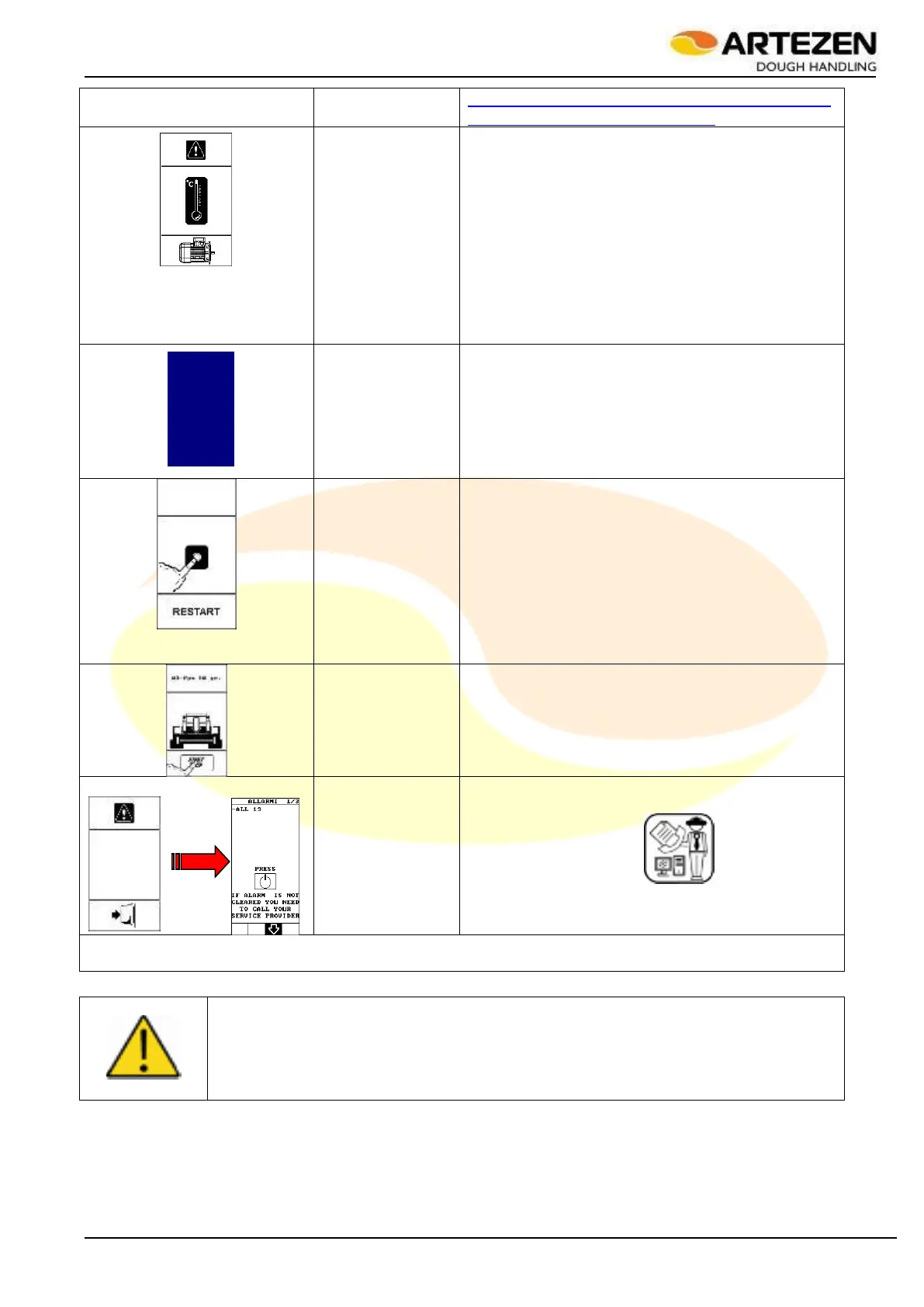
Table 10 - Graphic alarm list and possible solution
On the front door to access the inside of the machine, the list of coded alarms of
Table 11 is shown in concise format, as they are discussed in more detail in the following table.
ATTENTION!
The identification of a possible alarm, as well as the ability of a technician to solve the
problem, entails that the technician in question possesses the electrical and oil-hydraulic
diagram of the machine, as well as the specific professionalism of someone who is able to
interpret a functional, electrical or oil-hydraulic diagram: therefore, any person not qualified to
perform this type of check, and unable to do so, is excluded from this analysis.



 To Next Page