11
2 Device Description
2.1 Features
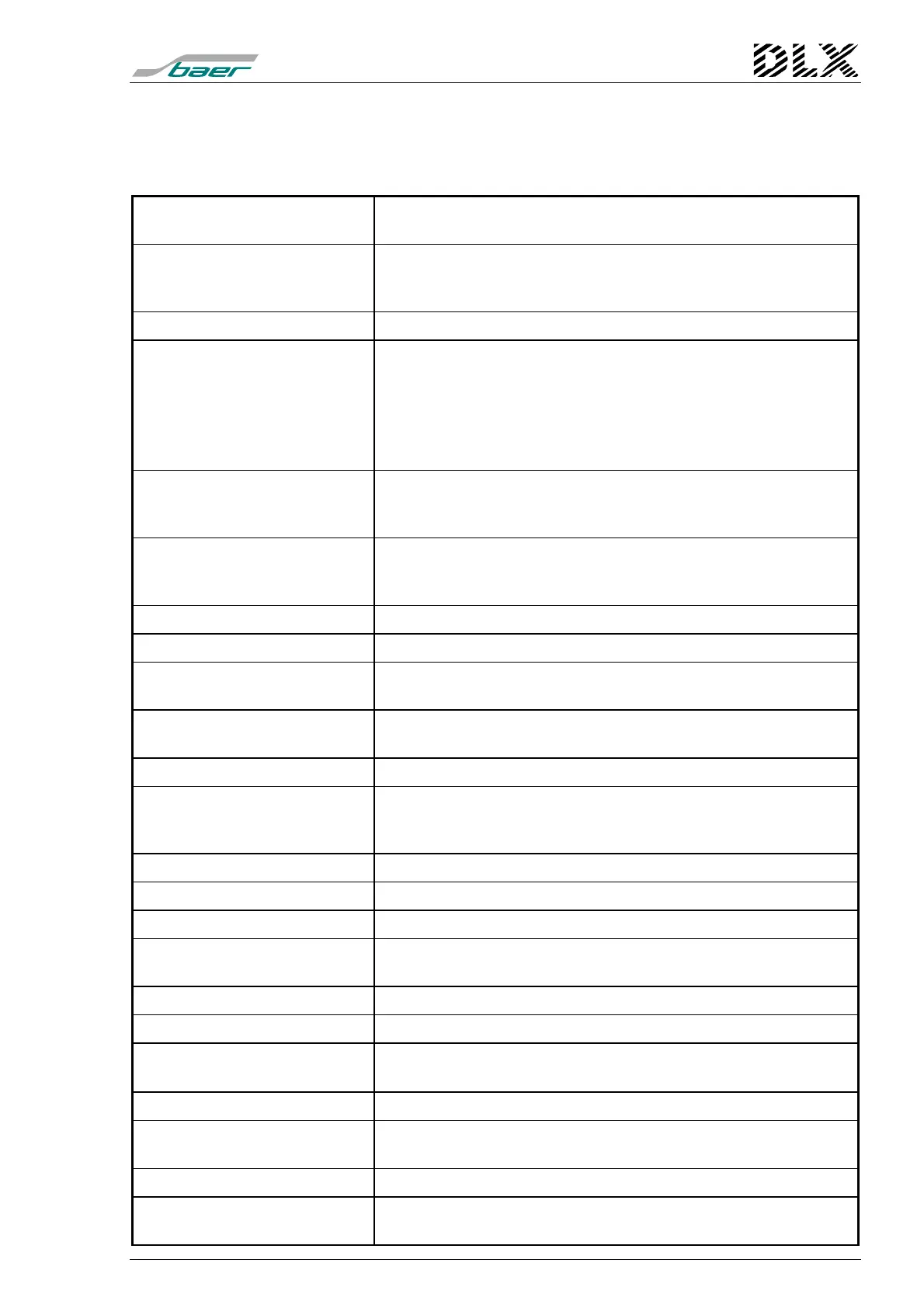
Display LCD (illuminated supertwist), 4 lines of 20 characters,
controlled by keypad or control input ANZ
Light emitting diodes
(Number / Usage)
16 inputs (pulse or analogue),
7 control inputs, 6 outputs (incl. 2 alarms),
1 PC-Card (memory card), 3 interfaces
Keypad 4 keys (Enter, Exit, Cursor-Up, Cursor-Down)
Interfaces
1) Service interface (programming/data retrieval): RS232
2) Data interface (optional): RS232, RS485, Fiber-optic,
20mA/CS or M-Bus
3) Internal modem (optional: PSTN, ISDN or LAN/Ethernet)
or another data interface (RS232, RS485, Fiber-optic,
20mA/CS or M-Bus)
Data memory Internal memory: 1MByte (Flash-Memory)
Backup memory: PC-Card (memory card) acc. to JEIDA-
Standard, max. 4MByte (SRAM or Flash)
Clock Real time clock, buffered by GoldCap,
max. deviation: 30 sec/month at 25°C (10ppm)
reserve: min. 7 days without auxiliary voltage
Synchronization Via SYN input or external via DCF77 receiver (optional)
Pulse inputs 6 (standard), optional up to16
Input types Pulse: S0 (IES), wipe (IEW) or bi-current / bi-polar (IED);
Analogue: signal current: 0..20mA or 4..20mA, ±1%
Control inputs 1 (standard: SYN),
optional up to 7 (SYN, TR1÷4, RSTX, ANZ, LOG1÷4)
Control input types S0 (standard), wipe
Outputs 2 mech. relays (change-over for Alarm1÷2/MPA1÷2/RSTA/
Tariff rates TRA1÷4/LOG1÷4), max.: 250V/2A
4 wipe (IAW/pulse), max.: 250V/100mA (optional)
Digits of energy registers 4, 6, 8 (programmable)
Digits of demand registers 4, 6, 8 (programmable)
Registration periods 2
Period lengths Tm1
Tm2
1, 2, 3, 4, 5, 6, 10, 12, 15, 20, 30, 60 minutes (programmable)
in addition 2, 3, 6, 12, 24 hours
Load profile types Register reading, register increment or demand
Totals 1 (standard), optional up to 4
Cos(ϕ) registers
(or apparent energy/demand)
1 (standard), optional 2
Internal tariff calendar Yes
Max. number of energy and
demand rates
4 / 4
Demand registration Yes, with storage of date and time
Number of stored previous
demand values
Min. 20


 To Next Page