64 DCM00044 REV. 14
6.3 Operating the Actuator
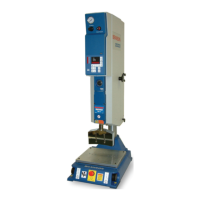
For detailed information about Ultraweld L20 Actuator controls, refer to 2.4 Controls
6.3.1 Check Welder Performance
Ensure that nothing is touching the tip on all four sides. With the tooling disengaged and
unloaded, press the “TEST” button on the power supply for no longer than one second. If
there is a loud squealing noise, the problem may be in the following areas:
1. The Tip may not be secured properly.
2. The Horn may not be secured properly.
3. Tooling may be in contact with each other.
6.3.2 Establishing Weld Parameters
With the tooling properly set up and with the ultrasonic stack tuned, welding may be
performed. Optimize the weld settings in the following manner:
1. Set weld energy and pressure for initial weld trials to minimum values: 50 joules and 15 PSIG for
air pressure as a starting point.
2. Place the parts to be welded securely into the fixture.
3. Cycle the welder by actuating the foot switch or the start switches.
4. Inspect the welded joint.
5. Increase/decrease the values for energy, and air pressure as necessary to reach an acceptable
level of welding.
6.3.3 Knurl Pattern Imprint Evaluation
The imprint that the tooling creates on the interface is a result in the aligning the welding
tip to the anvil. If the weld appears heavy to a certain side, readjustment of the tooling
will be required to get even weld results across the weld surface. Typically, using carbon
paper will give the best results. Figure 6.4
shows what typical imprints will look like and
the corrective action to be taken
NOTICE
For information on locating the “TEST” button on your particular
Power Supply model please refer to your Power Supply manual.
NOTICE
Weld parameters may already be established. Refer to Parameter
Preset Information located in the Special Information Section.



 To Next Page