C_scsi.doc 151 Tue Jul 2 14:56:06 1996
151
SCSI Connections
SCSI Bus Differences
SCSI Bus Differences
A Small Computer Systems Interface (SCSI) bus is an IEEE standard bus for
connecting your workstation to internal and external devices (SCSI devices)
running at different speeds, singly or in combination. Examples of these
SCSI devices are 4-mm DDS-format tape drives, CD-ROM drives, and Win-
chester hard disk drives.
There are two types of SCSI buses available with this workstation - a single-
ended SCSI bus (SE SCSI), and a fast, wide SCSI bus (FW SCSI). Table 20
shows the specification differences between these SCSI buses, and Table 21
shows the SCSI addresses, ID numbers, and arbitration priorities for each.
CAUTION: Do not mix single-ended and fast, wide devices on any one bus type. Doing this will
cause a system failure.
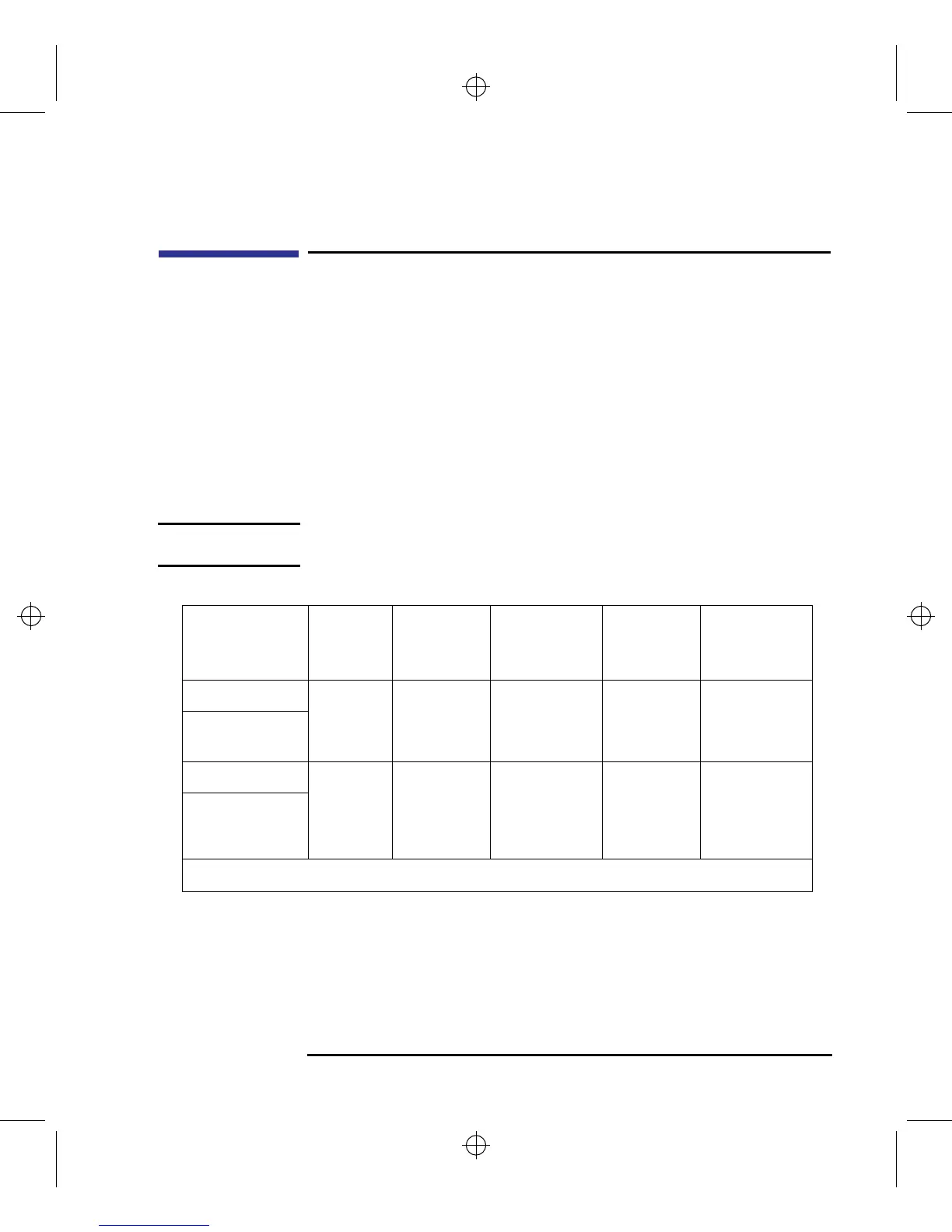
Table 20 SCSI Bus Differences
Transfer Rate
Data Bus
Width
Maximum
Addresses*
Maximum
Cable Length
Device
Physical
Location
Controller
Embedded
or Plugable
Single-Ended
8 bits 8 6.0 meters
(19.6 feet)
Internal and
external
Embedded
Up to 5 Mbytes
per second
Fast, Wide
16 bits 16 25 meters
(82 feet)
Internal
and
external
Embedded
Up to 20 Mbytes
per second
* Address 7 is reserved for host controller use on both buses.



 To Next Page