Need help?
Do you have a question about the Icom IC-M91D and is the answer not in the manual?
Outlines the step-by-step procedure for making a distress call on Channel 16.
Details the procedure for initiating a distress call using the DSC function on Channel 70.
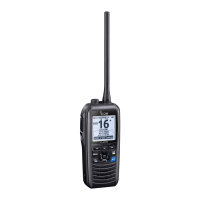
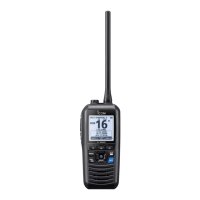
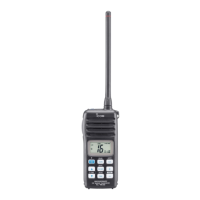
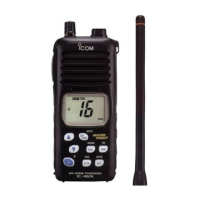
Identifies and describes the main external components and their locations on the transceiver.
Details the purpose and operation of key controls like PTT, Menu, Navigation, Volume/Squelch, and Power.
Explains the function of the Channel 16 key, Enter key, Clear/Lock key, and channel select keys.
Introduces the softkeys and their role in navigating menu options and functions.
Describes specific functions assignable to softkeys, such as Scan, Dualwatch, and Backlight.
Explains various icons and indicators on the LCD, including Busy, Power, and Channel Group.
Describes the softkey functions for navigation, compass, and accessing call logs.
Details icons like Duplex, Favorite Channel, Mail, GPS, Switch, Lock, and Channel Name Field.
Explains indicators for GPS position, scan status, and battery level on the LCD.
Provides a summary of how softkey functions are assigned and selected.
Guides users through the process of programming the Maritime Mobile Service Identity (MMSI) code.
Guides users on programming specific DSC addresses for individual calls.
Details the procedure for programming DSC addresses for group calls.
Explains how to remove programmed Individual or Group DSC IDs.
Guides users on manually entering ship position (latitude/longitude) and UTC time.
Outlines the basic steps for initiating a distress call.
Provides detailed steps for making a distress call, including selecting the nature of distress.
Explains how to transmit distress calls and manage repeat calls and acknowledgments.
Guides users on sending DSC signals to specific individual stations.
Details the process of sending DSC signals to a specific group of stations.
Explains how to broadcast DSC messages to all ships within range.
Provides steps to cancel a distress call transmission before or after acknowledgment.
Guides users on requesting position information from other vessels.
Explains how to send your own position information to a specific ship.
Details the procedure for performing test transmissions on DSC channels.
Covers sending acknowledgements (Able to Comply, Unable to Comply) for individual calls.
Describes how to acknowledge group calls.
Explains how to acknowledge received test calls.
Guides users on replying to received position requests.
Details how to reply to polling requests received from other vessels.
Explains how to reply to received position report requests.
Explains FCC limits and guidelines for human exposure to RF energy during radio use.
 General
| Brand | Icom |
|---|---|
| Model | IC-M91D |
| Category | Transceiver |
| Language | English |

 To Next Page