Chapter One: General Information How This Manual is Organized
18
Analog I/O is available via either a 9-pin D or 15-pin D. The 9-pin D option provides for setpoint I/O along
with a valve override function. The 15-pin D option provides for setpoint I/O, valve override and the ability
to control to an optional input. Analog I/O is covered in detail in Chapter 4 of this manual.
Reliability
To provide excellent reliability, the design utilizes a low mechanical and electronic components count and has
successfully passed the following tests:
STRIFE, including temperature cycling and vibration (sine and random tests)
EMC Directive 2004/108/EC for CE Mark compliance (with a metal braided, shielded cable, properly
grounded at both ends)
ODVA Compliance (DeviceNet version)
Cleanliness Features
The
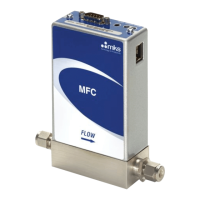
G-SERIES are available with either elastomer (GE50A & GV50A) or metal seals (GM50A). The
MFC’s mechanical design incorporates minimal wetted surface area and virtual leaks, assuring rapid dry-
down. All instruments are assembled and double-packaged in a Class 100 clean room environment.
The GM50A’s metal seals eliminate gas permeation and ensure extremely low external leakage under
pressure or vacuum conditions relative to atmosphere. The internal valve control plug of the GM50A is
Teflon which is chemically stable and not prone to out-gassing or particle generation. To further enhance its
cleanliness, internal surfaces are precision machined to a 10Ra surface finish that is electropolished.
How This Manual is Organized
Before installing the device in a system and/or operating it, carefully read and familiarize yourself with
all precautionary notes in the Mass Flow Device Safety Information section at the front of this manual.
In addition, observe and obey all
WARNING and CAUTION notes provided throughout the manual.
Chapter One: General Information introduces the product and describes the organization of the manual.
Chapter Two: Overview provides an overview on the use of Mass Flow Control
Chapter Three: Installation and Configuration provides outline drawings and information on the product
installation.
Chapter Four: Analog and Digital Interfaces
Chapter Five: Ethernet Interface Setup and Configuration
Chapter Six: Embedded Web-Based GUI and Diagnostics
Chapter Seven: Maintenance
Chapter Eight: Troubleshooting
Appendix A: Product Specifications lists the specifications of the instrument.
Appendix B: Model Code Explanation for GE50A & GV50A
Appendix C: Model Code Explanation for GM50A
Appendix D: Outline Drawings



 To Next Page