Installation Procedure Chapter Three: Installation and Configuration
27
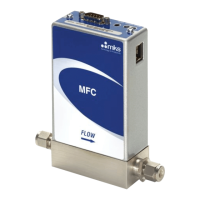
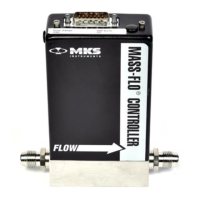
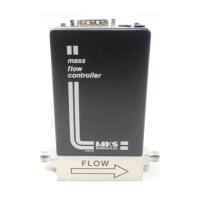
1. The MFC is prepared for cleanroom installation.
Follow standard cleanroom practices to ensure a clean installation:
- discard outer material outside of the cleanroom
- remove the outer packaging in the gray area
- carry the MFC into the clean area then remove the inner bag and any protective fitting covers just
prior to installation.
- Do not discard calibration sheet
Prepare the system according to your facility’s gas handling procedures, including purging of the gas lines
with appropriate purge gas, and notification to equipment personnel and haz/mat teams.
PERSONAL
SAFETY
HAZARDS!
Gas systems can contain toxic, explosive, combustible, corrosive or other gases
which can present life- threatening hazards. ALWAYS use appropriate personal
protection equipment. NEVER open a gas line unless the system has been
properly purged of harmful gases. Certain gas system components may contain
hazardous residuals if not properly prepared. Consult with your facility safety
engineers prior to working on any gas delivery system and notify all personnel in
adjacent areas to take appropriate personal safety precautions BEFORE working
on the equipment.
2. Prepare the connections fittings:
• Flow clean, dry purge gas across the fittings to minimize particle contamination prior to and during
installation. Use only purge gases that are approved for your process.
• Use appropriate size and material gaskets (VCR or w-seal) or c-seals for the application. These are
not included with the MFC.
• Install the MFC and secure according to the fitting manufacturer’s instructions. DO NOT overtighten
connections.
Note
Before installing a Devicenet or a Profibus MFC be sure to set the Baud Rate and MACID for
the device.
3. Perform appropriate helium leak checking of your gas lines and MFC connections to verify the
integrity of the gas seals prior to supplying power to the MFC.
Note
Before connecting the cable leading to the MFC, verify all pinouts for power and signals match
those for the I/O type being used. Information on each I/O type’s pinouts are found in the
following chapter.
4.
Connect cable and power up the MFC.
5.
Set the device gas type and Full Scale using the Ethernet User Interface if it is to be different that
that displayed on the product lable. The device IP address may also be changed at this time. If
changes are made be sure to record the IP address, Gas Type and Maximum Flow Rate (Full
Scale Flow Rate) on the calibration sheet.



 To Next Page