8-10 Operator’s Manual – OPTI CCA-TS
8.5.6 Quality Control
On initial use of each shipment of cassettes, and at 1 month intervals thereafter, validation of the
lot should be performed by analysis of OPTI Medical blood gas, electrolyte, metabolite, tHb and
SO
2
controls (OPTI CHECK or OPTI CHECK PLUS) or other equivalent material which has been
recommended by OPTI Medical Systems. This material should provide target values for all measured
parameters over a range of measurement values typically seen in each laboratory.
The results obtained should fall within limits dened by the day-to-day variability as measured in the
user’s laboratory.
It is recommended to aspirate Quality Control and Prociency testing material directly from the ampoule.
This procedure helps to minimize sensitivity to pre-analytic and other errors associated with the use of
aqueous controls (see Limitations Section).
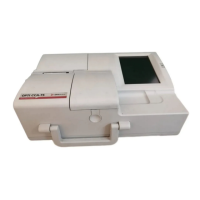
A minimum of two Standard Reference Cassettes (SRCs), of different levels, should be used as a control
for measurement and proper analyzer operation. OPTI Medical Systems recommends that the SRC
measurement be conrmed within acceptance ranges on both levels once each day of OPTI CCA-TS
operation. These special test cassettes contain a stable optical sensor simulator which is measured by
the device in exactly the same manner as any other cassette and provides assurance that measurement of
all analytes by the device is consistent. The results obtained should fall within limits supplied with the
SRCs. Level 1 and level 3 SRCs are supplied with the analyzer producing low and high values for all
measured parameters. An optional, normal range SRC (Level 2) is available from OPTI Medical Systems.
All specic performance specications reported in this summary are determined from the above, minimal
recommendations for quality control verication.
The OPTI CCA-TS’s equivalent QC method, Standard Reference Cassette (SRC), is a relatively new
concept in quality control testing. In traditional blood gas analyzers, liquid quality control (QC) material
is run several times a day to verify the system measurement, including reagents, used for patient testing.
On these systems, multiple patient samples are run using the same reagent system. The OPTI CCA-TS is
one of a new generation of systems where all reagents needed to run a single patient measurement are pre-
packaged in a single disposable cassette. Each cassette is an individual reagent and sensor system.
For SRC limit values, see analyte section of this manual.
The traditional method of running a liquid QC material several times each day does not check these
individual reagent and sensor systems. Therefore, manufacturers have developed equivalent QC methods
to ensure all elements of the system are monitored. OPTI Medical Systems has a two-step approach.
First the SRC, the OPTI CCA-TS’s electronic/optical simulator, checks the electronics, optics,
thermostats, etc. of the system. Second, when a sample cassette is inserted, it performs an extensive
quality check prior to patient sampling to ensure, among other things, that the reagent system contained
within the cassette is within pre-dened limits. If it is not, an error message occurs and the cassette is
discarded. In addition, automatic checks are performed of packaging integrity, temperature control,
proper uidic control, bubble detection, etc. This approach provides a quality control check of the system
similar to traditional liquid QC without incurring additional costs to the laboratory.
Every hospital is required to develop its own policies and procedures for quality control checks.
Minimum guidelines are dened by a variety of regulatory agencies. Many agencies have updated their
regulations to incorporate equivalent QC methods such as the SRC. Some, however, have not.


 To Next Page