IV–76
L15 Defective Pairing of Indoor Units
Error detection method
1) In the case of double-duct models
Detects defective combinations (type, capacity, group and unit count settings) in double-duct units.
Troubleshooting
1) In the case of double-duct models
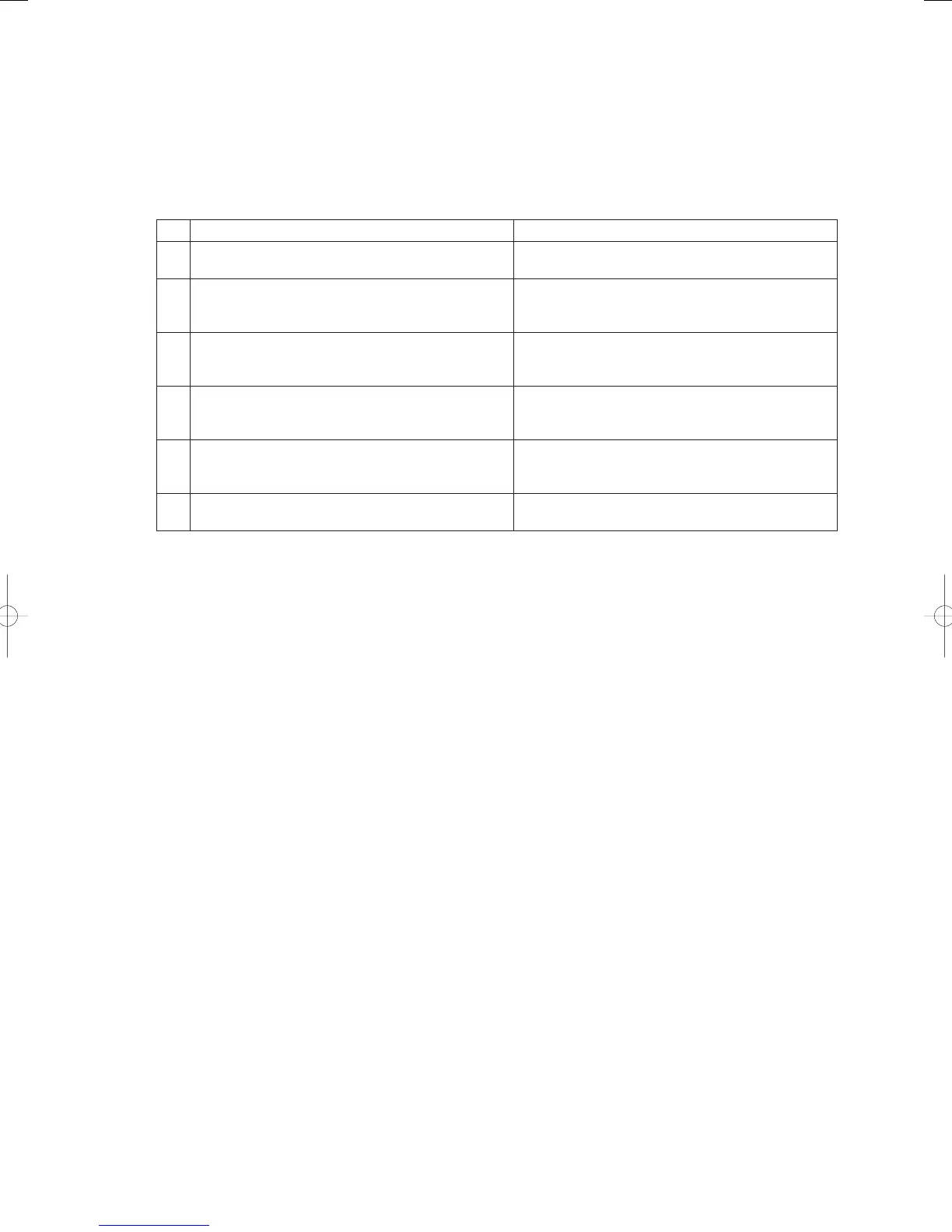
No. Problem Recovery
1
Another indoor unit is connected to the system to
which a double-duct unit is connected.
Connect only one indoor unit to the system
*1
.
2
Another indoor unit is group-connected to the remote
controller group in the double-duct unit.
Disconnect the other indoor unit from the group and
reset the group settings (item code 14 in the remote
controller’s advanced settings)
*2
.
3
A defective setting exists in the remote control group
settings between the two built-in indoor units’ control
boards.
Set one of the two boards to “1” (main) and the other
to “2” (sub) in the group settings (item code 14 in the
remote controller’s advanced settings).
3
The type or capacity settings differ between the two
built-in indoor units’ control boards.
Set the type and capacity parameters to the same
setting for both indoor unit’s control boards with the
remote controller’s advanced settings.
4
The remote control group wiring is severed or short-
circuited between the two built-in indoor units’ control
boards.
Repair the wiring.
5
One of the two built-in indoor units’ control boards is
malfunctioning.
If there is no problem with the power supply, etc.,
replace the board.
*1 It is necessary for only one indoor unit to be connected to the outdoor unit to which a double-duct model is
connected.
*2 A group has been established between the two indoor boards in the indoor unit, so groups cannot be set for
other indoor units.
GHPtroubleshooting.indbIV‒76GHPtroubleshooting.indbIV‒76 2012/11/2611:20:122012/11/2611:20:12



 To Next Page