EasyManua.ls Logo

PI C-863 - User Manual

PI C-863
111 pages
Print Icon
To Next Page IconTo Next Page
Loading...
Physik Instrumente (PI) GmbH & Co. KG · Auf der Römerstr. 1 76228 Karlsruhe, Germany
Telephon +49 721 4846-0 · Telefax +49 721 4846-1019 · E-Mail info@pi.ws
MS205Equ
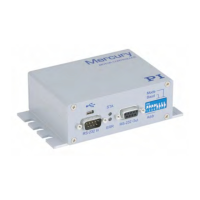
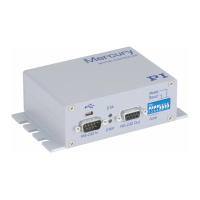
C-863 Mercury Controller
Short Version of the User Manual
Version: 2.0.0
Date: 22.03.2013
This document describes the following
product:
C-863.11
Mercury DC Motor Controller, 1 Channel,
with Wide-Range Power Supply
The detailed version of this user manual is
included as a PDF file on the product CD
and can be downloaded from our website.

Table of Contents

Questions and Answers

  • C
    Crystal StewartAug 4, 2025
    Why is communication with my PI Controller failing?
    • J
      jeremy61Aug 5, 2025
      Communication with the PI Controller might fail due to several reasons: * The wrong or defective communication cable is used. Use a null-modem cable for the RS-232 connection. Check the cable on a working system. * The USB driver is not installed. Log in with administrator rights, insert the product CD, and follow the instructions. If the controller is still not detected, reconnect the USB cable. * The baud rate is not configured correctly. Check DIP switches 5 and 6 for the baud rate. Ensure every controller in a daisy chain network has the same baud rate. * The controller address is not configured correctly. Check DIP switches 1 to 4 for the controller address. * Another program is accessing the interface. Close the other program.
  • K
    Kimberly MartinezAug 14, 2025
    What to do if my PI Controller stage executes unintentional motion?
    • R
      Raven PittmanAug 14, 2025
      If the PI Controller stage executes unintentional motion, consider these potential causes: * The joystick may not be calibrated. Calibrate the joystick. * A start-up macro might be executed. Check if a macro is specified as a start-up macro and cancel its selection if necessary. * The stage brake might be deactivated with the BRA command while servo mode is switched off. Secure the stage against unintentional motions before deactivating the brake by command!
  • J
    jessica02Aug 29, 2025
    What to do if LEDs on PI C-863 Controller don't light up?
    • D
      Deanna LeAug 29, 2025
      If the LEDs on the PI C-863 Controller do not light up even when switched on, it might be because the firmware update mode is set. To resolve this: 1. Switch off the C-863 by disconnecting the power cord. 2. Set DIP switch 8 on the C-863 to the normal operation (OFF) position. 3. Switch on the C-863 by connecting the power cord back to the power socket.
  • J
    James MilesSep 10, 2025
    Why is my PI Controller stage oscillating or positioned inaccurately?
    • A
      Alyssa RobertsSep 12, 2025
      If the PI Controller stage is oscillating or positioned inaccurately, it may be because the load was changed. Readjust the system according to the changed load.
  • J
    Jamie CookNov 9, 2025
    How to fix a PI C-863 Controller stage that does not move?
    • K
      Kaitlyn FergusonNov 9, 2025
      If the PI Controller stage does not move, consider the following potential causes and solutions: * The cable might not be connected correctly. Check the cable connections. * The stage or stage cable could be defective. If possible, replace the stage to test. * The stage might not be connected to a power supply. If the stage has an integrated PWM amplifier, connect it to a suitable and functioning power supply. * The limit switch signal logic might be set incorrectly. Set DIP switch 7 appropriately, and adjust the Limit Mode parameter (ID 0x18). * The limit switch signals might not be compatible with the C-863. * The configuration might be incorrect. Check the parameter settings of the C-863 with the SPA? (volatile memory) and SEP? (non-volatile memory) commands. * The comma...
  • D
    Dr. Donna MercerNov 24, 2025
    How to stop PI C-863 Controller stage oscillating during reference move?
    • K
      Kari MorrisNov 24, 2025
      If the PI Controller stage is oscillating during the reference move, it could be due to a very high load on the stage. Follow these steps: 1. Do not start the reference move in the Start up axes step, but click on Close to close the Start up controller window instead. 2. In the main window, open the single axis window for the stage connected by selecting the stage in the View > Single Axis Window menu. 3. Expand the view of the single axis window by clicking on the > button at the right edge of the window. 4. With the Servo check box, make sure that the servo mode is switched on. 5. Start the reference move by clicking on one of the Reference… buttons. 6. If the stage is oscillating: Immediately stop the reference move in the Reference Axes dialog, close the dialog and switch off th...

Summary

About this Document

Goal and Target Audience of this User Manual

Outlines the manual's purpose and intended readers, covering product description and usage.

Symbols and Typographic Conventions

Explains symbols and formatting conventions used throughout the manual for clarity and consistency.

Definition

Provides definitions for key technical terms and concepts used in the user manual.

Other Applicable Documents

Lists and describes related documents and software manuals relevant to the product.

Downloading Manuals

Guides users on how to access and download the latest versions of manuals from the manufacturer's website.

Safety

Intended Use

Specifies the intended applications and limitations of the C-863 controller for proper operation.

General Safety Instructions

Provides essential safety guidelines and precautions for operating the C-863 controller.

Organizational Measures

Outlines organizational procedures for safe manual handling, usage, and information sharing.

Safety Measures during Installation

Details critical safety precautions to be taken during the installation and setup process of the controller.

Safety Measures during Start-Up

Specifies safety measures to follow when powering on and initializing the C-863 for the first time.

Safety Measures during Operation

Outlines crucial safety precautions required for the safe and proper operation of the C-863.

Safety Measures during Maintenance

Details safety measures necessary for performing maintenance procedures on the C-863 controller.

Product Description

Features and Applications

Details the key features and common applications of the C-863 Mercury DC motor controller.

Model Overview

Briefly describes the C-863 within the Mercury controller series and its relation to other models.

Product View

Provides an overview of the controller's physical appearance and layout.

Front Panel

Identifies and explains the components and connectors located on the front panel of the controller.

Rear Panel

Identifies and explains the components and connectors located on the rear panel of the controller.

Scope of Delivery

Lists all items included in the product package, ensuring the user has everything needed.

Accessories

Lists optional accessories available for purchase to enhance the functionality of the C-863.

Functional Principles

Explains the underlying operational principles and how the C-863 controller functions.

Communication Interfaces

Describes the available communication interfaces (USB, RS-232) for connecting the C-863 to a PC.

Overview of PC Software

Lists and describes the PC software utilities provided with the controller for setup and operation.

Stage Databases

Explains the use of stage databases for parameter configuration and stage type selection.

Unpacking

Quick Start

Installation

Installing the PC Software

Guides the user through the initial installation process for the PC software required for the controller.

Performing the Initial Installation

Details the step-by-step procedure for performing the initial installation of the controller software.

Mounting the C-863

Explains how to properly mount the C-863 controller onto a surface or in a cabinet.

Grounding the C-863

Describes the procedure for grounding the C-863 controller to ensure electrical safety.

Connecting the Power Supply to the C-863

Provides instructions on how to safely connect the external power supply to the C-863 controller.

Connecting the Stage

Details the correct procedure for connecting the motor stage to the C-863 controller.

Connecting the PC

Explains how to establish a physical connection between the PC and the C-863 controller.

Connecting to the RS-232 Interface

Guides the user through the process of connecting the controller to the PC via the RS-232 serial interface.

Connecting to the USB Interface

Guides the user through the process of connecting the controller to the PC via the USB interface.

Setting Up a Daisy Chain Network

Explains how to configure multiple controllers to work together in a daisy chain network.

Connecting an analog joystick - see detailed manual

Refers to the detailed manual for instructions on connecting an analog joystick for manual control.

Connecting digital in- and outputs - see detailed manual

Refers to the detailed manual for information on connecting digital inputs and outputs.

Connecting signal sources - see detailed manual

Refers to the detailed manual for instructions on connecting various signal sources.

Start-Up

General Notes on Start-Up

Provides essential guidelines and important notices for the initial start-up process of the controller.

Adapting the DIP Switch Settings

Explains how to configure the controller's behavior using the onboard DIP switches.

General Procedure

Outlines the general procedure for setting the DIP switches for application-specific configuration.

Controller Address

Details how to set a unique address for each controller, crucial for networked operation.

Baud Rate

Explains how to set the communication baud rate, ensuring compatibility between devices.

Logic Level of the Limit Switches

Describes how to set the logic level for the stage's limit switches to match the controller.

Update Mode

Explains how to set the controller into update mode for firmware installation.

Switching on the C-863

Provides instructions on how to properly power on the C-863 controller.

Establishing Communication

Details the process for establishing communication between the controller and the PC.

Establishing Communication via RS-232

Guides on establishing communication with the controller using the RS-232 serial interface.

Establishing Communication via USB

Guides on establishing communication with the controller using the USB interface.

Establishing Communication for a Networked Controller

Explains how to set up communication for controllers operating in a networked configuration.

Starting Motions

Guides the user on how to initiate and control movement of the connected stage.

Recording the Step Response

Explains how to record the system's step response for performance analysis and tuning.

Optimizing the Servo-Control Parameters

Details how to adjust servo-control parameters to optimize system performance and stability.

Operation

Motion errors - see detailed user manual

Refers to the detailed manual for comprehensive information on diagnosing and resolving motion errors.

Data Recorder - see detailed user manual

Refers to the detailed manual for information on using the data recorder feature for analysis.

Digital output signals - see detailed user manual

Refers to the detailed manual for information regarding digital output signals.

Digital input signals - see detailed user manual

Refers to the detailed manual for information regarding digital input signals.

Analog Input Signals - see detailed user manual

Refers to the detailed manual for information concerning analog input signal processing.

Joystick control - see detailed user manual

Refers to the detailed manual for instructions on operating the system using a joystick.

Controller Macros - see detailed user manual

Refers to the detailed manual for information on creating and using controller macros for automation.

GCS Commands

GCS Syntax for Syntax Version 2.0 - see detailed user manual

Refers to the detailed manual for information on the syntax of GCS commands version 2.0.

Target and sender address - see detailed user manual

Refers to the detailed manual for understanding target and sender addresses in commands.

Variables - see detailed user manual

Refers to the detailed manual for information on using variables within GCS commands.

Command Overview

Lists and provides brief descriptions of the available GCS commands for controller operation.

Adapting Settings

Changing Parameters in the C-863

Explains how to modify controller parameters to adapt the system to specific application requirements.

Creating or Modifying a Stage Type

Guides on creating new stage types or modifying existing ones in the stage database.

Parameter Overview - see detailed user manual

Refers to the detailed manual for a comprehensive overview and description of all controller parameters.

Maintenance

Cleaning the C-863

Provides instructions and safety precautions for cleaning the C-863 controller to prevent damage.

Updating Firmware - see detailed user manual

Refers to the detailed manual for procedures on updating the controller's firmware.

Troubleshooting

The stage does not move

Addresses common causes and solutions when the connected stage fails to move.

Limit switch signal logic set incorrectly

Guides on correcting limit switch signal logic settings for proper stage movement.

Limit switch signals not compatible with the C-863

Provides advice for situations where limit switch signals are incompatible with the controller.

Incorrect configuration

Helps diagnose and resolve issues arising from incorrect controller parameter settings.

Incorrect command or incorrect syntax

Addresses problems related to incorrect command syntax or unrecognized commands.

Incorrect axis commanded

Troubleshoots issues related to using the wrong axis identifier in commands.

Joystick control is enabled

Explains how to manage motion commands when joystick control is enabled.

Stage executes unintentional motion

Addresses causes and solutions for unexpected or unintentional movements of the stage.

Stage is oscillating or positioned inaccurately

Helps resolve issues where the stage oscillates or is positioned inaccurately.

Stage is oscillating already during the reference move

Provides solutions for oscillations occurring during the reference move process.

Customer Service

Technical Data

Specifications

Details the technical specifications and operational parameters of the C-863 controller.

Data Table

Presents a comprehensive table of key technical data and characteristics for the C-863.11.

Maximum Ratings

Lists the maximum operational ratings, including voltage, frequency, and current consumption.

Ambient Conditions and Classifications

Specifies the environmental conditions and classifications for the safe operation of the C-863.

System Requirements

Lists the necessary PC hardware and software requirements for operating the C-863 controller.

Dimensions

Provides the physical dimensions of the C-863 controller in millimeters.

Pin Assignment

Details the pinouts and functions for all connectors on the C-863 controller.

DC Motor only

Shows the pin assignment for the 15-pin Sub-D socket specific to DC motor connections.

I;O

Details the pin assignment for the 9-pin Mini-DIN socket used for digital and analog I/O.

C-170.IO Cable for Connecting to the I;O Socket

Describes the specifications and use of the C-170.IO cable for I/O connections.

Joystick

Details the pin assignment for the 6-pin Mini-DIN socket used for joystick connections.

C-819.20 Y Cable for C-819.20 Joystick

Describes the Y-cable used to connect two controllers to a single joystick.

RS-232 In and RS-232 Out

Details the pin assignment for the RS-232 input and output connectors.

Power Supply Connection 15-30 VDC

Shows the pin assignment for the DC barrel connector used for power supply input.

Old Equipment Disposal

EC Declaration of Conformity

PI C-863 Specifications

General IconGeneral
Operating voltage24 VDC
Command setPI General Command Set (GCS)
Storage Temperature-20 to 70 °C
InterfacesRS-232, USB
HumidityMax. 80% non-condensing

Related product manuals