NORME PER L’UTILIZZO E LA MANUTENZIONE
DI BATTERIE TIPO FORCEblock
IT
Dati batteria
1. Tensione nominale (V):
vedi etichetta
2. Capacità nominale C
5
:
vedi etichetta
3. Corrente nominale di scarica: C
5
/5
7HQVLRQHGL¿QHVFDULFD 9SF
5. Temperatura nominale: 30°C
Riferimenti normativi:
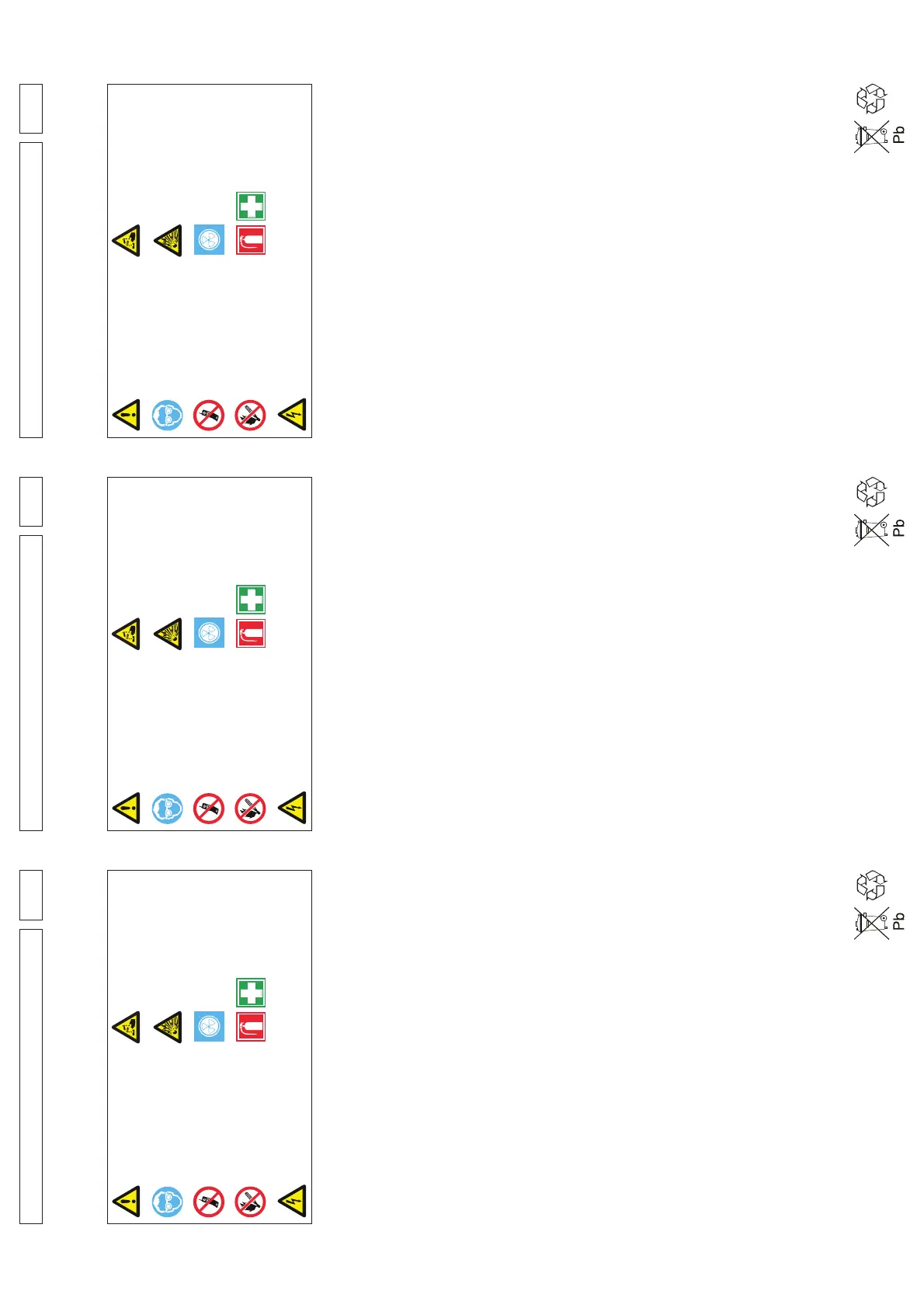
(15(48,6,7,',6,&85(==$3(5%$77(5,(',$&&808/$725,(/252,167$//$=,21,
/( %$77(5,( ( */, (/(0(17,
SO
NO PESANTI. RISPETTARE LE
RACCOMANDAZIONI DI SICUREZZA
ED UTILIZZARE ATTREZZATURE
$'(*8$7(
Utilizzare occhiali e abiti protettivi
q
uando si opera sulle batterie
1RQIXPDUH1RQXVDUH¿DPPHOLEHUH
evitare cortocircuiti e qualunque
sorgente di scintille nelle vicinanze
della batteria e nella zona di ricarica
L’elettrolita è un liquido altamente
corrosivo (acido solforico) in grado
di provocare serie ustioni. In caso di
contatto accidentale con gli occhi o
FRQ OD SHOOH ODYDUH FRQ DEERQGDQWH
acqua corrente e consultare un medico
Le batterie in carica emettono una
miscela esplosiva di idrogeno e ossigeno.
5LVFKLRGLHVSORVLRQLHGHÀDJUD]LRQL
Le batterie devono essere ricaricate
esclusivamente in aree ventilate. Prima
di iniziare le operazioni di ricarica aprire
il coperchio del vano batteria
Il kit di primo soccorso e
l’estintore devono essere
posizionati in un luogo
facilmente accessibile
ATTENZIONE! Tutte le parti metalliche della batteria sono sempre attive. Prima di ogni
operazione sulla batteria rimuovere tutti gli oggetti metallici e assicurarsi che nessun
oggetto possa cadere sulla batteria. Utilizzare sempre strumenti isolati. Non posizionare
oggetti sulle batterie.
1. Installazione di batterie cariche
9HUL¿FDUH LO FRUUHWWR FROOHJDPHQWRSRODULWj GHLFDYL
terminali ed il serraggio delle viti: 10±1 Nm.
Procedere alla carica della batteria (vedi punto 3).
2. Utilizzo
Accertarsi che durante l’utilizzo le aperture d’areazio
ne non siano ostruite. Non aprire o chiudere contatti
durante le fasi di carica o scarica. Evitare scariche pro
IRQGHROWUHO¶GHOODFDSDFLWjQRPLQDOH/HVFDULFKH
profonde pregiudicano il buon funzionamento e la du
rata della batteria. Dopo la fase di scarica la batteria
deve essere quanto prima ricaricata.
3. Carica
$O WHUPLQH GHO WXUQR ODYRUDWLYR FDULFDUH OD EDWWHULD
come segue:
HIIHWWXDUHODFDULFDLQOXRJKLHVFOXVLYDPHQWHDFLz
GHVWLQDWLHEHQDUHDWLLQFRQIRUPLWjDOODQRUPD
(1
DSULUHLOFRSHUFKLRGHOYDQREDWWHULD
,WDSSLGH,VLQJROLHOHPHQWLGHYRQRULPDQHUHFKLXVL
HVHJXLUHODFDULFDHVFOXVLYDPHQWHFRQLOFDULFD
EDWWHULDSUHYHQWLYDPHQWHGH¿QLWR
FROOHJDUHODEDWWHULDDOFDULFDEDWWHULDULVSHWWDQGROH
polarità ed iniziare la carica.
3.1. Carica di equalizzazione
/DFDULFDGLHTXDOL]]D]LRQHFKHGHYHHVVHUHHVHJXLWD
almeno due volte al mese al termine della normale
IDVHGLFDULFDFRQWULEXLVFHDPDQWHQHUHHI¿FLHQWHOD
batteria ed è particolarmente indicata dopo utilizzi con
scariche profonde o ricariche incomplete.
4. Elettrolito (batterie tipo aperto - VLA)
/DGHQVLWj QRPLQDOHGHOO¶HOHWWUROLWR ULIHULWD D & q
NJ/
N.B.: Temperature superiori a 30°C riducono la densi
tà dell’elettrolito e temperature inferiori la aumentano.
,OIDWWRUHGLFRUUH]LRQHqGLNJ/SHUJUDGR&
(VDGXQDGHQVLWjGLNJ/ULOHYDWDDOODWHPSHUDWX
UHGL&FRUULVSRQGHXQDGHQVLWjGLNJ/D&
5. Temperature
/DWHPSHUDWXUDQRPLQDOHqGL&HVDOYRVSHFL¿FD
YDOXWD]LRQHSUHYHQWLYD GHYHULPDQHUHFRPSUHVDWUD
+5°C e +45°C durante l’esercizio.
N.B.: Temperature elevate accorciano la durata
della batteria e temperature basse ne diminuisco
-
QRO¶HI¿FLHQ]D
6. Manutenzione
6.1. Giornaliera
'RSRXQDIDVHGLVFDULFDULFDULFDUHODEDWWHULD
Batterie tipo aperto - VLA: esclusivamente dopo
XQDIDVHGLULFDULFDYHUL¿FDUHLOOLYHOORGHOO¶HOHWWUROLWR
e solo se necessario rabboccare con acqua demi
neralizzata.
6.2. Settimanale
Procedere ad un ispezione visiva della batteria ed
eseguire una carica di equalizzazione.
6.3. Trimestrale
Controllare la coppia di serraggio sulle viti dei termi
nali in riferimento al paragrafo 1.
Batterie tipo aperto - VLA:
DOOD¿QHGLXQDIDVHGLFDULFDGLHTXDOL]]D]LRQHYH
UL¿FDUHHGDQQRWDUHODWHQVLRQHHODGHQVLWjGLRJQL
VLQJROR HOHPHQWR GHOOD EDWWHULD 9HUL¿FDUHLO OLYHOOR
GHOO¶HOHWWUROLWRGLWXWWLJOLHOHPHQWL
Batterie tipo VRLA:
DOOD¿QHGLXQDIDVHGLFDULFDGLHTXDOL]]D]LRQH
YHUL¿FDUHHGDQQRWDUHODWHQVLRQHGLRJQLVLQJROR
elemento della batteria.
In caso di considerevoli variazioni rispetto alla ve
UL¿FDSUHFHGHQWH FRQWDWWDUHLOVHUYL]LRDVVLVWHQ]D
Eseguire un’accurata pulizia della batteria (vedi
SXQWR
9HUL¿FDUHO¶LQWHJULWjGHOO¶LVRODPHQWR
7. Pulizia
La pulizia della batteria è particolarmente impor
tante per il suo buon funzionamento ed è pertanto
necessario asciugare e pulire con cura i coperchi e
tutte le parti esterne.
8. Batterie a magazzino
Le batterie non utilizzate devono essere mantenute
LQDPELHQWHFRSHUWRDVFLXWWRQRQSROYHURVRHGDOUL
paro del gelo. Eseguire dei controlli e delle ricariche
SHULRGLFDPHQWHFRQIUHTXHQ]DDOPHQRPHQVLOH6L
raccomanda di non lasciare mai per più di 2 giorni
OHEDWWHULHVFDULFKH FRQ WHQVLRQHLQIHULRUH D
9SFHGLHVHJXLUHFDULFKHFRPSOHWHSULPDGLOXQJKL
periodi di inattività.
9. Malfunzionamenti e difetti
4XDORUD IRVVHUR ULVFRQWUDWL PDOIXQ]LRQDPHQWL R
GLIHWWL QHOOD EDWWHULD FRQWDWWDUH LPPHGLDWDPHQWH LO
servizio assistenza. I valori di tensione e densità
rilevati (vedi punto 6.3) saranno utili per individuare
il guasto.
LA GARANZIA DECADE NEL CASO DI:
Mancato rispetto delle presenti istruzioni d’uso e
manutenzione.
Interventi effettuati da personale non autorizzato.
Impiego di componenti non originali.
batterie VLA: aggiunte all’elettrolito di qualsiasi
sostanza chimica ad eccezione di acqua demine
UDOL]]DWD
batterie VRLA: rimozione delle valvole (apertura
della batteria).
INSTRUCTIONS FOR THE USE AND MAINTENANCE
OF FORCEblock BATTERIES
EN
%DWWHU\VSHFL¿FDWLRQV
1. Nominal voltage (V):
see label
2. Nominal capacity C
5
:
see label
3. Nominal discharge current: C
5
/5
(QGRIGLVFKDUJHYROWDJH 9SF
5. Nominal temperature: 30°C
Reference standards:
(16$)(7<5(48,5(0(176)25%$77(5,(6$1'%$77(5<,167$//$7,216
BATTERIES AND CELLS ARE HEAVY.
F
OLLOW THE SAFETY INSTRUCTIONS
$1'86(68,7$%/((48,30(17
Use protective glasses and clothing
w
hen working on batteries
Do not smoke. Do not use naked
ÀDPHV DYRLG VKRUW FLUFXLWV DQG DQ\
source of sparks near the battery and
recharging area
The electrolyte is a highly corrosive liquid
(sulphuric acid) that may cause serious
burns. In the event of accidental contact
ZLWKWKH H\HVRUVNLQ ULQVH WKRURXJKO\
with large quantities of running water
and seek medical attention
Batteries being charged emit an explosive
mixture of hydrogen and oxygen. Risk of
explosion
Batteries should only be charged in
ventilated areas. Open the cover on the
battery compartment before recharging
$ ¿UVWDLG NLW DQG ¿UH
extinguisher should be
SRVLWLRQHG LQ DQ HDVLO\
accessible area
CAUTION! All metal parts on the battery are permanently live. Remove all metal objects and
ensure that nothing can fall onto the battery before carrying out any operation on the battery.
Always use insulated tools. Do not place anything on the batteries.
1. Installing charged batteries
Check that the terminal cables are correctly connected
SRODULW\DQGWKDWWKHEROWVDUHWLJKWHQHG1P
Start charging the battery (see point 3).
2. Use
Make sure the air vents do not become obstructed
during use. Do not open or close the contacts during
charging or discharging. Avoid deep discharges great
er than 80% of nominal capacity. Deep discharges
compromise battery operation and shorten battery life.
The battery should be recharged as soon as possible
following discharge.
3. Charging
$WWKHHQGRIWKHZRUNVKLIWFKDUJHWKHEDWWHU\DVIRO
lows:
RQO\ FKDUJH WKH EDWWHULHV LQ ZHOO YHQWLODWHG DUHDV
GHGLFDWHGWRWKLVSXUSRVHLQFRPSOLDQFHZLWK6WDQG
DUG(1
RSHQWKHFRYHURIWKHEDWWHU\FRPSDUWPHQW
7KHFDSVRQWKHLQGLYLGXDOFHOOVVKRXOGEHOHIWFORVHG
RQO\ FKDUJHWKHEDWWHULHVXVLQJWKHEDWWHU\FKDUJHU
GH¿QHGLQDGYDQFH
FRQQHFWWKHEDWWHU\WRWKHEDWWHU\FKDUJHUREVHUYLQJ
the correct polarity and begin charging.
3.1. Equalize charge
The equalize charge should be carried out at least
twice a month following the normal charging cycle. It
FRQWULEXWHVWRPDLQWDLQLQJWKHEDWWHU\VHI¿FLHQF\DQG
is particularly recommended following use with deep
discharges or incomplete recharging cycles.
4. Electrolyte (open batteries - VLA)
The nominal density of the electrolyte at 30°C is
1.29 ± 0.01 kg/L.
N.B. Temperatures higher than 30°C reduce the den
sity of the electrolyte and lower temperatures increase
LW7KHFRUUHFWLRQIDFWRULVNJ/SHUGHJUHH&
(JD GHQVLW\RI NJ/PHDVXUHG DW DWHPSHUD
WXUHRI&FRUUHVSRQGVZLWKDGHQVLW\RINJ/
at 30°C.
5. Temperature
The nominal temperature of the electrolyte is 30°C
and should remain between +5°C and +45°C during
RSHUDWLRQH[FHSWLQWKHHYHQWRIDVSHFL¿FSULRU DV
sessment.
N.B. High temperatures shorten battery life and
ORZWHPSHUDWXUHVUHGXFHEDWWHU\HI¿FLHQF\
6. Maintenance
6.1. Daily
Recharge the battery following a discharge cycle.
Open batteries - VLA: check the electrolyte level
RQO\IROORZLQJDFKDUJHF\FOHWRSXSZLWKGHPLQHU
alised water only if necessary.
6.2. Weekly
Visually inspect the battery and carry out an equal
ize charge.
6.3. Quarterly
Check the tightening torque of all the terminal bolts as
described in paragraph 1.
Open batteries - VLA:
Check and note down the voltage and density of
each individual battery cell at the end of an equalize
charge cycle. Check the electrolyte level of all cells.
VRLA batteries:
Check and note down the voltage of each individual
battery cell at the end of an equalize charge cycle.
&RQWDFWWKHDVVLVWDQFHVHUYLFHLQWKHHYHQWRIVLJQL¿
cant variations with respect to the previous inspec
WLRQ7KRURXJKO\FOHDQWKHEDWWHU\VHHSRLQW
Check the condition of the insulation.
7. Cleaning
Cleaning the battery is particularly important for
good battery operation. All external parts and cov
ers should therefore be dried and cleaned with care.
8. Storing batteries
Batteries not being used should be stored in a
FRYHUHG HQYLURQPHQW WKDW LV GU\ IUHH RI GXVW DQG
protected against frost. Carry out periodical checks
DQGUHFKDUJHF\FOHVDWOHDVWRQFHDPRQWK1HYHU
leave batteries discharged or with the voltage lower
than 2.05 Vpc for more than 2 days. Always carry
out a full charging cycle before any long periods of
inactivity.
9. Malfunctions and faults
Contact the assistance service immediately in the
event of battery malfunctions or faults. Take voltage
and electrolyte density readings (see point 6.3) to
help identify the fault.
THE WARRANTY IS INVALIDATED IN THE
EVENT OF:
Failure to comply with these instructions for use and
maintenance.
Operations carried out by unauthorised personnel.
7KHXVHRIQRQRULJLQDOFRPSRQHQWV
VLA batteries: the addition to the electrolyte of any
chemical substances other than demineralised wa
WHU
VRLA batteries: removal of the valves (opening the
battery).
%(75,(%681':$5781*6$1/(,781*)h5%$77(5,(1
DES TYPS FORCEblock
DE
Kennwerte der Batterie
1. Nennspannung (V):
Siehe Typenschild
2. Nennkapazität C
5
:
Siehe Typenschild
3. Nennentladestrom: C
5
/5
(QWODGHVFKOXVVVSDQQXQJ 9SF
5. Nenntemperatur: 30°C
Normenbezug:
',1(16,&+(5+(,76$1)25'(581*(1$1%$77(5,(181'%$77(5,($1/$*(1
BATTERIEN UND BATTERIEZELLEN
SIND SCHWER. DIE
SICHERHEITSHINWEISE EINHALTEN
81' *((,*1(7(6 :(5.=(8*
VERWENDEN.
Bei Arbeiten an Batterien
grundsätzlich eine Schutzbrille und
Schutzkleidung tragen.
1LFKW UDXFKHQ .HLQH RIIHQHQ
)ODPPHQ YHUZHQGHQ .XU]VFKOVVH
und Funkenbildung in der Nähe
der Batterie sowie im gesamten
Ladebereich vermeiden.
Der Elektrolyt ist eine stark ätzende
)OVVLJNHLW 6FKZHIHOVlXUHGLHVFKZHUH
Verletzungen verursachen kann. Den
(OHNWURO\WHQ QDFK HLQHP .RQWDNW PLW
Augen oder Haut sofort mit viel klarem
:DVVHU DXV E]Z DEVSOHQ XQG
umgehend ärztliche Hilfe veranlassen.
Batterien setzen während des
/DGHYRUJDQJV HLQ H[SORVLYHV *DVJHPLVFK
aus Wasserstoff und Sauerstoff frei. Es
EHVWHKW([SORVLRQVXQG9HUSXIIXQJVJHIDKU
%DWWHULHQ GUIHQ QXU LQ DXVUHLFKHQG
EHOIWHWHQ 5lXPHQ DXIJHODGHQ ZHUGHQ
Vor dem Ladevorgang den Deckel des
Batteriefachs öffnen.
(UVWH+LOIH$XVUVWXQJXQG
Feuerlöscher an einem
gut zugänglichen Ort
aufbewahren.
$&+781* 6lPWOLFKH 0HWDOOWHLOH GHU %DWWHULH VWHKHQ SHUPDQHQW XQWHU 6SDQQXQJ 9RU
$UEHLWHQDQGHU %DWWHULH DOOH0HWDOOJHJHQVWlQGHHQWIHUQHQ XQG VLFKHUVWHOOHQGDVVNHLQH
*HJHQVWlQGHDXIGLH%DWWHULHIDOOHQN|QQHQ$XVVFKOLHOLFKLVROLHUWH:HUN]HXJHYHUZHQGHQ
.HLQH*HJHQVWlQGHDXI%DWWHULHQDEOHJHQ
1. Inbetriebnahme gefüllter Batterien
Den polrichtigen Anschluss der Endkabel und
den Festsitz der Schrauben von Steckern und
Anschlussklemmen nachweisen: 10 ± 1 Nm.
Die Batterie laden (siehe Punkt 3).
2. Betrieb der Batterie
%HL %HWULHE VWHWV VLFKHUVWHOOHQ GDVV GLH
/IWXQJV|IIQXQJHQ QLFKW YHUVFKORVVHQ RGHU
YHUGHFNW ZHUGHQ 'LH .RQWDNWH QXU LQ VWURPORVHP
=XVWDQG |IIQHQ XQG VFKOLHHQ 7LHIHQWODGXQJHQ
von mehr als 80 % der Nennkapazität vermeiden.
Tiefentladungen beeinträchtigen den störungsfreien
Betrieb und die Lebensdauer der Batterie. Nach
einer Entladephase muss die Batterie so rasch wie
möglich wieder aufgeladen werden.
3. Laden der Batterie
Die Batterie nach jeder Arbeitsschicht wie folgt
DXÀDGHQ
'HQ /DGHYRUJDQJ DXVVFKOLHOLFK DQ HLQHPGDIU
YRUJHVHKHQHQJXWEHOIWHWHQ2UWDXVIKUHQVLHKH
KLHU]XGLH9RUJDEHQGHU1RUP',1(1
'HQ 'HFNHO GHV %DWWHULHIDFKV |IIQHQ GLH
9HUVFKOVVH GHU HLQ]HOQHQ %DWWHULH]HOOHQ MHGRFK
geschlossen halten.
'LH %DWWHULH DXVVFKOLHOLFK PLW GHU GDIU
vorgesehenen Batterieladestation laden.
'LH %DWWHULH SROULFKWLJ DQ GDV /DGHJHUlW
DQVFKOLHHQXQGGHQ/DGHYRUJDQJVWDUWHQ
3.1 Ausgleichsladung
Die Ausgleichsladung der Batterie muss
mindestens zweimal pro Monat nach dem
normalen Ladevorgang vorgenommen werden.
'LHV KLOIW GLH /HLVWXQJVIlKLJNHLW GHU %DWWHULH ]X
erhalten und ist vor allem nach einem Betrieb mit
Tiefentladungen oder unvollständigen Ladezyklen
sehr sinnvoll.
4. Elektrolyt (offene Batterie - VLA)
Die Nenndichte des Elektrolyten bei 30 °C beträgt
NJO
+,1:(,6 %HL 7HPSHUDWXUHQ EHU & LVW GLH
'LFKWHGHV(OHNWURO\WHQJHULQJHUEHL7HPSHUDWXUHQ
XQWHU&LVWVLHK|KHU'HU.RUUHNWXUIDNWRUEHWUlJW
NJOSUR*UDG&HOVLXV
Zum Beispiel entspricht eine bei 45 °C gemessene
'LFKWHYRQNJOHLQHU'LFKWHEHL&YRQ
kg/l.
5. Temperatur
Die Nenntemperatur des Elektrolyten beträgt
& $XHU LQ 6RQGHUIlOOHQ GLH YRUDE YRP
+HUVWHOOHU EHXUWHLOW XQG JHQHKPLJW ZHUGHQ PXVV
die Temperatur bei Betrieb im Bereich von +5 °C bis
+45 °C liegen.
HINWEIS: Hohe Temperaturen verkürzen
die Lebensdauer der Batterie, niedrige
Temperaturen mindern ihre Leistung.
6. Wartung
6.1. Tägliche Wartung
Die Batterie nach einer Entladephase wieder
DXÀDGHQ
Offene Batterie - VLA: Den Elektrolytstand stets
QDFKHLQHU(QWODGHSKDVHSUIHQXQGQXUEHL%HGDUI
HQWPLQHUDOLVLHUWHV:DVVHUQDFKIOOHQ
6.2. Wöchentliche Wartung
(LQH6LFKWSUIXQJGHU%DWWHULHYRUQHKPHQXQGHLQH
$XVJOHLFKVODGXQJGXUFKIKUHQ
6.3. Vierteljährliche Wartung
Den einwandfreien Festsitz der Schrauben an
GHQ $QVFKOXVVNOHPPHQ QDFKZHLVHQ VLHKH KLHU]X
Abschnitt 1.
Offene Batterie - VLA:
Nach einer Ausgleichsladung die Spannung und
Elektrolytdichte jeder einzelnen Batteriezelle
messen und notieren. Den Elektrolytstand
VlPWOLFKHU%DWWHULH]HOOHQEHUSUIHQ
Batterien vom Typ VRLA:
Nach einer Ausgleichsladung die Spannung jeder
einzelnen Batteriezelle messen und notieren.
,P )DOO HUKHEOLFKHU $EZHLFKXQJHQ JHJHQEHU GHU
YRUDXVJHJDQJHQHQhEHUSUIXQJGHQ.XQGHQGLHQVW
kontaktieren. Die Batterie gewissenhaft säubern
VLHKH3XQNW
3UIHQREGLH,VROLHUXQJXQEHVFKlGLJWLVW
7. Reinigung
6DXEHUNHLW LVW IU HLQHQ HLQZDQGIUHLHQ %HWULHE GHU
%DWWHULH lXHUVW ZLFKWLJ 'DKHU GHQ 'HFNHO XQG
VlPWOLFKH lXHUHQ .RPSRQHQWHQ GHU %DWWHULH
VlXEHUQXQGDQVFKOLHHQGDEWURFNQHQ
8. Lagerung von Batterien
1LFKW YHUZHQGHWH %DWWHULHQ VWDXE XQG IURVWIUHL LQ
einem geschlossenen und trockenen Raum lagern.
'LH HUIRUGHUOLFKHQ .RQWUROOHQ XQG 1DFKODGXQJHQ
LQ PRQDWOLFKHQ $EVWlQGHQ GXUFKIKUHQ (QWODGHQH
%DWWHULHQ GHUHQ 6SDQQXQJ JHULQJHU DOV 9SF
LVW P|JOLFKVW QLFKW OlQJHU DOV 7DJH ODJHUQ 9RU
längeren Standzeiten sind jeweils Vollladungen
GXUFK]XIKUHQ
9. Störungen und Defekte
Bei Störungen oder Defekten der Batterie
XPJHKHQG GHQ .XQGHQGLHQVW NRQWDNWLHUHQ 'LH
DXIJH]HLFKQHWHQ 6SDQQXQJV XQG 'LFKWHZHUWH
VLHKH 3XQNW HUOHLFKWHUQ XQG YHUNU]HQ GLH
Fehlersuche.
DER GARANTIEANSPRUCH ERLISCHT IN
FOLGENDEN FÄLLEN:
1LFKWHLQKDOWXQJ GLHVHU %HWULHEV XQG
Wartungsanleitung.
(LQJULIIH GLH YRQ QLFKW DXWRULVLHUWHP 3HUVRQDO
vorgenommen werden.
9HUZHQGXQJYRQ1LFKW2ULJLQDO(UVDW]WHLOHQ
Batterien des Typs VLA: Zugabe chemischer
Stoffe zum Elektrolyten mit Ausnahme von
entmineralisiertem Wasser.
Batterien des Typs VRLA: Entfernen der Ventile
(Öffnen der Batterie).



 To Next Page