Technical data are subject to change without notice.
© Copyright SPM 2002-04. 71650.B
SPM Instrument AB • Box 504 • S-645 25 Strängnäs • Sweden
Tel +46 152 225 00 • Fax +46 152 15075 • info@spminstrument.se • www.spminstrument.se
Communication and cooperation needed
Poor communication between within an organisation is illustrated by these events:
1. The periodic shock pulse reading on a drying cylinder in a paper machine showed an
insignificant increase.
2. A fortnight later, the return filters in the lubrication system were found to be clogged. The
filters were replaced.
3. The next morning, the steam box fell off and was replaced.
4. The same afternoon, the completely ruined bearing worked free of the shaft, causing very
heavy and expensive damage.
There were three departments involved, each doing its own work correctly and efficiently but, at
that time, not communicating with the others. This is what happened at the various stages:
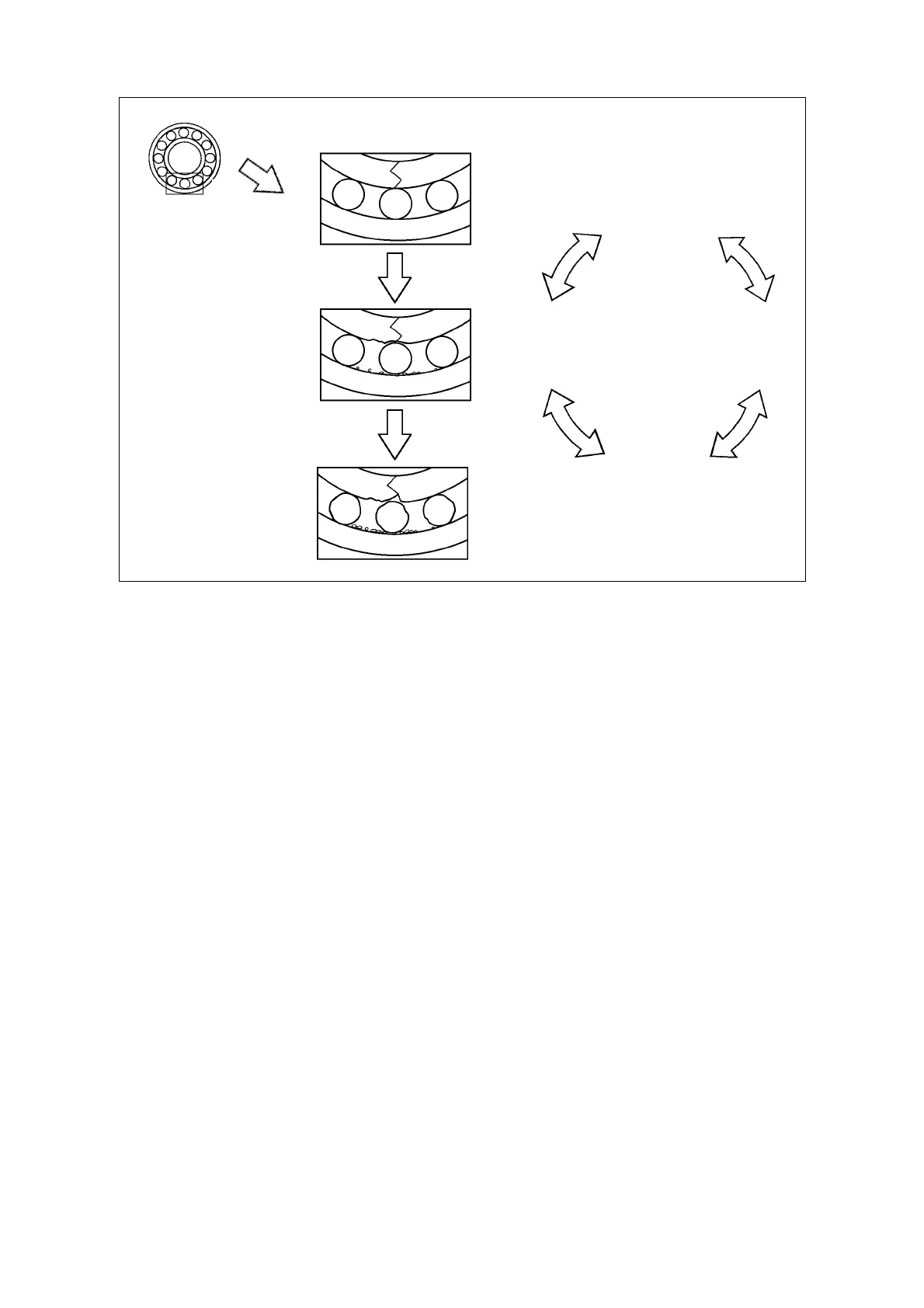
1. The bearing may have had a clean crack through the inner ring at the time of measurement.
This type of fault is difficult to detect on a bearing with a low rpm.
2. Spallings from the edges of the crack conta-minated the lubricant. This would have resulted in
high shock pulse readings if anybody had measured during the period the surface damage
developed, or at the time the contamination was detected.
3. Bearing damage was now so heavy that it caused vibration which shook loose the steam box.
At this stage, simply relating cause and effect should have prevented the breakdown.
It is obvious that measuring personnel must closely cooperate with the personnel responsible for
lubrication and for machine repairs and maintenance. It is of equal importance that information
concerning machine condition reaches the measuring personnel. As a rule:
• The bearings should be checked after detecting or repairing any type of fault which may
affect bearing condition.
This particularly includes changes in the lubrication system and in shaft alignment.
1. Clean crack
(slight increase of
shock value)
2. Surface damage,
(particles in
the lubricant)
3. Heavy damage,
(vibration, noise)
Lubrication,
maintenance
Condition
evaluation
Condition
monitoring
Planned
repairs
Cracked inner ring
28 General remarks on SPM measurement



 To Next Page