Technical data are subject to change without notice.
© Copyright SPM 2002-04. 71650.B
SPM Instrument AB • Box 504 • S-645 25 Strängnäs • Sweden
Tel +46 152 225 00 • Fax +46 152 15075 • info@spminstrument.se • www.spminstrument.se
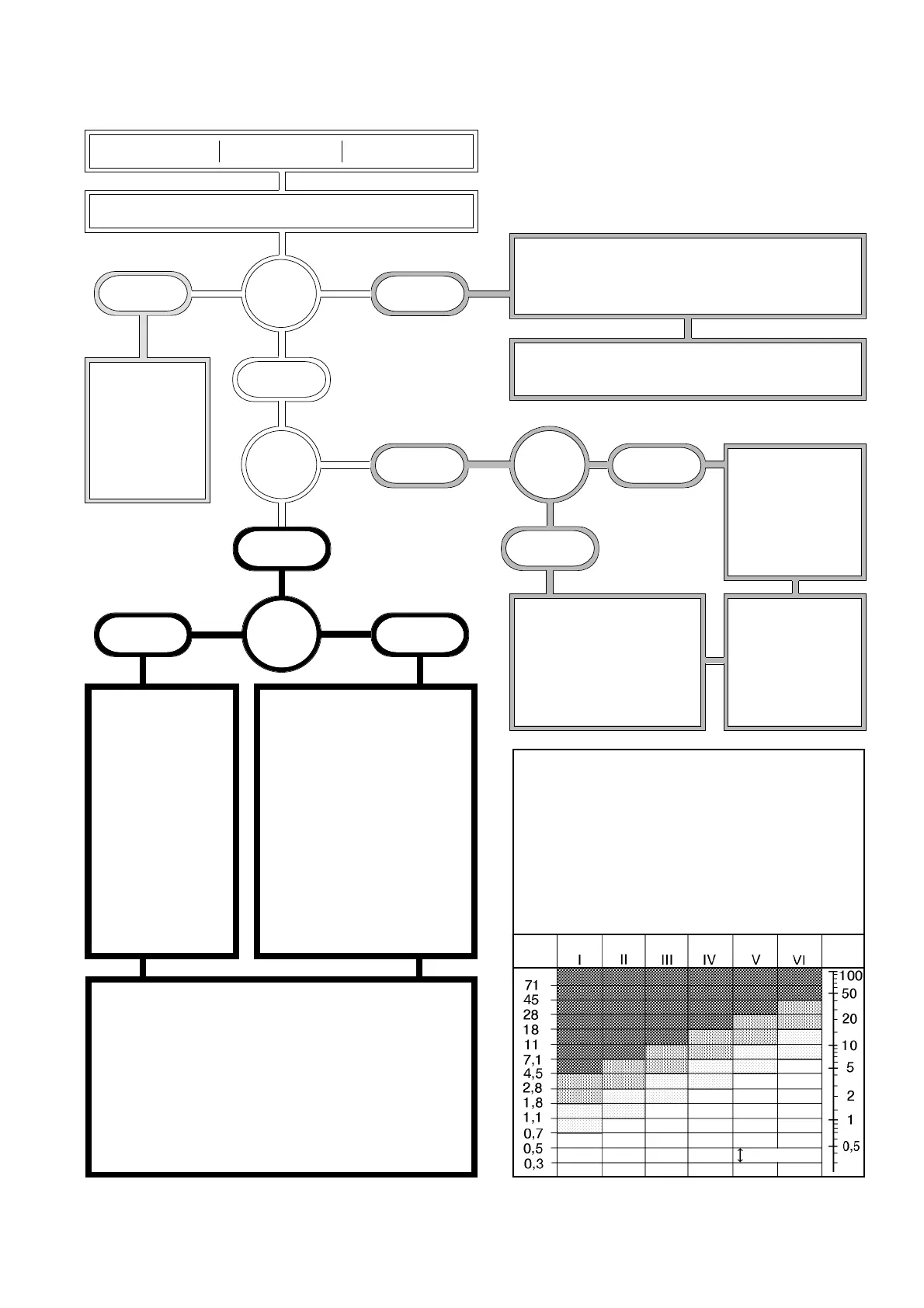
Fault analysis chart
Vibration up 2 steps from original or good level:
Plan to maintain, measure more frequently.
Vibration up 3 steps:
Inspect and maintain as soon as possible,
measure daily.
Vibration up 4 steps or more:
Shut down immediately and investigate.
Where
?
Part of
machine
All over
machine
Axial
+ radial
How
much
?
> 1 step
Record results.
Measure again
according to
schedule.
No
change
Increase
Treat large unexplained decrease like large
increase. Investigate soonest.
Recent maintenance, machine off load or stopped.
Measuring fault.
Something broken, loose, or missing.
Change
?
Measure Vibration Severity
Plan to maintain
when vibration
increases 2 steps
above new or
good level.
Slow build-up of
dirt.
Steady wear,
corrosion.
Stretched or
slipping belts.
Direc-
tion
?
Slack mounting bolts,
loose frame parts,
etc.
Coupling wearing or
stiffening.
Gear tooth wear.
Mainly
radial
< 1 step
Time Schedule Machine Class Measuring Point
Decrease
Mainly radial: Failed fan blades,
loss of balance weights,
shedding of dirt. Oil film
hysteresis whirls, excessive
bearing play.
Radial and axial: Changes in
foundation or support structure
causing serious misalignment or
looseness. Bent or fractured
shafts. Critical speed and other
resonances.
Small machines: Possibly
transmitted vibration from
larger machines.
Radial and axial:
Slack or sheared
mounting bolts.
Damaged machine
feet, bent or
damaged subframes
or supports.
Faulty alignment,
bent or cracked
shaft.
Gear tooth damage.
One step on the chart below (any class at any
level) represents a 1.6 times increase from
previous value.
Each condition band (= 2 steps) represents a
2.5 times increase, i.e. a significant change in
vibration severity.
3 steps up is a fourfold increase, an alarming
change demanding immediate action.
Class Class Class Class Class Class mm/s
Limits
1 step
Measuring vibration 49
RMS



 To Next Page