Technical data are subject to change without notice.
© Copyright SPM 2002-04. 71650.B
SPM Instrument AB • Box 504 • S-645 25 Strängnäs • Sweden
Tel +46 152 225 00 • Fax +46 152 15075 • info@spminstrument.se • www.spminstrument.se
44 Measuring vibration
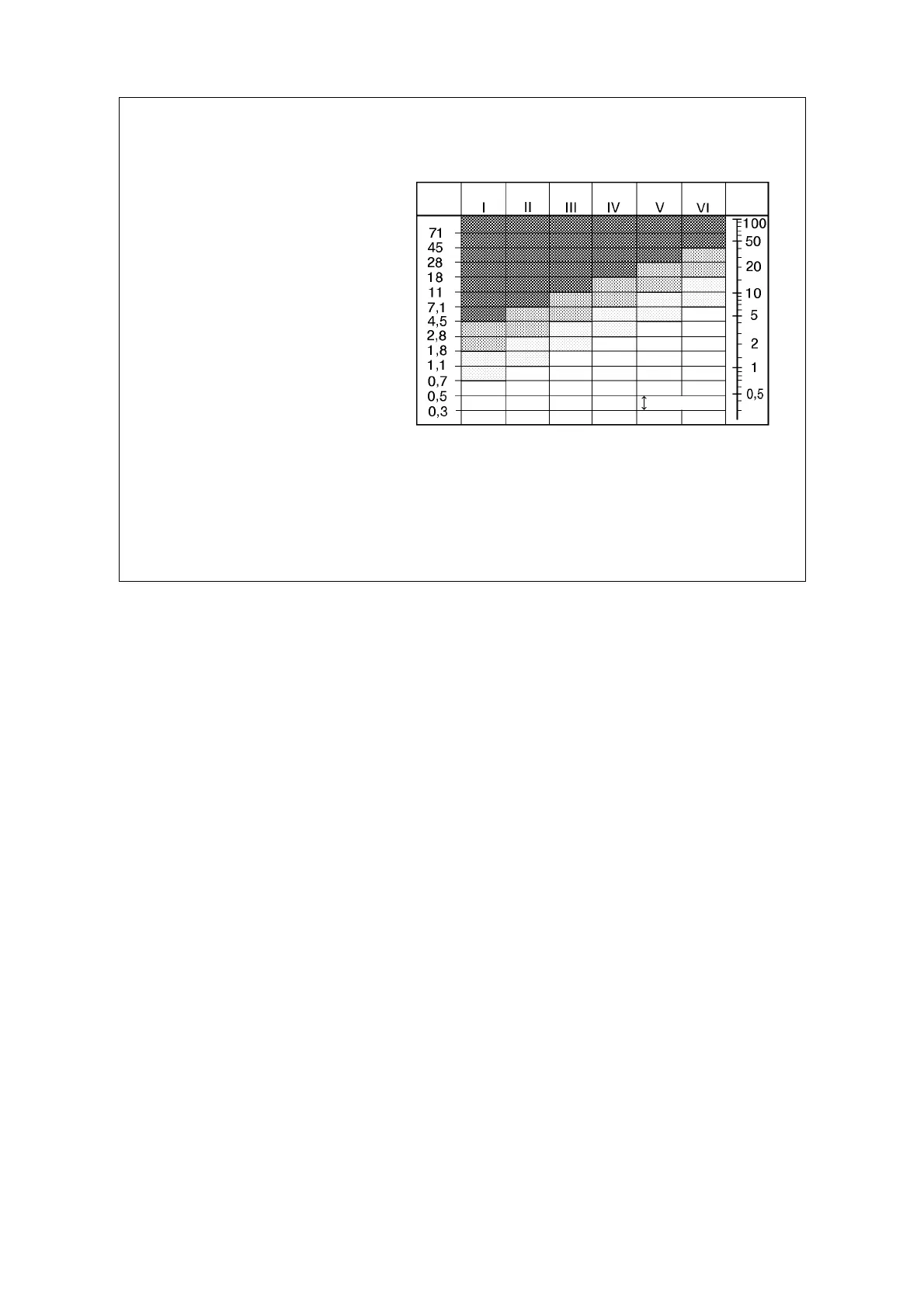
Class Class Class Class Class Class
RMS
mm/s
Limits
1 step
Definition of machine classes according to ISO
The following text is a quotation from ISO 10816: In order to show how the recommended method
of classification may be applied, examples of specific classes of machines are given below. It should
be emphasized, however, that they are simply examples and it is recognized that other classifica-
tions are possible and may be substituted in accordance with the circumstances concerned.
Class I: Individual parts of engines and machines, integrally connected with the complete machine in
its normal operating condition (production electrical motors of up to 15 kW are typical examples).
Class II: Medium-sized machines, (typically electrical motors with 15 to 75 kW output) without
special foundations, rigidly mounted engines or machines (up to 300 kW) on special foundations.
Class III: Large prime movers and other large machines with rotating masses on rigid and heavy
foundations which are relatively stiff in the direction of vibration measurement.
Class IV: Large prime movers and other large machines with rotating masses on foundations which
are relatively soft in the direction of vibration measurement (for example turbogenerator sets,
especially those with lightweight substructures).
Class V: Machines and mechanical drive systems with unbalanceable inertia effects (due to
reciprocating parts), mounted on foundations which are relatively stiff in the direction of vibration
measurement.
Class VI: Machines and mechanical drive systems with unbalanceable inertia effects (due to
reciprocating parts), mounted on foundations which are relatively soft in the direction of vibration
measurements; machines with rotating slackcoupled masses such as beater shafts in grinding mills;
machines, like centrifugal machines, with varying unbalances capable of operating as selfcontained
units without connecting components; vibrating screens, dynamic fatigue-testing machines and
vibration exciters used in processing plants.
The essence of the ISO recommenda-
tion is:
1 It states that vibration severity
readings are useful for a general
assessment of machine condition.
2 It divides industrial machines into
six vibration classes and provides
limit values for good, acceptable,
tolerable, and bad condition.
The T30 is based on this recommendation, with the exception that both good and accept-
able condition together are indicated on the green field of the condition scale.
Machine classes and limit values according to ISO recommendations



 To Next Page