Technical data are subject to change without notice.
© Copyright SPM 2002-04. 71650.B
SPM Instrument AB • Box 504 • S-645 25 Strängnäs • Sweden
Tel +46 152 225 00 • Fax +46 152 15075 • info@spminstrument.se • www.spminstrument.se
Confirming bearing damage
On receiving the typical bearing damage signal – high dBm, large difference between dBm and
dBc, random peaks, strongest signal on the bearing housing – you must confirm one of the
following causes for the reading:
• tapping of loose parts against the bearing housing
• excessive bearing play in combination with vibration
• particles in the lubricant
• bearing damage.
Interference can usually be detected by a careful inspection, including a vibration reading.
Lubrication test
A lubrication test is the best means to reach a conclusive verdict:
• Examine the grease or oil for contamination with hard particles.
• Grease or oil the bearing and repeat the measurement. Measure immediately after
lubricating and again a few hours later.
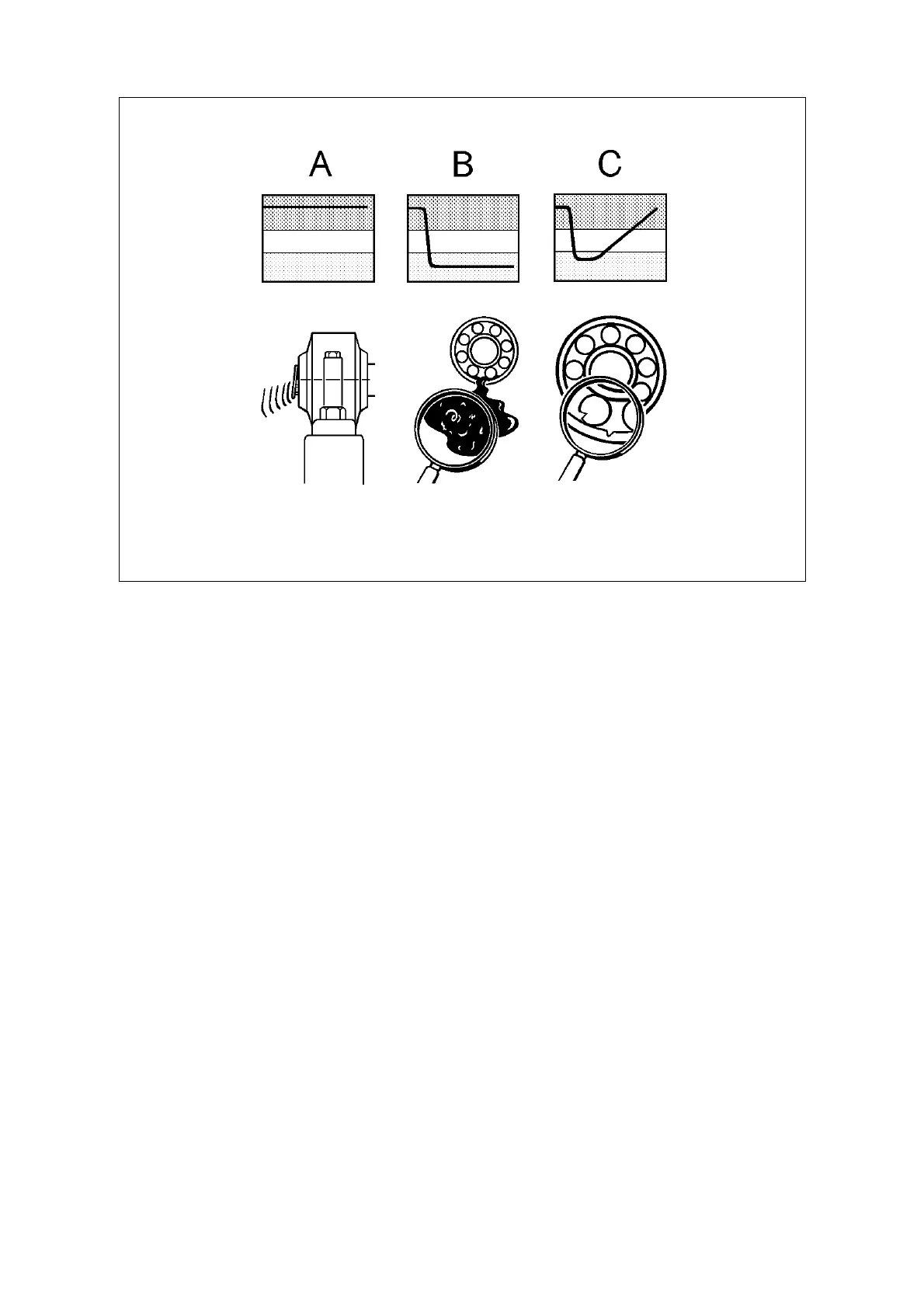
Make sure that the grease or oil reaches the bearing. Typically, you will get the following results:
A The shock pulse level remains constant. The signal is caused by interference or cross talk from
another bearing.
B The shock pulse level drops immediately after lubricating and remains low. Foreign particles in
the bearing were removed by the fresh lubricant.
C The shock pulse level drops immediately after lubricating but rises again within a few hours.
The bearing is damaged.
Note that metal particles in the lubricant can originate from the bearing itself. Measure the bearing
again over the next few days and make sure that the values stay low.
38 Evaluation of SPM measurements



 To Next Page