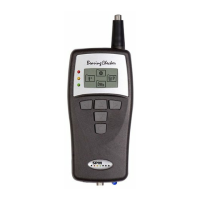
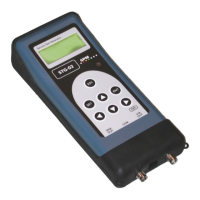
Technical data are subject to change without notice.
© Copyright SPM 2002-04. 71650.B
SPM Instrument AB • Box 504 • S-645 25 Strängnäs • Sweden
Tel +46 152 225 00 • Fax +46 152 15075 • info@spminstrument.se • www.spminstrument.se
SPM - shock pulse measurement
The Shock Pulse Method for bearing condition monitoring (SPM) was developed for measuring
rolling bearings. This is a summary of some important facts needed to understand the basic input
data for bearing monitoring as well as the nature and use of the shock pulse transducers.
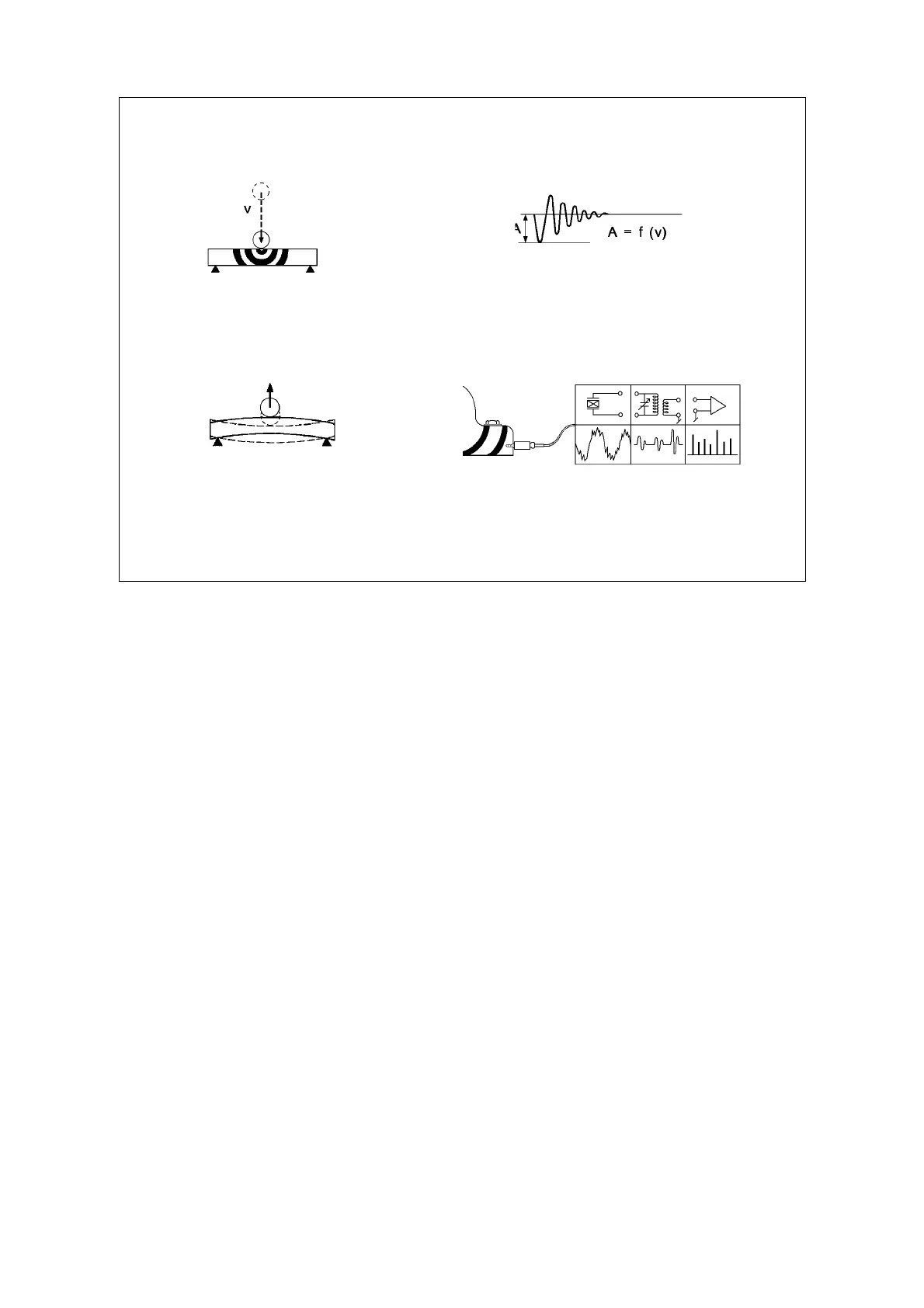
• Shock pulses are caused by impacts. An impact is a single event: one body hitting another
body once. It is not a constant force. It can be repeated at regular intervals in time, but is
often not. In a bearing, typically the impacts occur at random (and extremely short) intervals.
• The impact sends a shock wave through the material of both bodies. Vibration comes as a
second stage. In the SPM transducer, vibration is filtered out.
• The shock pulse transducer reacts to the amplitude of the wave front at its own resonance
frequency. This magnifies the low energy signal. Only the wave front is measured, causing one
shock pulse from the transducer.
• The amplitude of the wave front is a function of impact velocity. This means that (bearing and
operating condition being equal) the higher the rpm, the higher the shock level. Because the
rotational speed of the bearing depends on both its size and the rpm, both are needed as
input data.
• Shock pulses are transient signals. They lose their energy on the way through the material of
the machine. Also, they are reflected from surfaces and severely dampened by interfaces in
the material. That is why we need defined measuring points.
• All impacts cause shock pulses. You must make sure that you are measuring a signal from the
bearing.
Event 1: a shock wave spreds
through the material
Event 2: the body vibrates
Results of an impact:
1. Shock waves converted to
electric pulses
2. Pulse magnitude is
measured,
vibration filtered out
Shock pulse measurement:
The Shock Pulse Method 17



 To Next Page