Technical data are subject to change without notice.
© Copyright SPM 2002-04. 71650.B
SPM Instrument AB • Box 504 • S-645 25 Strängnäs • Sweden
Tel +46 152 225 00 • Fax +46 152 15075 • info@spminstrument.se • www.spminstrument.se
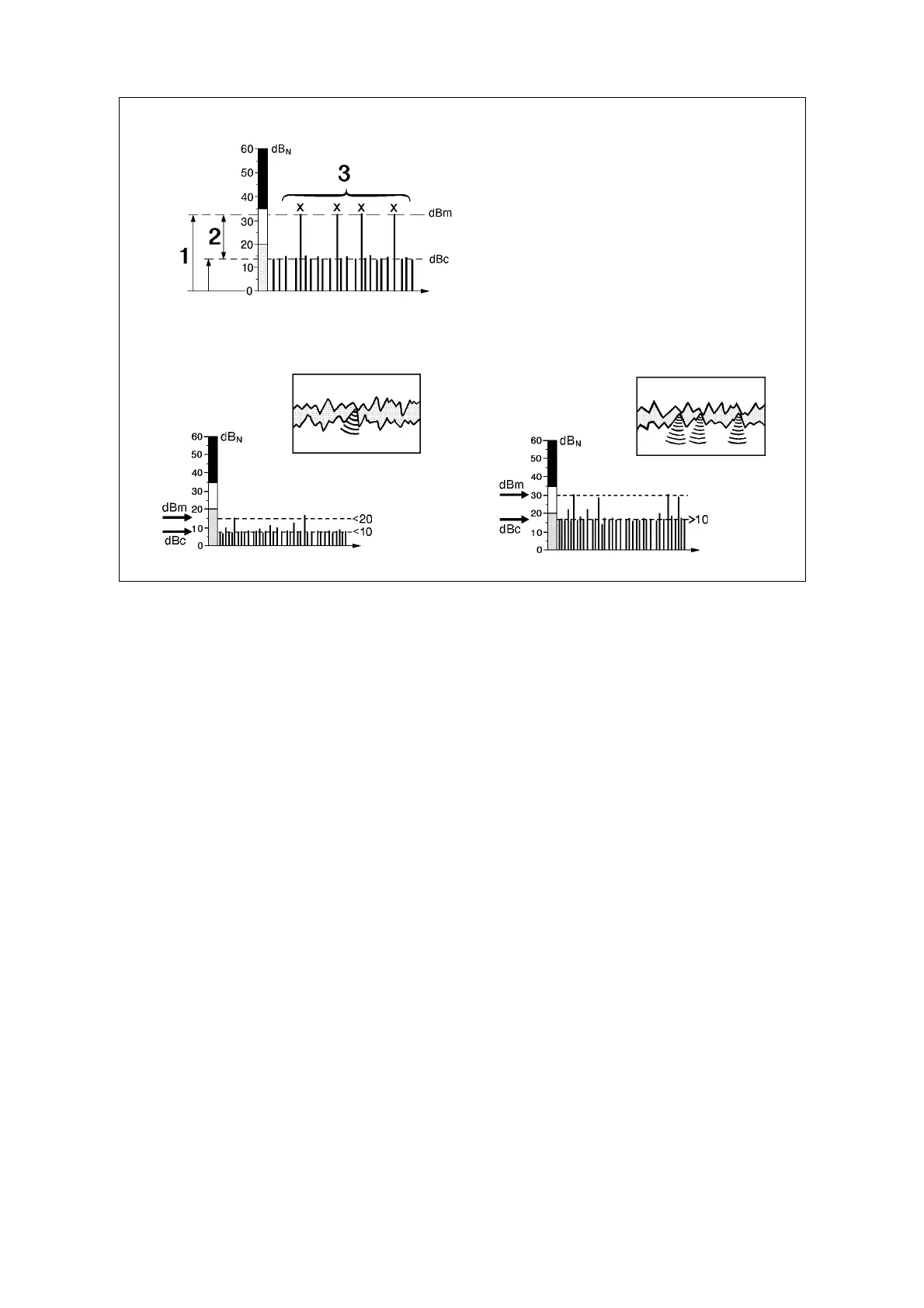
1. Maximum value dBm
2. Difference between dBm and dBc
3. Rhythm of the strongest pulses
Typical shock pulse patterns from rolling bearings
A shock pulse pattern is a sequence of either random or rhythmical strong pulses (dBm level) above
a carpet of very rapid weaker pulses (dBc level). You have to be aware of:
• the dBm value
• the difference between dBm and dBc
• the rhythm of the strongest pulses.
The rhythm of the strongest pulses is best discerned by listening with the earphone at a setting a
few dB below the dBm level. Typical for bearing signals is a random sequence of strong pulses (no
discernable rhythm). Rhythmical shocks can come from a bearing but are more often a sign of
interference. Typical patterns are described on the next pages.
1 Pattern from a good bearing
A bearing in good condition should have a dBm value below 20 and a dBc value approximately 5 to
10 dB lower. Once you have verified the reading, there is no need for any further evaluation.
The maximum value can be lower than 0. However, be suspicious when the measured value is very
low. The cause is often a bad measuring point or an incorrectly installed adapter or transducer. If
the reading is very low, check the installation. Measure on other parts of the bearing housing and
try to pick up a stronger signal. Another possible reason for a very low reading is that there is no
load on the bearing. This can happen with well balanced fans and similar rotating machines.
2 First signs of damage
dBm values between 20 and 35 dB (in the yellow zone) and a moderate increase of the carpet value
are a sign of stress in the bearing surfaces or minor damage. Note that the gap between dBm and
dBc gets larger.
Bearings with dBm values in the yellow zone should be measured more frequently, to determine if
their condition is stable or deteriorating.
12
34 Evaluation of SPM measurements



 To Next Page