Black plate (368,1)
一般Model "A2470GE-B" EDITED: 2010/ 9/ 24
9-18 In case of emergency
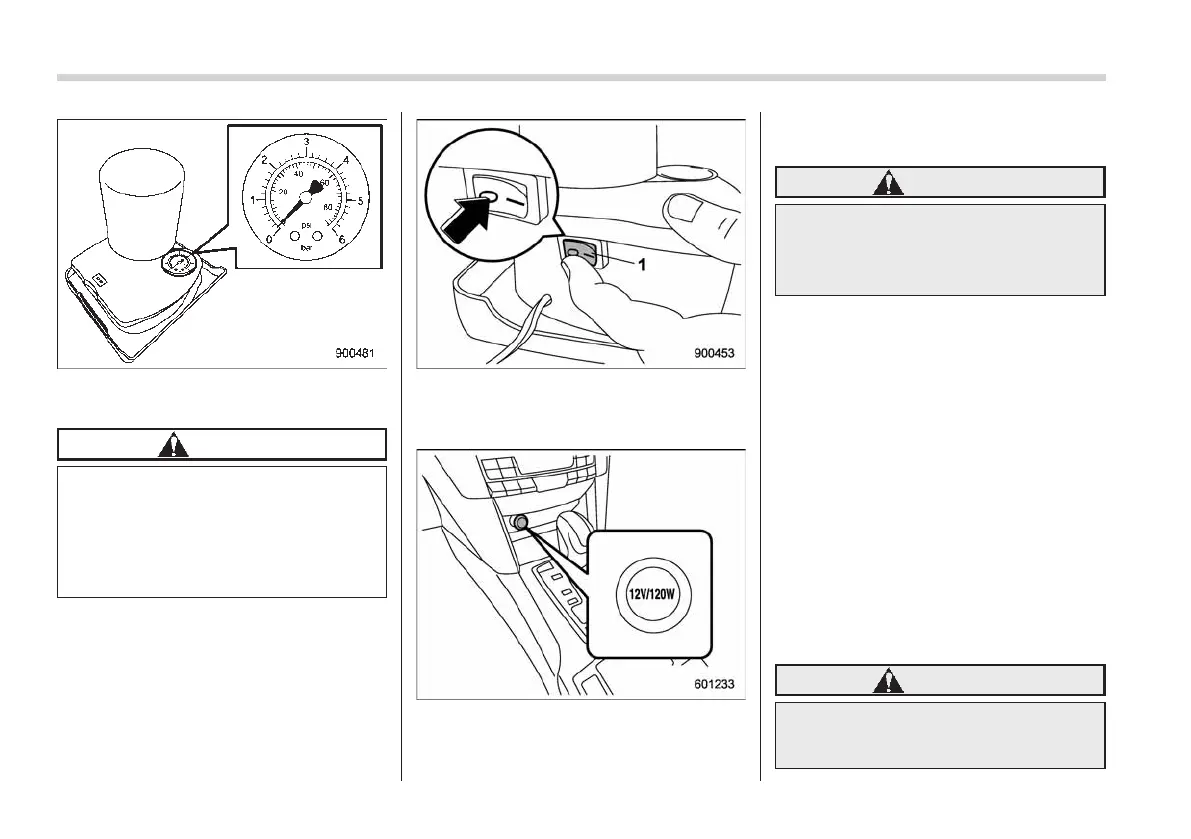
4. Read the tire pressure from the pres-
sure gauge.
CAUTION
If the tire check shows that the
pressure of the sealant-filled tire is
less than 130 kPa (1.3 kgf/cm
2
,19
psi) or if there are any cracks,
bumps or similar tire damage visi-
ble, do not continue to use the tire.
5. If the pressure of the sealant-filled tire
is 130 kPa (1.3 kgf/cm
2
, 19 psi) or more, it
must now be adjusted to the pressure
specified for your vehicle. See the tire
pressure label located on the door pillar on
the driver’s side.
1) Compressor switch
6. Make sure that the compressor switch
is switched off to “0”.
7. Insert the power plug into the acces-
sory power outlet located below the
climate controls.
8. Turn the ignition switch to the “Acc”
position.
WARNING
Running the engine in a non-venti-
lated or poorly ventilated area (e.g.,
inside a building) may cause as-
phyxiation. Do not start the engine.
9. Switch the compressor on to “I” and
pump the tire up to the specified tire
pressure. See the tire pressure label
located on the door pillar on the driver ’s
side.
10. Switch the compressor off to “0” and
check the tire pressure again. If the tire
pressure is too high, deflate the tire to the
specified pressure using the pressure
relief valve.
11. Once you have inflated the tire to its
correct tire pressure, switch off the com-
pressor, pull the plug out of the accessory
power outlet, unscrew the hose, fasten the
valve cap and install the protective cap.
12. Leave the bottle in the holder and
store it safely in the cargo area.
WARNING
. After using the sealant do not
drive faster than 80 km/h (50
mph), and the damaged tire must











 To Next Page