CHAPTER TWO - INSTALLATION
18
SG-System I Operating Manual
2
NOTE: Firewall protection must be designed in such a way that the Automation software port connected to the SG-System I
alarm receiver is protected from external attacks (e.g. ‘spoofing’, ‘DOS’).
Set Up and Testing
NOTE: Install external devices connected to items (10)-(16) in the same room as the SG-System I. Maintain 6.5mm (1/4”) of
separation between power limited and non-power limited circuits. Use power limited, supervised circuits only.
Familiarization with the connections and setup of the unit will make the final installation simpler. DSC recommends that the user gather all
elements of the system and stage a successful trial run before going live.
The following items are required:
• IEC power supply cord
• CAT5 Ethernet cable
• Phone line, dialer
• Hub/router or network
NOTE: When a Hub or Router/Gateway is used with the SG-System I, 24 hr standby power is required for these devices (i.e.
UL listed UPS, Battery Backup, or engine driven generator).
Take the following steps:
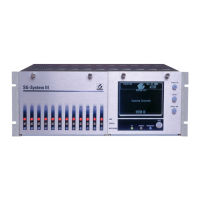
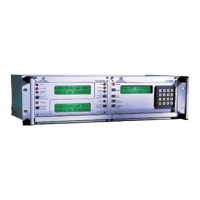
1. Unpack the SG-System I components. Remove the unit and inspect for shipping damage. If any damage is apparent, notify the car-
rier immediately.
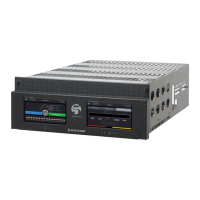
2. Install the rack-mount brackets or the rubber feet in the indents as required.
3. Connect telephone.
4. Connect the main power using a standard computer IEC cable (not supplied). See the wiring diagram below.
5. The LCD will power up and display internal Troubles (printer, computer, telephone line fault).
NOTE: Internal diagnostics may require more than 60 sec during the power up sequence.
6. Send a signal from a control panel to the receiver using PSTN and PSDN communication protocols. The signal will be displayed on
the LCD. Press the Ack button to silence the buzzer and clear the signal from the LCD.
Table 4: Loading Capacities for Hunt Groups
System loading at the supervising
station
1
channel
2
channels
3
channels
4
channels
5-8
channels
Number of initiating circuits (with DACR
lines processed in parallel)
~ 5000 10 000 20 000 20 000
Number of DACTs (with DACR lines pro-
cessed in parallel)
~ 500 1500 3000 3000
Number of initiating circuits (with DACR
lines processed serially - put on hold, then
answered one at a time)
~ 3000 5000 6000 6000
Number of DACTs (with DACR lines pro-
cessed serially - put on hold, then answered
one at a time)
~ 300 800 1000 1000


 To Next Page