C
LEAR
P
ATH
-EC
U
SER
M
ANUAL REV
1.11
71
M
OTOR
C
ONNECTION
:
G
ENERAL
T
IPS AND
G
UIDELINES
This section contains information and tips on how to safely and securely
couple a servo motor to a mechanical system.
For more information on this topic, visit the Teknic website:
https://teknic.com/securing-mechanics-motor-shafts/
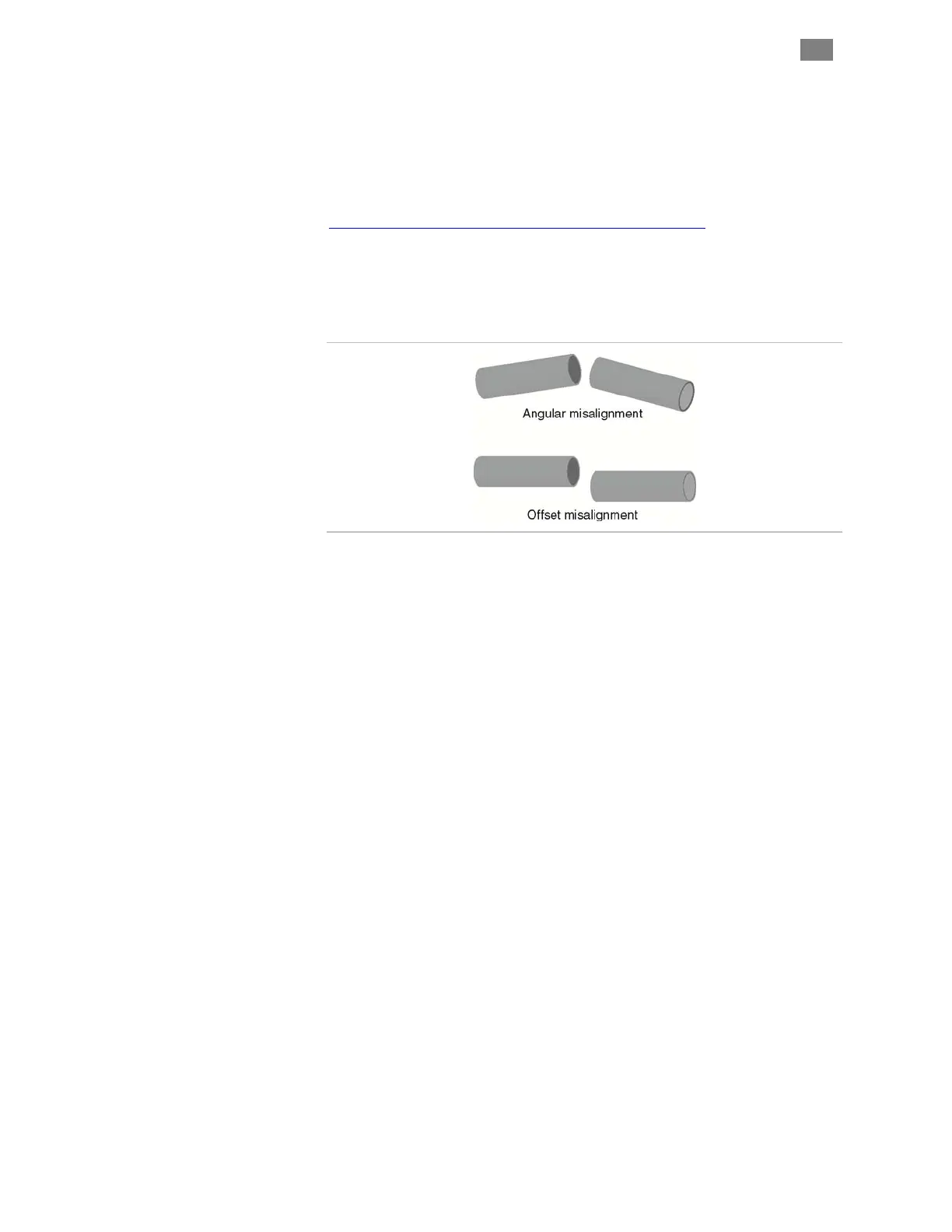
x Align with care. When connecting two shafts—such as a
motor shaft to a screw shaft—the rotating centers must be
carefully aligned in both the angular and offset sense (including
offsets/adjustments for thermal growth) to achieve the best
possible motion quality and longest motor/bearing life.
Some couplings are more forgiving of misalignment than
others, but in general, misalignment will cause undesired
vibration/noise, shortened bearing life, or even broken motor
shafts in extreme cases.
x Use lightweight components. Aluminum couplings,
pinions, and pulleys add significantly less inertia to the motion
system than steel parts of the same size. In most applications,
lower inertia is preferable because it allows the motor (and
attached mechanics) to accelerate harder and move and settle
faster.
x Don’t use set screws. Coupling devices with set screws are
prone to failure and often become the weak link when joining a
motor to a load. Set screws deform the metal around the screw’s
point of contact, often resulting in a raised bur on the shaft that
can make it hard to remove and replace the coupling element.
Set screws also tend to slip and score the shaft.
x Tip: Couplings, pulleys and pinions with circumferential
clamping mechanisms tend not to damage motor shaft, hold
better, and are easier to replace than those that use set screws.
x Clamp close to the motor. For maximum performance,
secure pulleys and pinions as close to the motor face as is
practical. This effectively reduces the lever arm (and associated
bearing load) for applications with a side load.
x Don’t over-tension belts. Always read the belt
manufacturer’s guidelines for proper belt tension, but never
exceed the ClearPath specification for maximum side load.
Overly tight belts put undue stress on the motor shaft and
bearing systems that can result in premature bearing and shaft
failure.
T
EKNIC
,
I
NC
. T
EL
.
(585)
784-7454


 To Next Page