1 Intended Use
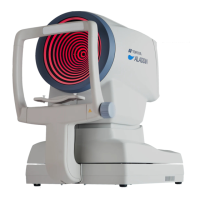
ALADDIN is intended for biometric determination of the following ocular measurements: axial length, corneal
radius, corneal cylinder axis, anterior chamber depth, white-to-white (WTW) and pupil diameter of the
human eye. ALADDIN also measures corneal topography.
For patients who are candidates for intraocular lens (IOL) implantation, ALADDIN also aids in the calculation
of the appropriate IOL power and type to be implanted.
ALADDIN is intended for use by physicians and eye-care professionals and may only be used under the
supervision of a physician.
1.1 Description of functionalities
Aladdin is a combined device for the measurement of various parameters used in the application of
intraocular lenses.
The instrument can work in two different modes:
1. Consecutive acquisition of all the measurements available on the eye
2. Individual acquisitions for each type of measurement
Aladdin includes six types of measurement in a single instrument.
Axial length(AL)
Corneal topography
Keratometry(KER)
Corneal diameter (white-to-white)
Pupillometry
Anterior chamber depth (ACD)
Axial length is the distance between the cornea and the inner limiting membrane. It is measured with a low-
coherence interferometry system with a super luminescent diode. The measuring range goes from 15 mm to
38 mm
Keratometry is used to measure the corneal curvature. It is based on the reflection of the Placido disk on the
eye at a controlled working distance for high measuring precision.
Aladdin allows the user to acquire the corneal topography of the eye. The “Corneal Map” is obtained from
the reflection of 24 rings of the Placido disk at a distance of 80 millimetres from the patient's eye. The position
of the device in relation to the patient’s eye serves as the starting point to make adjustments in the respective
measurement modes. With the acquisition of the corneal topography, the Corneal Diameter can be
determined. The Corneal Diameter is also known as "white- to- white" distance.
The pupillometry is performed with LEDs of different wavelengths. In particular, the instrument uses infrared
LEDs to dilate the pupil and white LEDs to reproduce photopic light conditions and to contract the pupil
(dynamic pupillometry).
ACD (anterior chamber depth) is the distance between the anterior surface of the crystalline (anterior
capsule) and the outermost stratum of the cornea (epithelium), measured along the optical axis where the
latter is biggest. This measurement is performed using the reflection principle of a slit light projected onto
the anterior surfaces of the eye.


 To Next Page