VEMCO – VR100 Manual 28 May 2018 9
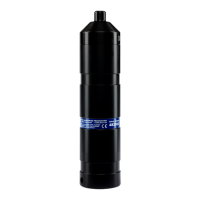
This hydrophone is also weighted for easier deployments. When a transponding hydrophone is attached to a
VR100-200, acoustic communication to a transponding receiver is possible.
All hydrophones listed in the table below will function with either VR100 model, although the transponding
capabilities of the VHTx hydrophone will only function with a VR100-200 running firmware version 3.3.1 or
later. The hydrophone you choose to use will depend on your needs.
VH165
- Omni-directional
- 50-85 kHz
- Black epoxy housing
Monitoring and testing 69 kHz coded
and 50 – 85 kHz continuous
transmitters.
VH110
- Directional
- 50-85 kHz
- Hydrodynamic black
anodized aluminum case
Locating and tracking 69 kHz coded
and 50 – 85 kHz continuous
transmitters.
VH180
- Omni-directional
- 180 kHz
- Green epoxy housing
Monitoring and testing 180 kHz coded
transmitters.
VH180-D
- Directional
- 180 kHz
- Hydrodynamic black
anodized aluminum case
Locating and tracking 180kHz coded
transmitters.
VHTx-69kHz and
VHTx-180kHz (for HR2)
- Transponding
- Omni-directional
- 50-85 kHz or 180kHz
- Black acetal resin case
with stainless-steel cage
- PVC head (VHTx-180kHz
only)
Monitoring and testing 69 kHz coded
and 50 – 85 kHz continuous
transmitters (180kHz coded only for
VHTx-180kHz).
Communicating with a receiver
(VR2Tx, VR2AR, HR2) to read health
and stats, or to activate an acoustic
release (VR2AR only).
Regardless of the hydrophone being used, it is connected to the VR100 through the bulkhead connector on the
side of the receiver (see section 2.1.1).


 To Next Page