OPERATION
Axio Imager Illumination and contrast methods Carl Zeiss
M70-2-0020 e 06/2009 430000-7344-001 157
• Push the analyzer slider (4-122/1) into the respective slot or swivel in the analyzer module (4-122/4)
on the reflector turret. The field of view appears dark due to the polarizers being crossed.
If you work with the analyzer slider on the Axio Imager, swivel the reflector turret to a blank
turret position.
• Move the specimen feature you want to examine into the field of view and rotate it with the rotary
stage Pol through 360°. As a rule, while being rotated between crossed polarizers, birefringent
(anisotropic) specimens will now show the variations in color and intensity described above. However,
optically anisotropic substances may also remain dark, if an isotropic direction, e.g. of optically uniaxial
or biaxial crystals, is oriented parallel to the direction of observation.
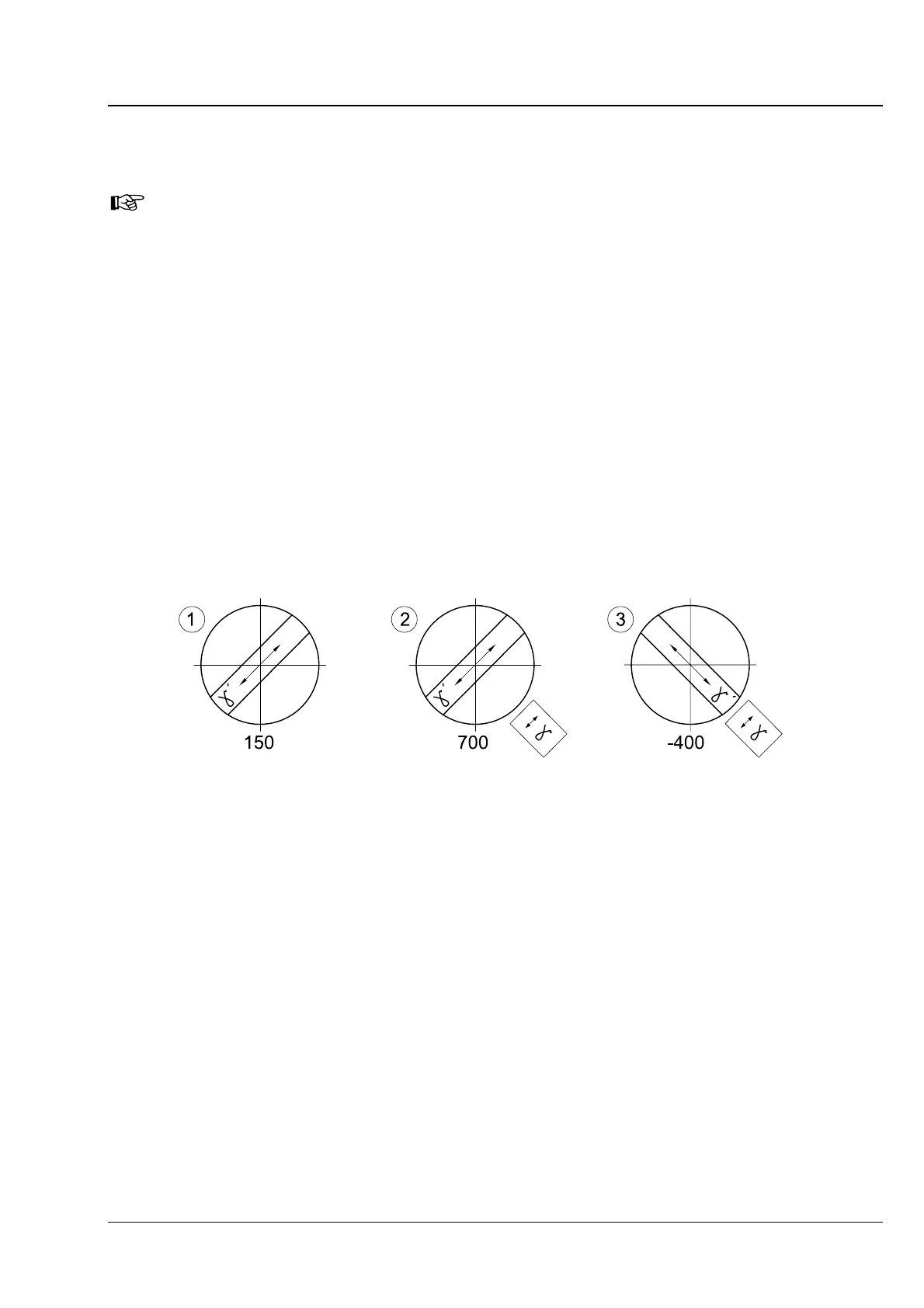
4.9.5.2 Determining the vibration direction n
γ '
(1) Use
The determination of the vibration directions of n
γ
and n
γ'
(vibration direction with the absolutely or
relatively highest refractive index) and n
α
and n
α'
(vibration direction with the absolutely or relatively
lowest refractive index) in relation to the morphological directions, e.g. of crystal surfaces, crystal needles
or fibers, provides an important criterion for recognition. It is also used for the diagnosis of biocrystals
(e.g. gout, pseudo-gout).
Fig. 4-123 Determining the vibration direction n
γ '
by the example of a synthetic fiber
(2) Microscope configuration
− Phototube Pol
− Achromatic-aplanatic universal condenser Pol
− Strain-free objectives
− Rotary stage Pol
− Polarizer D (rotatable or fixed)
− Analyzer slider or analyzer module D in reflector turret (only on microscopes equipped with a reflector
turret)



 To Next Page