1.2.4. DISPOSING THE EQUIPMENT WHEN NO LONGER USED
In compliance with Directives 2011/65/EU and 2012/19/EU regarding restriction of the use of certain hazardous substances in electrical and electronic
equipment along with waste electrical and electronic equipment, it is forbidden to dispose of this equipment in the municipal waste stream as unsorted
municipal waste.
When new equipment that is similar is purchased, the old equipment must be given to the dealer for disposal. As regards reuse, recycling and other
forms of recovery of waste electrical and electronic equipment, the manufacturer carries out the functions defined by current local laws. A high level of
separate collection of waste electrical and electronic equipment is indispensable to efficiently recycle, treat and dispose of the equipment. Recycling and
treatment operations should comply with minimum standards to assure human health and high environmental protection as well as favour recycling of
the materials included in the equipment. The symbol indicating separate collection for electrical and electronic equipment
consists of the crossed out bin marked on the equipment.
• All devices are permanently installed.
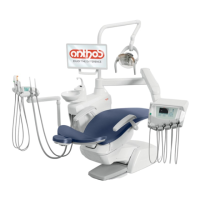
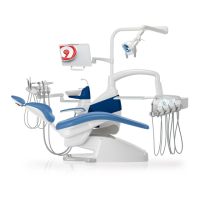
Depending on the type of dental chair the unit comes with, refer to the installation SCHEMATICS in paragraph "Technical Specifications”.
The CEFLA s.c. shall not be held liable for any personal injury or property damage arising from failure to heed the following clause.
• Floor conditions.
The floor (continuous) should meet the load-bearing capacity set forth by DIN 1055, sheet 3.
The weight of the dental unit including a 190 kg patient is about 350 kg.
For further details on anchoring conditions, refer to the Installation Manual.
The positions of delivery and drain line connections comply with standard UNI EN ISO 11144.
In case of floor installation without load reduction plate, floor characteristics must ensure a breaking strength of the anchor bolt not less than 1200 daN
each (considering RcK concrete strength 20 MPa).
In case of floor installation without load reduction plate, floor characteristics must ensure a strength of the anchor bolt not less than 260 daN.
• This device may not be modified in any way without the authorisation of the manufacturer.
If the device is modified, appropriate examinations and tests need to be conducted in order to ensure continued safe use.
CEFLA s.c. shall not be held liable for any personal injury or property damage arising from failure to heed the following clause.
• Dental chair.
Dental chair maximum loading capacity is 190 Kg. Do not exceed this value.
• Tray holder bearing surface.
The maximum loading capacity must never be exceeded:
- tray holder module attached to the dentist's board, maximum allowable load 2 Kg, evenly distributed.
- tray holder module attached to the assistant's board, maximum allowable load 1 Kg, evenly distributed.
- auxiliary tray holder module, maximum allowable load on tray 3.5 Kg (without negatoscope) or 2.5 Kg (with negatoscope).
• Connections to external instruments.
The equipment can be hooked up only to other instruments that bear the CE mark.
• Electromagnetic interferences.
Use of electrical equipment that does not comply with standard IEC 60601-1 3rd Ed. - 2007 in the office or nearby may cause electromagnetic or other
types of interferences resulting in dental unit malfunctions.
In these cases it is recommended to shut off the dental unit power before using this equipment.
• Replacing the drills.
Operate the turbine release and contra-angle devices only once the drill has come to a complete stop. Failure to do so, will result in damaging the
locking system and drills could be released and cause injury. Exclusively use high-quality drills with a connection having a calibrated diameter. To
check the conditions of the locking system, make sure the drill is firmly secured to the instrument every day before starting work. Locking system
defects caused by misuse can be easily identified and are not covered by the warranty.
The drills and various instruments attached to the handpieces must comply with Biocompatibility Standard ISO 10993.
• Patients with pace makers and/or hearing aids.
When treating patients with pace makers and/or hearing aids, take into consideration the effects the instruments may have on pace makers and/or
hearing aids. Carefully read technical-scientific information available on this subject.
• Implants.
If the dental unit is used for implant operations using separate equipment designed for this purpose, you are recommended to shut the power off the
dental chair to avoid unwanted movements resulting from faults and/or accidental start-ups of the controls.
• Do not forget to turn off the office water supply and master switch of the equipment before leaving the surgery.
• The equipment is not protected against liquid penetration (IPX 0).
• The equipment is not suitable for use in the presence of a mixture of flammable anaesthetic gas with oxygen or nitrous oxide.
• This equipment must be stored properly so that it is kept in top working order at all times. The manufacturer shall not be held liable for misuse,
carelessness or improper use of the equipment.
• The equipment may only be used by authorised and adequately trained staff (dentists and paramedics).
• The user must be present at all times when the equipment is turned on or ready for start-up. In particular, never leave the equipment unattended in the
presence of children/ mentally disabled or other unauthorised personnel in general.
Any accompanying persons must keep out of the operating area and in any case under the responsibility of the operator. The operating area refers to
the space around the dental unit plus 1.5 meters.


 To Next Page