Need help?
Do you have a question about the Dexcom SEVEN PLUS and is the answer not in the manual?
Provides essential contact details for technical assistance and general information.
Outlines the intended purpose and applications of the SEVEN PLUS system.
Crucial safety guidelines and precautions for using the SEVEN PLUS device.
Lists critical contraindications, warnings, and necessary precautions for safe operation.
Details specific cautions to be observed during device use.
Defines key terms and terminology used throughout the user guide.
Explains the meaning of various symbols found on the device packaging and labels.
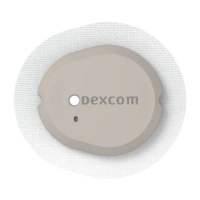
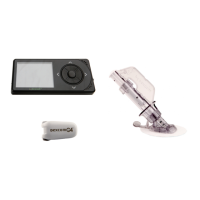
Describes the components and function of the SEVEN PLUS Sensor.
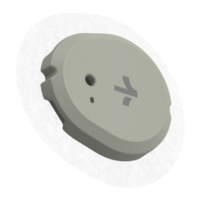
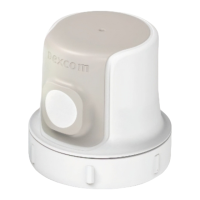
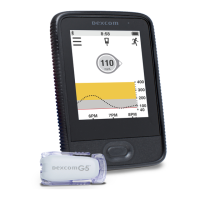
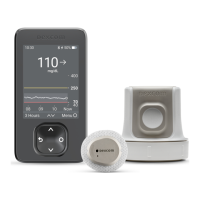
Details the SEVEN PLUS Transmitter, its function, and maintenance.
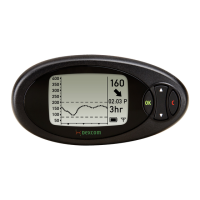
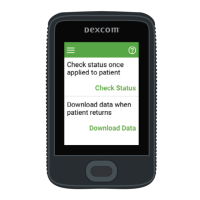
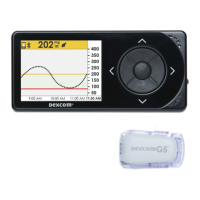
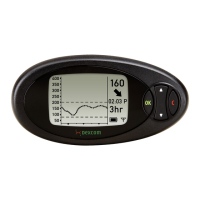
Explains the SEVEN PLUS Receiver, its display, and operation.
Instructions for charging the SEVEN PLUS Receiver battery.
Explains how to access and navigate the Receiver's settings menu.
Details how to configure various alerts for glucose monitoring.
Instructions for registering a meter for automatic data upload.
Pre-insertion checklist and preparation steps for using the SEVEN PLUS Sensor.
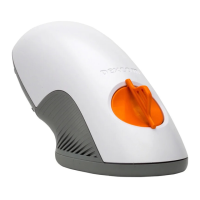
Overview of the sensor applicator and its components before use.
Guidance on choosing and preparing the skin for sensor insertion.
Step-by-step instructions for placing the sensor on the skin.
Detailed procedure for inserting the sensor probe under the skin.
Procedures for attaching the transmitter to the sensor pod.
Ensuring proper communication between transmitter and receiver.
Steps to start a new continuous glucose monitoring session.
Information on the sensor start-up phase and water resistance.
Explains the methods for calibrating the SEVEN PLUS system.
Detailed steps for manual BG reading entry for calibration.
Guide for calibrating using the auto-upload feature with a compatible meter.
Procedure for the initial calibration after sensor insertion.
Instructions for maintaining calibration accuracy every 12 hours.
Steps for re-calibration when a blood drop symbol appears.
How to view and interpret glucose readings on the Receiver.
Understanding trend graphs and arrows for glucose level direction.
Setting and understanding various glucose alerts and the low glucose alarm.
Explains symbols displayed in the Receiver's status box.
Troubleshooting steps for missing readings and system errors.
Addressing issues when the transmitter and receiver are out of range.
Instructions for temporarily powering down the Receiver.
How to log events like meals, insulin, and exercise.
Recording carbohydrate intake and insulin dosage.
Logging exercise details and health-related events.
Overview of the software for viewing glucose trends and patterns.
Information on sensor session expiration and early termination.
Procedures for handling sensor failure and manually stopping a session.
Steps for safely removing the transmitter from the sensor pod.
Solutions for common difficulties encountered during sensor insertion.
Addressing issues related to system calibration.
Understanding blood drop prompts and status box symbols for calibration.
Resolving sensor failure and error code issues.
Troubleshooting common problems with the receiver and cables.
Steps to take if alerts are not functioning as expected.
Recommendations for maintaining the sensor, transmitter, and receiver.
Proper methods for storing and cleaning device components.
Details on the system's performance, accuracy, and study results.
Technical specifications for the sensor, transmitter, and receiver.
Information regarding FCC certification and compliance for the transmitter.
Details various system alerts, their descriptions, and clearing actions.
Electrical input, operating conditions, and water resistance of the receiver.
 General
| Sensor Life | 7 days |
|---|---|
| Display | Yes |
| Display Type | LCD |
| Warm-up Time | 2 hours |
| Wireless Range | Up to 20 feet (6 meters) |
| Type | Continuous Glucose Monitoring (CGM) |
| Calibration | Calibrate twice daily |
| Transmitter Life | 6 months |
| Alarm | Yes (high and low glucose alarms) |
| Data Storage | 30 days |
| Power Source | Rechargeable battery (transmitter) |
| Measurement Range | 40 to 400 mg/dL |
| Water Resistance | Water-resistant (not waterproof) |
| Battery Life | 6 months |

 To Next Page