
 Need help?
Do you have a question about the ECKELMANN CI 3000 and is the answer not in the manual?
Explains the structure of general instructions.
Explains the structure of safety instructions and hazard warnings.
Lists and explains warning signs and symbols used in the document.
States disclaimer for non-compliance with operating instructions.
Defines necessary qualifications and training for personnel.
Specifies the intended purpose and application of the control system.
Outlines the five mandatory safety rules for electrical work.
Discusses vulnerability to ESD and necessary precautions.
Provides guidelines for safe handling and working with ESD components.
Lists and defines abbreviations used in the document.
Describes the physical connections and interfaces of the CI 3000.
Details new functionalities and improvements in different software versions.
Lists software version requirements for compatibility with other LDS components.
Covers alarm handling, priorities, remote messaging, and suppression.
Details PRIO1/PRIO2 and AUX multifunctional relay outputs and their functions.
Covers configuration of general, message/alarm, and special digital inputs.
Includes CAN bus monitoring, manual shutdown alarm suppression, LDS system config, and auto fault reporting.
Explains HACCP/EU archives, timers, energy management, totalizer, peak load, and LSM.
Covers M-bus interface, refrigeration controller, and third-party controller integration.
Refers to frequently asked questions for further information.
Describes the process and requirements for mounting the store computer in a control panel.
Explains the connection and configuration of the CAN bus, including fast connection.
Covers modem types, connection, and configuration for fault reporting and remote maintenance.
Explains connecting a service PC for local configuration via CAN bus, Combi Gateway, or modem.
Introduces SIOX modules, connection, configuration, meter integration, and power supply.
Outlines special functions invoked by key combinations for startup and testing.
Explains how to connect Marktrechner CI 3000 and CI 3100 case controllers.
Details the connection of M bus gateways for capturing meter data.
Explains the standard settings for DIP switches and jumpers on new and previous models.
Details the procedure and precautions for updating the device firmware.
Provides instructions and safety precautions for replacing the backup battery.
Provides comprehensive terminal diagrams and assignments for the CI 3000 store computer.
Provides comprehensive terminal diagrams and assignments for the SIOX extension module.
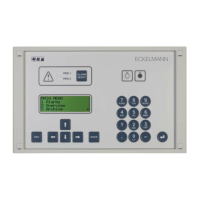
Describes the hardware components of the operating interface and their functions.
Explains menu structure, screen numbering, navigation, and special modes like entry block, Superuser, and Service mode.
Explains how to remotely operate and set parameters for LDS components via the interface.
Presents the primary menu structure of the CI 3000, detailing access to various functions.
Explains how to access and view alarms and the message log.
Covers displaying operating status, temperatures, and accessing archived data.
Details how to remotely operate components and configure the store computer.
Explains system monitoring, status checks, and I/O monitoring capabilities.
Covers setting parameters like date/time, language, interlock, and viewing HVAC data.
Details the safe procedure for disassembling the equipment.
Provides guidance on the proper disposal of the product according to regulations.
Lists power supply, rated power, leakage current, relay outputs, and digital inputs specifications.
Covers CI 3000 dimensions, panel mounting frame, and SIOX module mechanical data.
Shows detailed dimensional drawings of the CI 3000 unit.
Provides dimensions and details for the panel mounting frame.
Details the mechanical specifications of the SIOX Extension Module.
Lists order numbers for different CI 3000 and CI 3100 store computer models.
Lists order numbers for various accessories like cables, modems, and converters.

 To Next Page
 General