Need help?
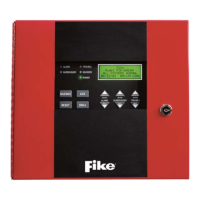
Do you have a question about the Fike FCP-300 and is the answer not in the manual?
Details critical installation needs for smoke detectors and placement near control panels.
Discusses limitations of audible devices and issues with alerting people, including those with disabilities.
Covers considerations for IP and cellular alarm signaling, including bandwidth and signal strength.
Critical safety warning to disconnect all power sources before servicing the panel or associated equipment.
Outlines the necessity of re-testing the system after any programming or component changes.
Specifies recommended operating temperature and humidity ranges for system reliability.
Provides compliance information regarding FCC rules for radio frequency emissions.
Provides a general overview of the FCP-300/ECS system and its capabilities.
Details the physical hardware components and capabilities of the FCP-300/ECS panel.
Describes hardware features related to networking multiple FCP-300 panels.
Lists advanced software features like automatic drift compensation and JumpStart.
Highlights specific features of the FCP-300ECS model, including ECS capabilities.
Defines key terms used throughout the manual for clarity.
Lists compatible Honeywell products available for use with the FCP-300.
Details FCC compliance information and requirements for connecting to telephone lines.
Outlines general UL requirements for all installations and specific subsections.
Covers general requirements for field wiring, device usage, and system checkout.
Specifies requirements for central station fire alarm system installations.
Details requirements for local protected fire alarm system installations.
Outlines requirements for remote station protected fire alarm system installations.
Specifies requirements for CO detection systems according to NFPA 720.
Lists minimum configurations required to comply with NFPA requirements.
Lists the components that should be included in the FCP-300ECS shipment.
Details precautions to prevent water damage and specifies environmental operating conditions.
Recommends downloading the latest software version for optimal features and functionality.
Lists terminal descriptions and their respective electrical ratings for the FCP-300.
Provides guidelines to avoid induced noise and ensure proper wiring practices.
Illustrates the circuit board assembly of the FCP-300.
Guides the user through determining current draw and standby battery needs for the system.
Outlines the steps for using the Current Draw Worksheet to calculate system requirements.
Provides current draw data for Fike SLC devices to aid in battery calculations.
Shows maximum battery standby loads for 24-hour and 90-hour standby periods.
Provides instructions and dimensions for surface or flush mounting the control panel cabinet.
Details precautions to prevent moisture entry into the cabinet through conduits.
Explains how to remove the control panel assembly from the cabinet for repair.
Describes the use of the Ethernet connection for IP communication and port location.
Details how to connect the AC terminals to the power source, noting it may require an electrician.
Explains the requirements for connecting sealed lead-acid batteries and observing polarity.
Describes the use and installation of the RBB Accessory cabinet for larger batteries.
Covers calculating SBUS wire distances and determining wiring configurations.
Illustrates SBUS wiring configurations, specifically Class B.
Provides steps for installing the FIK-RA100 remote annunciator, including mounting.
Details the procedure for installing the FIK-RA1000 remote annunciator.
Explains how to install the FIK-RA2000 remote annunciator, including mounting.
Covers the installation of the FIK-6815 SLC expander.
Describes how to connect the FIK-6815 SLC expander to the control panel.
Details the installation of the FIK-5824 module for connecting a printer.
Guides the user through selecting printer and output port options for the FIK-5824 module.
Covers the installation of the FIK-5880 LED I/O module.
Illustrates the layout of the FIK-5880 board, showing terminals for connections.
Details how to connect the FIK-5880 LED I/O module to the panel via SBUS.
Explains the wiring procedure for connecting LEDs to the FIK-5880 board.
Describes the wiring for the FIK-5880's 8 input circuits used for switch monitoring.
Covers the installation of the FIK-5865-3 and FIK-5865-4 LED annunciators.
Details how to connect the FIK-5865 LED annunciator to the panel via SBUS.
Provides instructions for mounting the FIK-5865-4 and FIK-5865-3 annunciators.
Explains how to configure SBUS modules, including assigning IDs.
Explains how to assign unique IDs to SBUS modules using DIP switches.
Details how to connect telephone lines to the panel using the Model 7860 phone cord.
Covers installing notification appliances and using NAC circuits for auxiliary power.
Explains how to install conventional notification appliances for Class A and Class B configurations.
Describes how to use NAC circuits for auxiliary power with four available types.
Describes the function of built-in trouble and programmable relays.
Explains the function of the dedicated common Form C trouble relay.
Describes the two Form C programmable relays and their installation.
Covers applications for remote station reporting, including Keltron and City Box connections.
Details the steps for connecting a Keltron Model 3158 to the control panel.
Explains how to connect the control panel to a municipal fire alarm box using the 5220 module.
Covers wiring the addressable relay module for city box connection.
Details the wiring and programming for NFPA 72 polarity reversal using the 5220 module.
Describes the connection of a UL 864 Listed Remote Station Transmitter to FACP dry contacts.
Explains how FCP-300/ECS panels can be networked to create a larger virtual system.
Defines a networked site and describes how panels operate as a single logical group.
Details wiring options like fiber-optic and twisted-pair for connecting networked panels.
Specifies the use of the FIK-NIC for linking panels and options for internal or external mounting.
Describes how the FIK-NIC connects to other units using twisted-pair or fiber-optic cable.
Introduces the two types of fiber-optic modules used for communication with the FIK-NIC.
Provides steps for properly mounting the FIK-NIC inside the FCP-300/ECS cabinet or remotely.
Explains how to set the network ID for each panel using DIP switch positions.
Covers tools for diagnosing network performance, including Ping Panel and status checks.
Explains how to continuously ping panels on the network to check reply times and counters.
Describes how to view statistics indicating network performance.
Explains how to view statistics indicating network performance for voice functions.
Details how to program network options using the built-in annunciator or HFSS tool.
Shows how to view connected panels and manage their status as Members or Guests.
Explains how to edit panel and site names for better identification within the network.
Guides on changing the current Network Panel ID, emphasizing careful consideration.
Describes initiating communications between the panel and a computer using HFSS.
Explains how access codes provide user-level access to panel functions.
Details configuration options for reporting events to a Central Station.
Covers programming timers for control lockout and auto-reset events.
Explains how to select system-wide voice commands for output groups.
Lists available Fike SLC devices and refers to their installation instructions.
Introduces SWIFT Wireless SLC devices and the FIK-W-WGI Wireless Gateway.
Specifies the maximum number of SLC devices supported by the FCP-300.
Details wiring requirements for SLC devices, including wire sizing and types.
Provides specific wire sizing requirements for the FIK-6815 SLC expander.
Recommends wiring practices for Fike SLC modules to minimize electrical interference.
Illustrates how to wire the FIK-6815 SLC loop for Class A configurations.
Explains how to address Fike SLC devices using rotary dials on the device board.
Guides on addressing SD detectors and modules at the FACP using installer code.
Details how to set addresses for input and relay modules using DIP switches.
Covers the WIDP-WGI Wireless Gateway, including its function and power connections.
Explains power connection requirements for the FIK-W-WGI Wireless Gateway.
Introduces the JumpStart feature for automating system setup and device configuration.
Describes how JumpStart automatically assigns input points and zones.
Explains how JumpStart programs output groups and assigns circuits.
Provides step-by-step instructions for running the JumpStart Auto-Programming feature.
Explains the concept of mapping, assigning events to outputs for activation.
Explains how input points are assigned to input zones.
Details how to assign notification and relay output circuits to groups.
Describes how to map events to output groups with specific patterns.
Shows how LED points are mapped to zones and output groups.
Illustrates mapping LED points across panels in a networked system.
Explains how to use the HFSS Programming Tool for panel configuration.
Details how to program the control panel using the on-board or remote annunciator.
Provides instructions for entering and exiting the panel programming mode.
Guides the user on navigating through the system menus.
Explains the generic methods for making selections and entering data in the menus.
Provides a quick reference to panel programming options and their settings.
Lists programming options and their permitted settings according to UL 864 and UL 2572 standards.
Lists available modules that can be programmed in the program menu.
Explains how to edit module names and wiring classes (Class A or B).
Guides on adding new hardware modules to the system.
Details the procedure for deleting a module from the system.
Explains how to view the list of modules currently installed in the system.
Covers zone configuration, including editing zone names and properties.
Covers editing zone names, properties like alarm delay, and detector sensitivity.
Explains how to view the points assigned to a specific zone.
Details programming output group names and properties, including voice/non-voice definitions.
Details programming output group names and properties, including voice/non-voice definitions.
Explains how to view the points assigned to a specific output group.
Guides on editing output group templates, including naming and selecting included groups.
Explains how to change characteristics of individual input points and output points.
Explains how to change options for individual input points on the FIK-6815 module.
Details point programming for internal or external power modules.
Explains point programming for FIK-5880 and FIK-5865 modules.
Guides on programming points for the FIK-5496 NAC expander.
Details point programming for FIK-AMP modules.
Explains point programming for FIK-NVCM and FIK-RVM modules.
Covers customizing system-wide options affecting general operation.
Covers customizing options for automatic communicator test times and phone line settings.
Explains how to adjust sensitivity levels based on time of day and week.
Details how to designate holidays to affect detector sensitivity.
Covers setting water flow delay, alarm verification, AC report delay, and clock format.
Explains options for strobe synchronization and display status at idle.
Describes the automatic DST adjustment feature and its settings.
Guides on creating a customized message for the panel's LCD banner.
Explains how to configure the FCP-300 to accept different SLC device protocols.
Provides instructions for running the JumpStart Auto-Programming feature.
Explains how to restore the panel to its factory default settings.
Covers programming custom messages into the FIK-NVCM and other voice settings.
Details how to program custom messages into the FIK-NVCM module.
Covers enabling dual channel system capabilities for voice.
Lists the default installer and user codes for system access.
Describes the control panel's annunciator, including its LCD display and LEDs.
Explains the information displayed on the control panel's LCD.
Describes the banner message and how to customize it.
Explains the functionality of the single key acknowledge feature for events.
Provides an overview of the main menu options and how to navigate them.
Provides an overview of the main menu options available on the control panel.
Guides the user on navigating through the system menus.
Covers fundamental system operations like setting time and enabling/disabling points.
Details the procedure for setting the system's time and date.
Explains how to disable or enable individual points within the system.
Describes how to view and clear the system's event history log.
Provides instructions for conducting a fire drill test using the system.
Explains how to perform an indicator test to check annunciator LEDs, PZT, and LCD.
Details the procedure for conducting a walk test to verify system operation.
Explains how to perform a communicator test to verify reporting functionality.
Describes the process for manually registering the system with AlarmNet.
Explains how to silence alarms and troubles using the panel or an external switch.
Details how to reset the control panel and communicator.
Guides on checking detector sensitivity compliance with NFPA 72 standards.
Explains how to view the status of an individual point, including trouble and sensitivity information.
Describes how to navigate to view active alarms or troubles.
Explains how to access system information like panel model and version.
Defines System Control and how it determines priority between Fire and Emergency Systems.
Explains how System Override temporarily disengages output groups for lower priority systems.
Details how event types are assigned priority levels for controlling output groups.
Lists rules governing priority changes between event types and systems.
Discusses additional factors affecting priority, such as dual channel mapping and direct maps.
Describes the functionality of multi-site annunciators and user access rules.
Covers the two types of releasing operations: Double Interlock Zone and Single Interlock Zone.
Explains the conditions required for activating Interlock Release Alert and Alarm outputs.
Details the conditions required for activating Interlock Release Alert, Detector Alarm, and Interlock Release Alarm outputs.
Guides on recording custom macros using the F-Key functionality.
Explains how to cancel an F-Key macro recording session.
Details the process for erasing a recorded F-Key macro.
Explains how to activate a recorded F-Key macro.
Describes the use of F-Keys for ancillary purposes by activating status events.
Explains how F-Keys can disable event-output group mapping for testing.
Introduces the ECS features, NFPA 72 compliance, and integration with fire alarm functions.
Covers the functionality of the Local Operating Console (LOC) and its components.
Outlines the functionality of the keys and LEDs on the FIK-NVCM and FIK-RVM modules.
Details the factors governing ECS control acquisition: LOC priority, lockout, and user profile.
Explains how to activate the Emergency System and perform emergency paging via Manual ECS State.
Describes programmable input points on FIK-NVCM/FIK-RVM for triggering ECS events.
Covers adding and editing amplifier modules within the system.
Guides on adding new amplifiers to the system and saving changes.
Explains which features of amplifier modules can be edited.
Covers adding and editing LOC modules, including priority assignments.
Details how to add new ECS hardware modules and associate them with annunciators.
Explains how to modify settings specific to an LOC, including priority and association.
Describes the capabilities of microphones for paging and emergency communication.
Describes the capabilities of microphones for paging and emergency communication.
Explains how to create and activate custom ECS events using the microphone.
Outlines the conditions for activating a Fire Page and an Emergency Page.
Covers recording custom messages using the microphone or Aux Audio Input.
Guides on recording messages using the Aux Audio Input and PC software.
Details how to record custom messages using the on-board microphone.
Explains how to erase stored user messages from the FIK-NVCM.
Describes the HFSS software utility for downloading recorded messages.
Explains how network paging allows live voice paging between panels across the network.
Lists receivers compatible with the control panel and their formats.
Details the SIA reporting format and event descriptions for PI Modifier reporting.
Explains the SIA panel communicator event format and reporting examples.
Offers suggestions for troubleshooting common hardware problems encountered with the control panel.
Explains how to use the Event History feature for tracking and recalling trouble conditions.
Covers built-in tools for testing and troubleshooting points and SLC devices.
Describes how to use the SLC Device Locator to find a specific device on an SLC loop.
Explains how to locate up to 8 devices on a single SLC search.
Details how to toggle outputs or trip inputs for testing point mapping.
Lists Earth Fault Resistance values for applicable terminals on the FACP.
Provides tables to record detector points and installed modules for installation tracking.
Provides tables to record devices installed on additional SLC loops.
Provides a chart to track the configuration of conventional output points (circuits).
Lists notification appliances compatible with the fire alarm control panel for synchronization.
Lists two-wire smoke detectors compatible with the panel and their per-loop detector count.
Lists UL-listed four-wire smoke detectors, including compatibility IDs and current draw.
Lists door holders compatible with the fire control panel.
Lists relays compatible with the fire control panel.
Lists compatible 520Hz speakers for audio signaling.
Lists compatible 520Hz low frequency bases for sounders.
Provides a table of programmable characters and their numeric designators for text entry.
Demonstrates the process of editing names using the built-in programmer.
 General
| Model | FCP-300 |
|---|---|
| Type | Fire Alarm Control Panel |
| SLC Loops | 1 |
| Communication | RS-485, Ethernet |
| Display | LCD |
| Operating Temperature | 32°F to 120°F (0°C to 49°C) |
| Power Supply | 120V AC, 60Hz, 3A |
| Battery Backup | 24 VDC, 7.0 AH (Maximum) |
| Notification Appliance Circuits (NACs) | 4 Class B or 2 Class A |
| Humidity Range | 0 to 93% RH, non-condensing |
| Weight | 9 lbs |
| Compatibility | Fike detectors and modules |

 To Next Page