Point Programming
FCP-300/FCP-300ECS Manual — P/N LS10145-002FK-E:A 3/12/2021 99
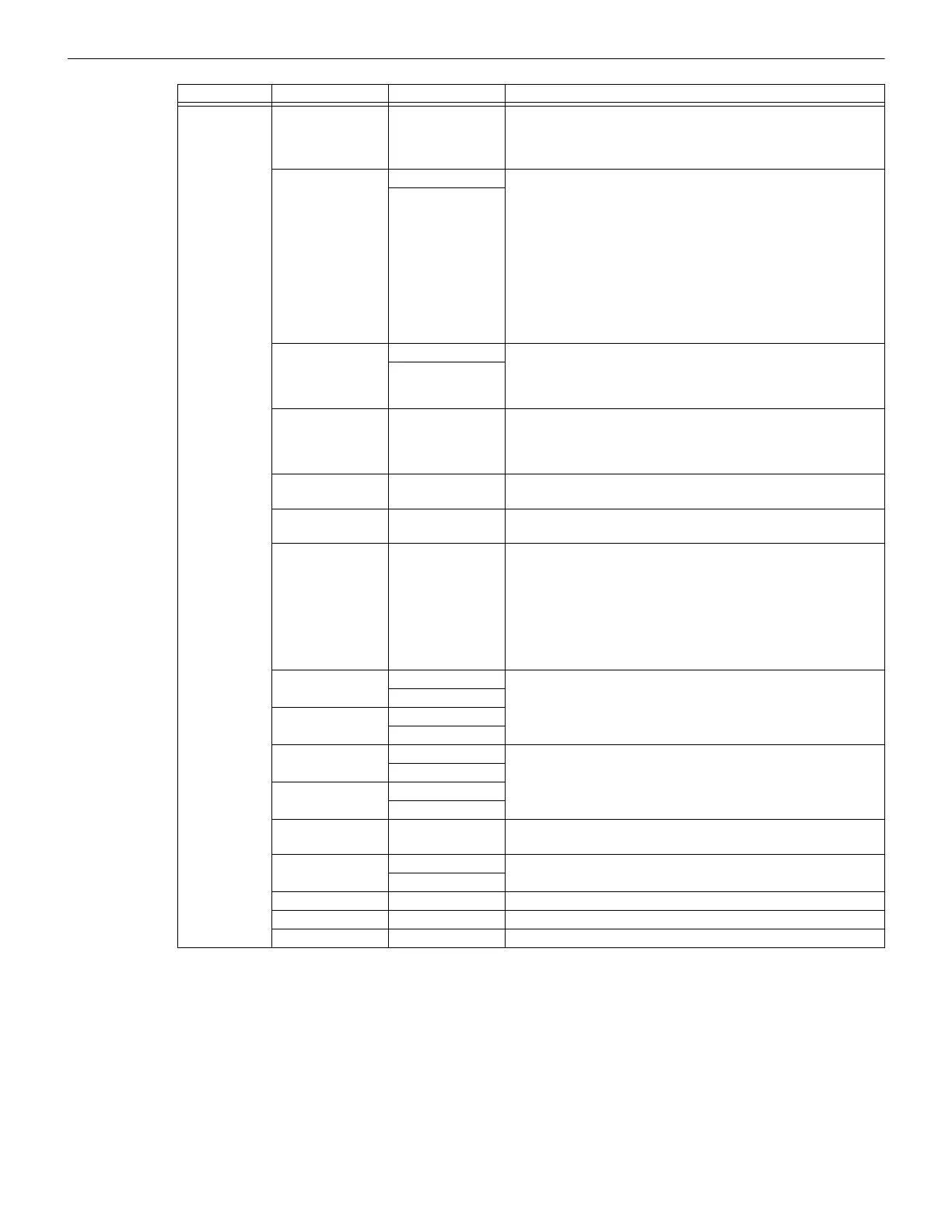
SWITCH MANUAL PULL Use this switch type for manual pull stations. This input is always
latched. The switch can clear only when an alarm is reset. This
switch type has the highest fire priority; it overrides any other type of
fire alarm.
WATERFLOW Latching Use this switch type for monitoring water flow in a sprinkler System.
Switch closure will cause a sprinkler alarm. Water flow switches can
be programmed as latching or non-latching.
You can program a delay of up to 90 seconds to be used with a water
flow switch. The delay allows for normal, brief changes in sprinkler
System water pressure. The water flow alarm will not activate unless
the switch is active for the programmed delay time.
If a delay is used, the System begins counting down when the switch
closes. If the switch opens (restores) before the timer expires, a
water flow alarm is not generated. If the water flow switch remains
closed after the timer expires, a water flow alarm will be generated.
Non Latching
FIRE SUPER-
VISORY
Latching Use this switch type for tamper monitoring of sprinklers and other fire
protection devices. If a contact closes, a sprinkler supervisory event
will be generated. Supervisory switches can be latching or non-
latching.
Non Latching
FIRE DRILL System-level, non latching switch. This switch is an alternative way
of causing a fire drill. It has the same operation as the fire drill option
available from the annunciator. When the switch is activated, a fire
drill begins; when the switch is de-activated, the fire drill ends.
SILENCE This System-level switch is an alternative way to silence the fire
System. It has the same effect as pressing the Silence key.
RESET This System-level switch is an alternative way to reset the fire
System. It has the same effect as pressing the Reset key.
P.A.S. ACK Positive acknowledge switch. This switch must be used in zones
programmed as Positive Alarm Sequence. ( See “Edit Zone
Properties” on page 94.).
If an acknowledge switch closes when an alarm or trouble condition
is not already in progress, a trouble will occur.
You must use a UL Listed normally open, momentary switch type.
The switch must be rated at 5V, 100 mA (minimum) and be used with
an EOL resistor for supervision.
ZONE AUX1 Latching Use these switch types if you want to monitor special zone-level
conditions (such as dry contact from a remote power supply).
Non Latching
ZONE AUX2 Latching
Non Latching
System AUX1 Latching Use these switch types if you want to monitor special System-wide
conditions (such as dry contact from a remote power supply).
Non Latching
System AUX2 Latching
Non Latching
DETECTOR Used to monitor conventional 4-wire detectors, a contact closure will
generate a detector alarm event.
FIRE TAMPER Latching Performs identically to a supervisory switch, but will be indicated as
a tamper switch on the LCD annunciator.
Non Latching
MANUAL RELEASE Manual release switch
INTERLOCK Interlock release switch input.
STATUS POINT
Type Selection Function Latching Option Comments
Table 9.5 Programming Options for FIK-6815 Modules (Continued)


 To Next Page