8
Technical specifications
EMC declaration
104 / 106
VOLISTA
IFU 01781 EN 19
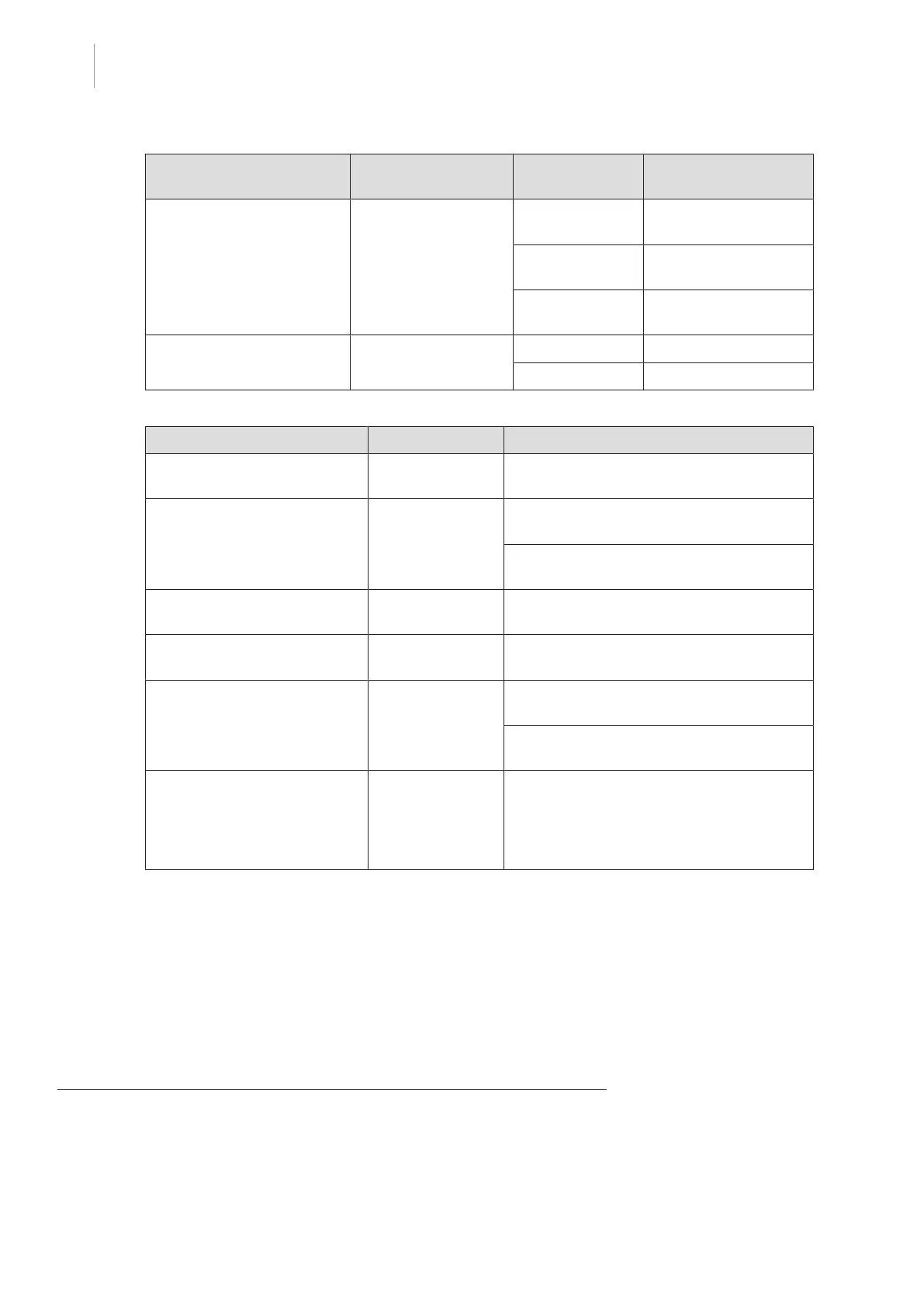
Type of test Test methods Range of fre-
quencies
Boundaries
Measurement of conducted
emissions on the main ports
EN 55011 GR1 CL A
8
0.15 - 0.5MHz 66 dBµV - 56 dBµV QP
56 dBµV - 46 dBµV A
0.5 - 5MHz 56 dBµV PQ
46 dBµV A
5 - 30MHz
60 dBµV PQ
50 dBµV A
Measurement of the radi-
ated electromagnetic field
EN 55011 GR1 CL A
8
30 - 230MHz 40 dBµV/m PQ 10m
230 - 1000MHz 47 dBµV/m PQ 10m
Tab.53: EMC declaration
Type of test Test methods Test level: Healthcare facility.
Electrostatic discharge im-
munity
EN 61000-4-2 Contact: ± 8kV
Air: ± 2; 4; 8; 15kV
Immunity to radiated electro-
magnetic fields
EN 61000-4-3 80 MHz, 2.7 GHz
3V/m Mod AM 80%/1kHz
Wireless RF frequencies
9 to 28V/m Mod AM 80%/1kHz
Immunity to fast electrical tran-
sients and bursts
EN 61000-4-4 AC: ± 2kV - 100kHz
IO >3m: ± 1kV - 100kHz
Immunity to power source
voltage surges
EN 61000-4-5 ± 0.5; 1 kV diff.
± 0.5 kV, ± 1 kV, ± 2 kV common mode
Immunity to conducted inter-
ference due to electromagnetic
fields
EN 61000-4-6 150 kHz, 80 MHz
3Vrms Mod AM 80%/1kHz
ISM
6Vrms Mod AM 80%/1kHz
Immunity to voltage dips and
short interruptions
EN 61000-4-11 0% Ut, 10ms
(0°; 45°; 90°; 135°; 180°; 225°; 270°; 315°)
0% Ut, 20ms
70% Ut, 500ms
0% Ut, 5s
Tab.54: EMC declaration
8.7.1 FCC Part 15 (USA only)
This equipment has been tested and found to comply with the limits for a ClassA digital device, pursuant to
Part15 of the FCC rules. These limits are designed to provide reasonable protection against harmful inter-
ference when the equipment is operated in a commercial environment. This equipment generates, uses,
and can radiate radio frequency energy and, if not installed and used in accordance with the instructions,
may cause harmful interference to radio communications. Operation of this equipment in a residential area
is likely to cause harmful interference, in which case the user will be required to suppress the interference at
its own expense.
8
The emission characteristics of this device enable it to be used in industrial areas and hos-
pital settings (Class A as defined in CISPR 11). If used in a residential environment (for which
class B defined in CISPR 11 is normally required), this device may not provide sufficient pro-
tection for radio frequency communication services. The user may need to take corrective
measures, such as relocating or re-orienting the device.



 To Next Page