Chapter 7
7. PT/aPTT Combination Test
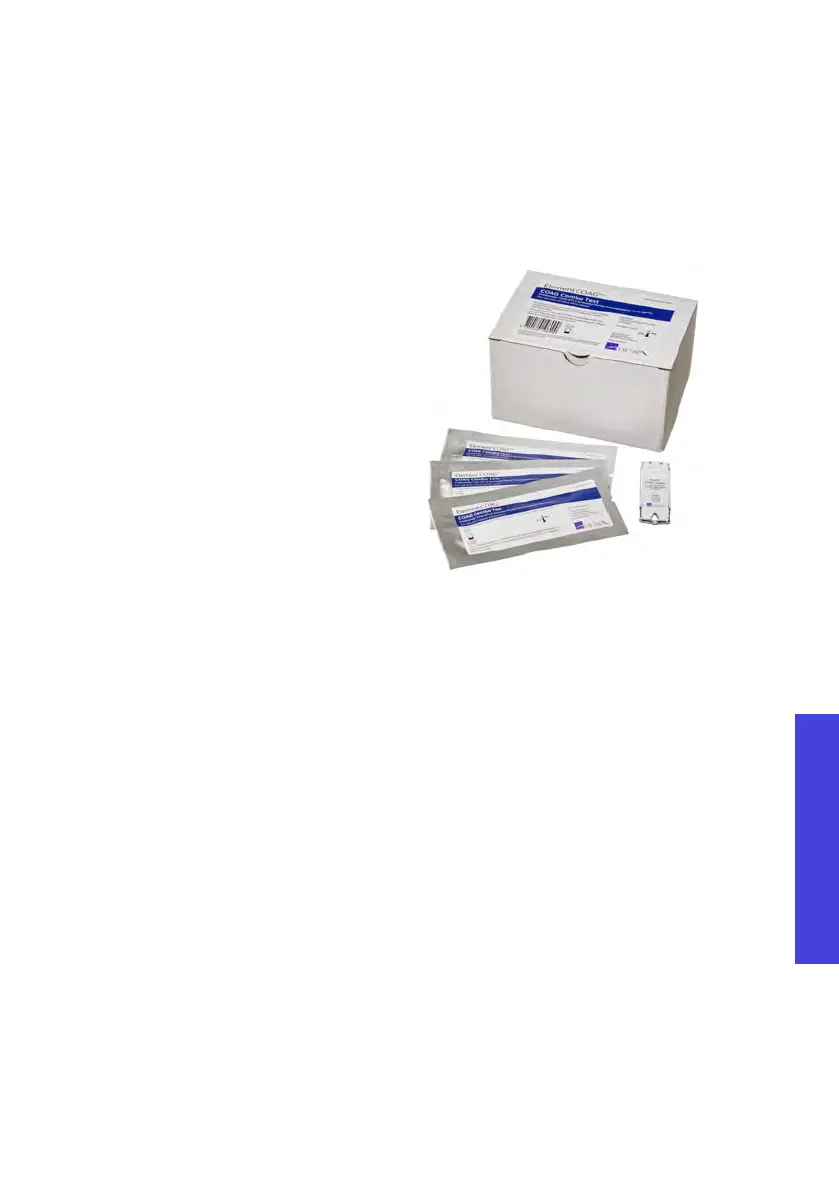
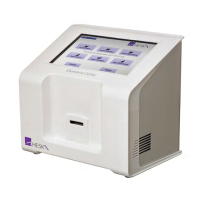
Figure 7.1:
The Heska Element COAG
™
PT/aPTT COAG Combo test kit.
The PT/aPTT Coag Combo cartridge
used with the Heska Element COAG
™
Analyzer is designed to detect and diag-
nose abnormalities in Prothrombin Time
(PT) and Activated Partial Thromboplastin
Time (aPTT).
Each PT/aPTT Coag Combo cartridge
contains dual optical detection windows
filled with micro-channels: one for detect-
ing PT clotting time, another for aPTT clot
detection.
The PT/aPTT Coag Combo test cartridge
can simultaneously measure PT and
aPTT from a single drop of citrated whole
blood with nominal test duration of 10 min-
utes including warm-up time.
7.1. Blood Coagulation
Blood coagulation is the process by which blood forms clots [
1
–
4
]. Disorders in the
coagulation process can lead to an increased risk of bleeding and/or clotting. Events
that lead to the formation of a blood clot are simplified in coagulation theory into two
coagulation cascades that are referred to as the intrinsic pathway and the extrinsic
pathway, both leading to the common pathway and the formation of a stable fibrin clot.
The analysis of blood coagulation can be a guide in determining a large number of
existing or potential disorders that can seriously affect the health of the patient, see
Figure 7.2 and [4].
The extrinsic pathway is initiated through the interaction of tissue factor with factor VII.
Tissue factor is released from or exposed on the damaged tissue, disrupted cells, or cells
such as macrophages, monocytes, or activated endothelial cells. In-vivo platelets, the
essential cofactors in this reaction, provide the platelet phospholipid surface on which the
49


 To Next Page