9. Canine Fibrinogen Test
sources of erroneous test results.
•
Do not use blood that has been stabilized in any other way than using
3.2 %
or
3.8 % citrate collection tubes.
• Do not use blood from over-filled or under-filled citrate tubes.
•
Do not use plasma from samples that have been centrifuged at less than
7000 g × minutes
.
• Do not use blood samples with visible clotting or debris accumulation.
•
Do not use plasma exhibiting signs of hemolysis, lipemia or other conditions that
may affect turbidity. A general guideline is that the sample should be clear and
more yellow than red in color.
•
To avoid mechanical hemolysis, the needle used should have a 22-gauge or larger.
•
The vein puncture site should be cleaned with alcohol and allowed to air-dry
completely.
•
When diluting the platelet poor plasma, ensure that no diluent is caught in the cap
of the pre-filled micro tube by tapping the cap prior to opening the tube.
•
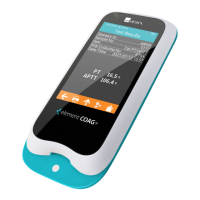
Use only the supplied Heska Element COAG
™
Fibrinogen pre-filled micro tube
with diluent. The Fibrinogen test will not work correctly if other diluents are used.
•
To avoid contaminating the plasma with red and white blood cells, please extract
the required volume from the upper half of the plasma.
•
Do not touch the part of the pipette tip that will come in contact with the plasma
when removing the pipette tip from the pouch.
•
Test results may be impaired if the sample is older than 12 hours or the extracted
plasma is older than 3 hours.
!
The accuracy of the Canine Fibrinogen Test is mainly dependent on the quality
of the blood sample and the extracted plasma. The way the blood is collected
and has been handled can greatly affect the blood and plasma quality.
9.4. Limitations
The veterinarian is always the final arbiter of test result interpretation and impact on
diagnosis. Therefore, it is highly recommended that Heska Element COAG
™
test results
should be scrutinized in the light of a specific patient’s condition and medical history, as
well as current or potential therapy.
Any test result exhibiting inconsistency with a patient’s status should be repeated and/or
supplemented with additional diagnostic tests.
72


 To Next Page