9. Canine Fibrinogen Test
In dogs, during active acute or chronic hepatitis, hyperfibrinolysis is observed frequently
in association with liver cell necrosis or apoptosis [
27
–
29
]. Therefore, the main purpose
of measuring fibrinogen level in canine medicine is to indicate blood coagulation disorders
in which the concentration of fibrinogen falls [
30
]. Moreover, measurement of fibrinogen
level, together with determination of other APPs, provides accurate information of the
course of the disease and allows better monitoring of treatment.
9.2. Test Specifications
An overview of the Canine Fibrinogen test specifications are given in
Table 9.1
. The
test has been validated for use with diluted canine (dog) plasma extracted from citrate-
stabilized whole blood. Under normal operating conditions, test results have a precision
of 0.3 g/L or better.
A Fibrinogen test takes up to 10 minutes to perform. The actual time depends on the
blood sample and test environment. At room temperature, it takes about 5 minutes for
the Analyzer to warm up the test cartridge to
99 °F
(
37
◦
C
). Lower and higher ambient
temperatures may change the warm up time. Once the procedure of the assay begins,
the result is reported within approximately 10 minutes.
Each test cartridge is individually packed in a sealed pouch with a desiccant bag and a
disposable pipette tip. The pouch should be kept at refrigerated temperatures (
36 °F
to
46 °F
/
2
◦
C
to
8
◦
C
). Remove the pouch from the refrigerator and allow the cartridge to
reach room temperature prior to running the test. The pouch should not be exposed to
direct sunlight and should be used within the same day it is warmed to room temperature.
Once the pouch has been opened, the cartridge should be used within the 10 minutes.
If stored in accordance with these guidelines, the test cartridges are stable until the
expiration date printed on the pouch label. One pre-filled tube with diluent should be
used with each test. Dispose of the diluent tube after running a test.
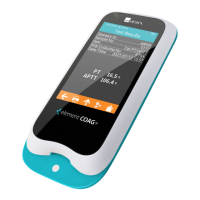
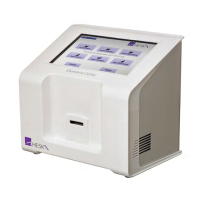
The test cartridge can be used only once and only in combination with the Heska
Element COAG
™
Analyzer. Once used, the cartridge, pipette tip, diluent tube, and
sample collection tube should be considered as potentially infectious. Dispose of them
properly in accordance with the policies and regulations at the place of operation.
!
Always strictly adhere to all biohazard safety guidelines pertaining to handling
and disposing of animal blood samples.
68


 To Next Page