Chapter 11
11.4. Limitations
11.3.2. Blood Sample Preparation
Use a syringe with a 22 gauge or larger needle to avoid hemolysis. Collect blood directly
into the EDTA test tube. The result of any blood analysis is dependent on the quality
of the blood sample. Follow standard blood-drawing procedures at all times and pay
special attention to the following:
•
Blood samples, if possible, should be collected within the day of testing. Ensure
proper mixing of the anticoagulant into the blood sample.
•
If a blood rocker is not available, slowly invert the tube containing the blood sample
10 times every 10 minutes.
•
The blood sample should be kept at room temperature, in case the testing is
delayed.
!
The accuracy of the Feline A & B Blood Typing Test is mainly dependent on
the quality of the blood sample. The way the blood is collected and has been
handled can greatly affect the blood quality.
11.4. Limitations
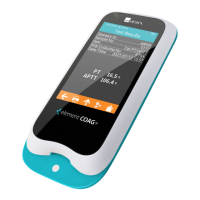
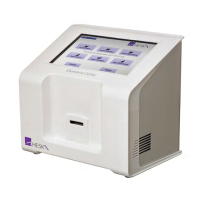
The veterinarian is always the final arbiter of test result interpretation and impact on
diagnosis. Therefore it is highly recommended that Heska Element COAG
™
test results
should be scrutinized in the light of a specific patient’s condition and medical history, as
well as current or potential therapy.
Any test result exhibiting inconsistency with a patient’s status should be repeated and/or
supplemented with additional diagnostic tests.
The accuracy of Heska Element COAG
™
Analyzer test results is largely dependent on
the quality of the blood specimen.
•
The quality of the blood sample is dependent upon the blood sample collection, the
proper blood to EDTA ratio, and the proper introduction of the sample and diluent
into the sample well. Please observe all precautions cited in this manual and use
good blood sample collection techniques at all times.
•
Being an absorption assay, the test accuracy is dependent on proper dilution of
the whole blood before adding the sample to the cartridge. Always measure the
hematocrit of the sample prior to testing and follow the on-screen dilution procedure.
•
Auto-agglutinated or hemolyzed blood samples may cause false results. The Ana-
lyzer is unable to distinguish RBC agglutinates from plasma containing hemoglobin.
Always verify that the sample is not hemolyzed when measuring the hematocrit.
As a general guideline, the plasma must be clear and more yellow than red. If the
sample is severely hemolyzed a new blood sample should be drawn.
91


 To Next Page