Chapter 7
7.3. Test Requirements
7.3. Test Requirements
7.3.1. Materials and Equipment
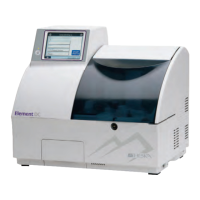
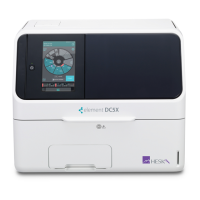
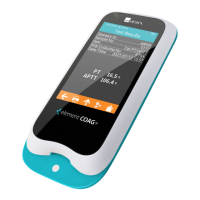
The following materials and equipment are required in order to perform a Heska Element
COAG
™
PT/aPTT COAG Combo Test on the Heska Element COAG
™
Analyzer:
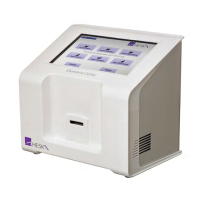
• Heska Element COAG
™
Analyzer
• PT/aPTT COAG Combo Test Cartridge
• Pipette (included in the sealed pouch with the test cartridge)
• Syringes with a 22-gauge needle or larger
• Sample tubes containing 3.2 % sodium citrate as an anticoagulant
• Package insert for the PT/aPTT COAG Combo Test
7.3.2. Blood Sample Preparation
Use a syringe with a 22-gauge needle or larger when drawing the blood to avoid hemolysis.
Collect the blood directly into the tube containing citrate as the anticoagulant. The result
of a coagulation analysis is very much dependent on the quality of the blood sample and
the correct concentration of anticoagulant in the sample. Follow standard blood-drawing
procedures at all times and pay special attention to the following:
•
Blood samples, if possible, should be collected about 5 minutes before testing to
stabilize the mixture of the blood and the citrate.
•
The sample collection tube must not be over- or under-filled. Even though the assay
requires only
60 µL
of whole blood, it is very important that the sample collection
tube has been filled to the correct filling line.
•
Slowly invert the tube containing the blood sample 10 times every 10 minutes as
an alternative if a blood rocker is not available.
•
The blood sample should be kept at room temperature, in case the testing is
delayed. Blood may be tested up to two hours after it has been collected without
affecting the test result.
•
Contamination from thromboplastin, alcohol and intravenous solutions will interfere
with the coagulation assay.
•
Hemolysis and foaming of the blood sample are potential sources of inaccurate
and imprecise test results.
53


 To Next Page