7. PT/aPTT Combination Test
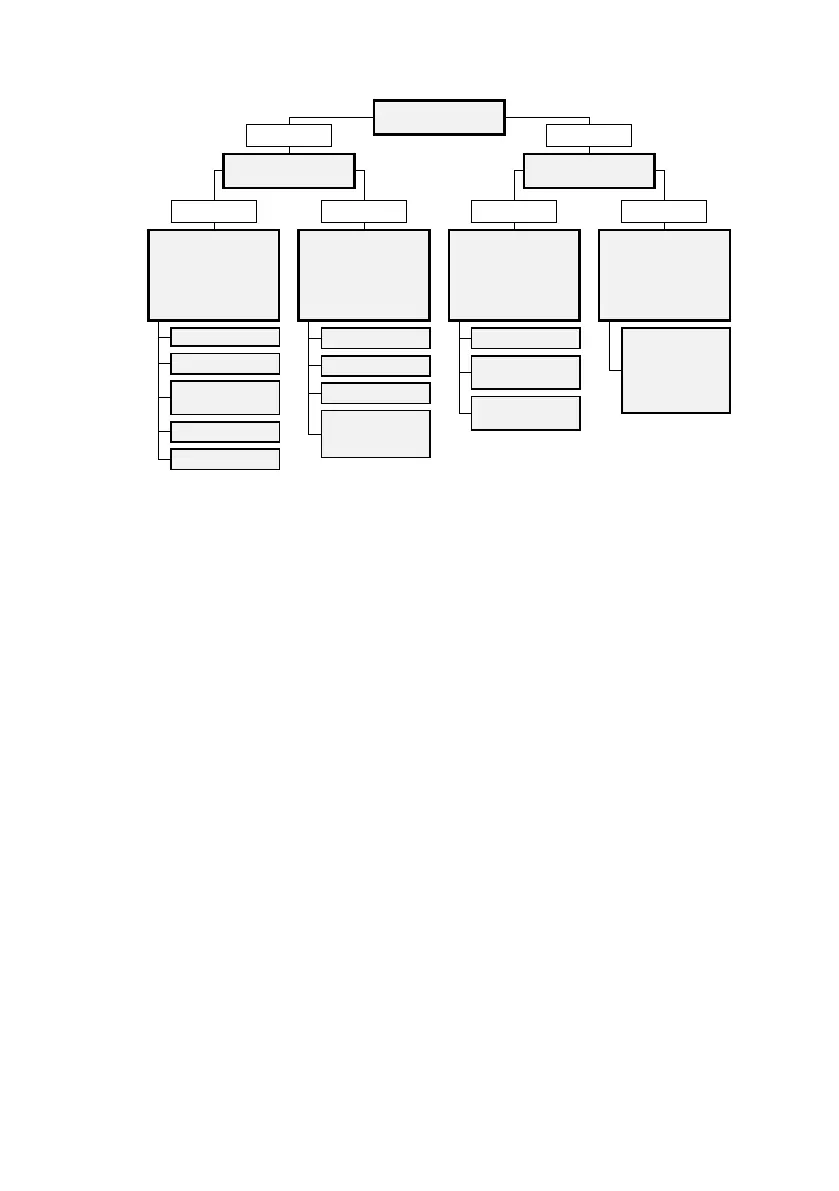
Common path-
way disorder
± combined intrinsic and
extrinsic pathway disorder
Intrinsic path-
way disorder
Extrinsic path-
way disorder
No coagula-
tion disorder
PT PT
aPTT
Prolonged Normal Prolonged Normal
Prolonged Normal
DIC
Over-heparinization
Common pathway
factor deficiency
Vitamin K deficiency
Rodenticide toxicity
Hemophilia A (VIII)
Hemophilia B (IX)
Hemophilia C (XI)
Factor XII deficiency
with no associated
bleeding disorder
Factor VII deficiency
Early rodenticide defi-
ciency
Vitamin K defi-
ciency/antagonist
Consider primary
bleeding disorder
- platelets
- von Willebrand fac-
tor
- vascular disorder
Figure 7.2: Guide to possible diagnosis based on PT and aPTT clot time.
coagulation occurs. The test reagents include phospholipid, therefore thrombocytopenia
does not affect this test.
The intrinsic pathway is started through contact activation of factor XII. The pathway goes
through several reactions that result in the formation of activated factor X. The common
pathway uses factor X, factor V, and free calcium to create enzymatic conversion of
prothrombin to thrombin, which is then used in creating fibrin from fibrinogen. Activated
Partial Thromboplastin Time (aPTT) and Prothrombin Time (PT) tests are general coag-
ulation tests used for screening and measuring the functionality of the blood coagulation
cascade. PT is used to assess the extrinsic and common pathway and aPTT to assess
the intrinsic and common pathway.
7.2. Test Specifications
An overview of the PT/aPTT COAG Combo test specifications is given in
Table 7.1
. The
test has been validated for use with feline (cat) and canine (dog) citrate-stabilized whole
blood. Under normal operating conditions, test results have a Coefficient of Variation
(CV) of 7 % or better.
A PT/aPTT COAG Combo test takes less than 15 minutes to perform. The actual time
depends on the blood sample and test environment. At room temperature, it takes about
50


 To Next Page