10. Canine DEA 1 Blood Typing
10.1.1. Blood Groups
Eight specific antigens have been identified on the surface of the canine erythrocytes [
31
,
39
]. The internationally accepted canine blood group system, the Dog Erythrocyte
Antigen (DEA), is based on these antigens. It currently characterizes eight common
blood groups, the antigens DEA 1, 1.2, 3, 4, 5, 6, 7, and 8.
As occurred in human medicine, new antigens are now being discovered on the red cells
of dogs. One, DAL, has been reported and is the subject of journal articles. These are
often breed specific and, thus, can be considered rare.
The DEA 1 blood group is the most significant blood factor in the dog. The DEA 1
blood group is highly antigenic and is the primary lytic factor in canine transfusion
medicine [
32
,
39
–
47
]. Although all of the blood group antigens are capable of stimulating
formation of alloantibodies, DEA 1 has the greatest stimulation potential. Thus, most
reactions resulting from the transfusion of incompatible cells occur when DEA 1 positive
blood is given to a DEA 1 negative recipient [
32
]. Clinically significant reactions to DEA 1.2
may occur but are less severe. DEA 7 may be a factor in transfusion reactions, but since
it is a cold agglutinin and a naturally occurring isoantibody, it is considered to have
very low clinical significance. The remaining antigens are considered to cause clinically
insignificant transfusion problems [32].
10.1.2. Blood Transfusion
Ideally, all transfused blood would be DEA 1 negative. However, until the concept of using
blood rapidly available from commercial sources is more widely accepted, transfusion
from dogs that are present in the area at the time of need will remain the norm.
It is estimated that
40 %
of all dogs are DEA 1 positive [
31
]. Because a number of dogs
auto-agglutinate and because a very anemic dog may give equivocal results, typing prior
to an urgent need for the information is indicated. Identifying a particular dog as DEA 1
positive or negative at birth greatly simplifies future decision making. A DEA 1 positive
dog can receive both DEA 1 positive and negative blood. A dog that is DEA 1 negative
should not receive DEA 1 positive blood.
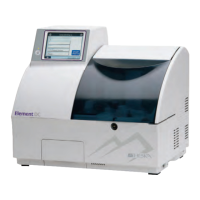
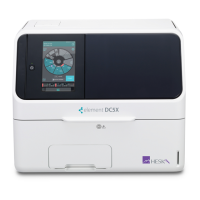
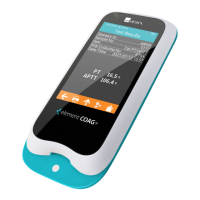
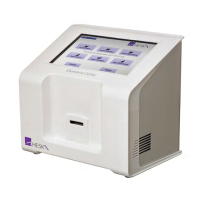
The Canine DEA 1 test cartridge used with the Heska Element COAG
™
Analyzer is
intended for use to classify dogs as DEA 1 positive, negative or inconclusive.
10.2. Test Specifications
Test results obtained under normal operating conditions have an accuracy of
95 %
or
better. A small percentage of blood samples is not possible to type definitely using the
Heska Element COAG
™
Analyzer. The results for these samples will be reported as
78


 To Next Page