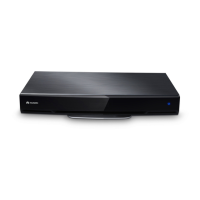
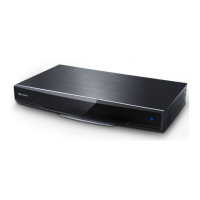
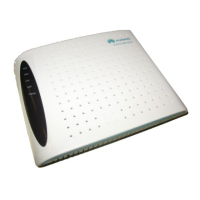
TE20 Videoconferencing Endpoint
Huawei Proprietary and Confidential
Copyright © Huawei Technologies Co., Ltd.
See Internet Protocol version 4.
See Internet Protocol version 6.
Internet Protocol
version 4 (IPv4)
The current version of the Internet Protocol (IP). IPv4 utilizes a 32bit address which
is assigned to hosts. An address belongs to one of five classes (A, B, C, D, or E) and
is written as 4 octets separated by periods and may range from 0.0.0.0 through to
255.255.255.255. Each IPv4 address consists of a network number, an optional
subnetwork number, and a host number. The network and subnetwork numbers
together are used for routing, and the host number is used to address an individual
host within the network or subnetwork.
Internet Protocol
version 6 (IPv6)
An update version of IPv4, which is designed by the Internet Engineering Task Force
(IETF) and is also called IP Next Generation (IPng). It is a new version of the
Internet Protocol. The difference between IPv6 and IPv4 is that an IPv4 address has
32 bits while an IPv6 address has 128 bits.
See Lightweight Directory Access Protocol.
Lightweight Directory
Access Protocol
(LDAP)
A network protocol based on TCP/IP, which allows access to a directory system
agent (DSA). It involves some reduced functionality from X.500 Directory Access
Protocol (DAP) specifications.
See multipoint control unit.
multipoint control
unit (MCU)
Data connection equipment used in a videoconferencing system. An MCU is used for
terminal access, video exchange, audio mixing, data processing, and signaling
exchange.
Session Initiation Protocol
See Simple Network Management Protocol.
See Secure Real-time Transport Protocol.
See service set identifier.
Secure Real-time
Transport Protocol
(SRTP)
A real time transport protocol with enhanced security and encryption
mechanism-based RTP.
Simple Network
Management Protocol
(SNMP)
A network management protocol of TCP/IP. It enables remote users to view and
modify the management information of a network element. This protocol ensures the
transmission of management information between any two points. The polling
mechanism is adopted to provide basic function sets. According to SNMP, agents,
which can be hardware as well as software, can monitor the activities of various
devices on the network and report these activities to the network console workstation.


 To Next Page