Voltage of
Electrical Cable
6,600V 2m
Special
voltage
(Transmission
line)
BEWARE OF ELECTRICAL CABLE ABOVE
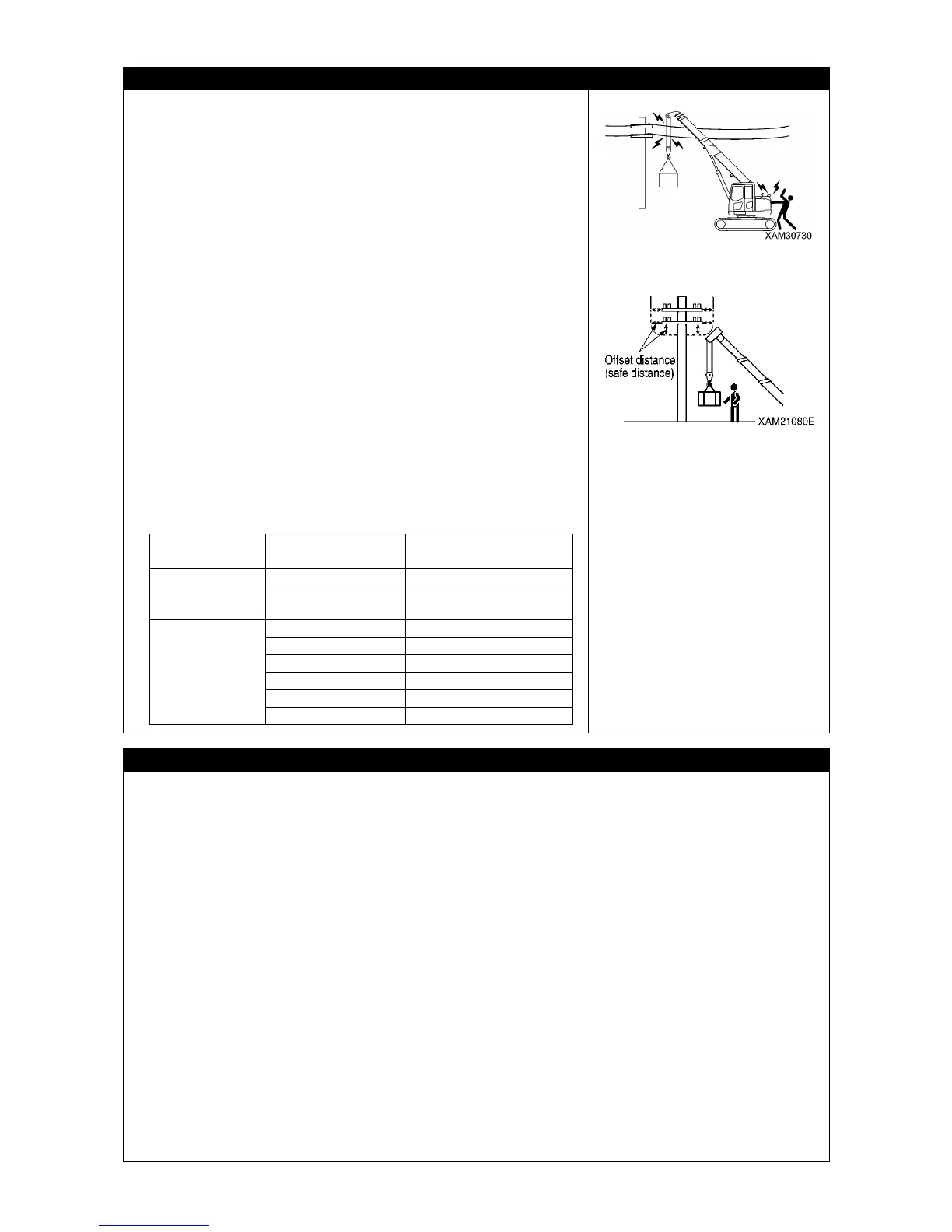
• Do not let the Machine touch the electrical cables above.
High voltage cables may also inflict electrical shock by close
proximity.
• Slinging operators are likely to suffer electrical shocks.
Always observe the following to prevent accidents.
• If the boom or the wire ropes may contact an electrical
cable in the workplace, consult the electricity company and
make sure that the measures (for instance placement of a
guard personnel or application of wrap tubes and warning
tags to the electrical cable) stipulated by the related
regulations are taken before starting work.
• Put on rubber soled shoes and rubber gloves, and be
careful that the body parts unprotected by rubber or other
insulation do not contact the wire rope or the Machine
frame.
• Place a guide and let him/her watch so that the boom, wire
rope or Machine frame does not go near the electrical
cable too much.
Before
doing so, decide the emergency signs and other
necessities.
• Ask the electricity company for the voltage in the electrical
cables at the worksite.
• Secure the separation (safe distance) shown in the
following table between the boom/Machine frame and
electrical cables.
MEASURES WHEN CHARGE ACCIDENT OCCURS
If a charge accident occurs, react calmly and take measures in the following procedure.
Immediately report to the electricity company or related management company, and receive
instructions for the power transmission stop, emergency procedures and related matters.
2. Evacuation of related personnel from vicinity of Machine
Evacuate all personnel, including workers, from the vicinity of the machine to prevent secondary
disasters.
Personnel who suffered elec
trical shock by holding a sling rope, guide rope or other conductor
when the Machine was charged should evacuate by his/her own effort.
Do not try to help personnel affected by electric shock.
Otherwise, secondary electrical shock
accident will occur.
3. Emergency procedure
In the case of personnel receiving an electric shock due to the machine being electrically charged,
do the following:
(1) If the machine is operational, immediately move it to a safe location away from the cause of the
electrical charge. Take care not to break or disrupt the distribution power cable.
(2)
Move the machine to a safe location, and after making sure the machine is not electrically
charged, take the affected personnel to the hospital.
4. Measure after accident
After the accident, do not reuse as is.
Such attempt may cause unexpected accidents and
Ask us or our sales service agency for repair.



 To Next Page