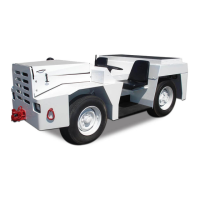
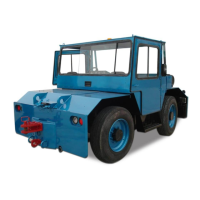
6. Install wheel assembly and tighten 9/16 lug nuts (rear) to 130 ft-lbs torque.
Remove safety stands and lower tractor.
1.7 POWER BOOSTER/MASTER CYLINDER ASSEMBLY
A hydraulically operated unit called a “power booster” supplies the power-assist to
the master cylinder, much like the vacuum booster found in most automobiles. The
power steering pump provides the hydraulic pressure. The master cylinder is
mounted on the end of the power booster.
An accumulator is filled with brake fluid each time the brakes are applied. If the
power steering pump fails for some reason, the accumulator will provide around
three power-assisted stops. Brakes can also be operated with no power assist, but
will require much firmer pedal pressure.
Check accumulator reserve charge retention as follows:
1. With engine running at medium rpm, holding steering to stop or hold brake with
100 lb. minimum brake pedal force for 5 seconds (maximum) and turn engine off.
2. Several minutes later, depress brake pedal (engine off). You should be able to
make two power-assisted applications. If this cannot be done, repair or replace
the booster.
Brake Booster Noise
Normal hydro-boost brake units will produce certain noises. The following noises
usually occur during high pedal efforts and quick pedal release:
Above-normal pedal pressure may cause the booster to hiss. Loud hissing sounds at
or below normal pedal effort indicates a possible problem.
Clunk, chatter, or clicking noises may be heard when the brake pedal is quickly
released from hard pedal efforts.
If you notice booster noise (hydraulic system at normal operating temperature)
during low brake pedal effort or with no pedal effort at idle, the booster may be
faulty.
1.7.1 Removal
1. With engine off, depress brake pedal several times to discharge accumulator.
2. Remove deck plate (located to right of operator’s seat).
AUGUST 31, 2008 CHAPTER 3 OVERHAUL
PAGE 12 1 GENERAL REPAIR
M100 Tow Tractor Manual No. 46052


 To Next Page