Preface
4
Preface
Scope
This manual contains instructions for installing and
operating the 6400 Calorimeter. For ease of
use, the manual is divided into 13 chapters.
1. Concept of Operation
2. Installation
3. Program Installation & Control
4. Operation
5. Menu Description
6. Standardization
7. Calculations
8. Corrections & Final Reports
9. Reporting Instructions
10. File Management
11. Maintenance & Troubleshooting
12. Communications Interfaces
13. Parts Lists & Drawings
Subsections of these chapters are identified in the
Table of Contents.
To assure successful installation and operation, the
user must study all instructions carefully before start-
ing to use the calorimeter to obtain an understanding
of the capabilities of the equipment and the safety
precautions to be observed in the operation.
Note About Nomenclature: Historically, burning
a sample enclosed in a high pressure oxygen
environment is known as Oxygen Bomb Calo-
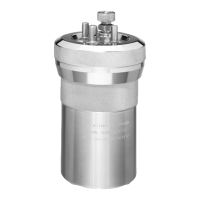
rimetry and the vessel containing the sample is
known as an Oxygen Bomb. The terms bomb
and vessel are used interchangeably.
Related Instructions
Additional instructions concerning the installation
and operation of various component parts and
peripheral items used with the 6400 Calorimeter
should be made a part of these instructions. Ad-
ditional instructions for the optional printer are
found in the respective printer package and should
be made a part of this book.
No. Description
201M Limited Warranty
207M Analytical Methods for Oxygen Bombs
230M Safety in the Operation of Laboratory
and Pressure Vessels
483M Introduction to Bomb Calorimetry
Note: The unit of heat used in this manual is the
International Table calorie, which is equal to 4.1868
absolute joules.
Purpose
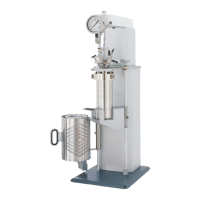
Heats of combustion, as determined in an oxygen
combustion (“bomb”) calorimeter such as the 6400
Automatic Isoperibol Calorimeter, are measured
by a substitution procedure in which the heat ob-
tained from the sample is compared with the heat
obtained from a standardizing material. In this test,
a representative sample is burned in a high-pressure
oxygen atmosphere within a metal oxygen combus-
tion vessel or “bomb”. The energy released by the
combustion is absorbed within the calorimeter and
the resulting temperature change is recorded.
Intended Usage
If the instrument is used in a manner not specified
by Company, the protection pro-
vided by the equipment may be impaired.



 To Next Page