17.5 Help texts
Content of the help
texts
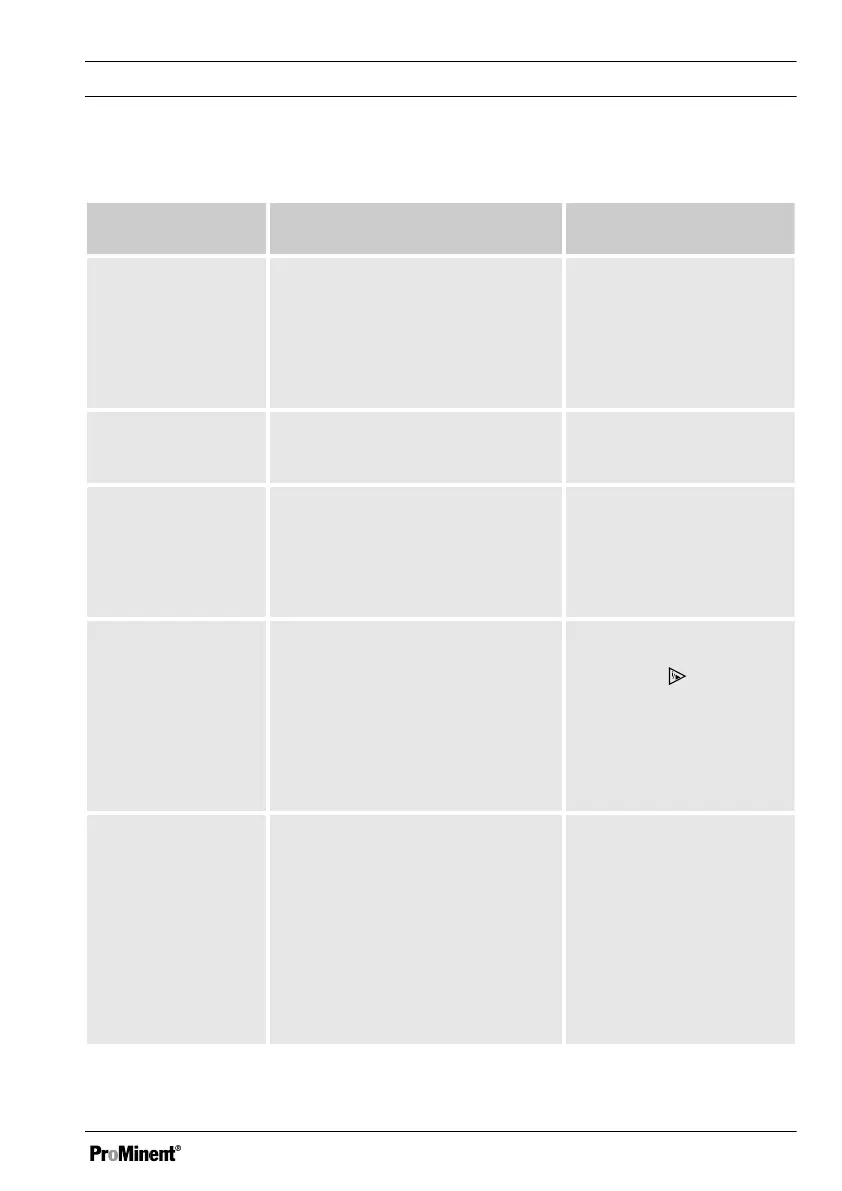
Cause Remedy
The DPD value is
too small, DPD
value > MRS + 2 %
If the calculated reference value
(e.g. DPD1) for calibrating a
sensor is less than 2 % of the
measuring range, then calibration
is not possible.
Increase the concentration
of the chemical to be
measured in the process/
sample water and deter‐
mine the reference value
again (e.g. DPD1) after the
run-in period.
The slope is too
shallow, < 20 % of
the MR
The sensor can no longer detect
the chemicals to be measured
Replace the membrane
cap and replace the elec‐
trolyte for new material
The slope is too
steep, > 300 % of
the MR
The sensor has been permanently
affected by for example surface-
active substances (surfactants).
Make sure that none of
these substances are
present in the water.
Replace the membrane
cap and replace the elec‐
trolyte for new material
The zero point is too
low, < 3.2 mA
The sensor delivers a measured
signal that is less than 3.2 mA.
This value is outside of the specifi‐
cation.
Check the raw value in mA
in the Information menu,
by pressing in the main
display. If the value is <
3.2 mA, then this is not the
correct sensor signal.
Check the cabling and
replace the sensor with a
new sensor.
The zero point is too
high, > 5 mA
You would like to calibrate the zero
point but the sensor is still
detecting the chemical to be meas‐
ured
Rinse the sensor with
water containing no chemi‐
cals that are to be meas‐
ured before zero point cali‐
bration. The water with
which the zero point is
determined should also not
contain traces of this
chemical. Use mineral
water without carbon
dioxide for this purpose.
[Diagnostics]
155





 To Next Page